
Chives: A Comprehensive Guide
Chives are one of the most versatile yet often overlooked herbs in the kitchen. These slender, hollow green stalks pack a mild onion flavor that enhances everything from morning eggs to evening soups without overwhelming other ingredients. Often relegated to a mere garnish, chives deserve a spotlight for their subtle flavor, easy growing habits, and impressive nutritional profile.

As an Amazon Associate I earn from qualifying purchases and sometimes recommend products from other sellers at no extra cost to you. For more details see my disclosure policy and privacy policy.
What are Chives?
- Scientific name: Allium schoenoprasum
- Family: Amaryllidaceae (formerly Alliaceae)
- Geographic origins: Native to Europe, Asia, and North America, particularly in cooler regions
- Historical background: Chives have been cultivated for at least 5,000 years and were used by the ancient Chinese, Greeks, and Romans for both culinary and medicinal purposes.
- Related plants: Part of the allium family alongside onions, garlic, shallots, leeks, and scallions
Chives have been valued throughout history not just for their flavor but also for their supposed ability to ward off evil spirits and diseases. Roman scholars documented their use for treating sunburn and sore throat, while medieval gardens almost always included chives for their practical and medicinal benefits.
Common Varieties
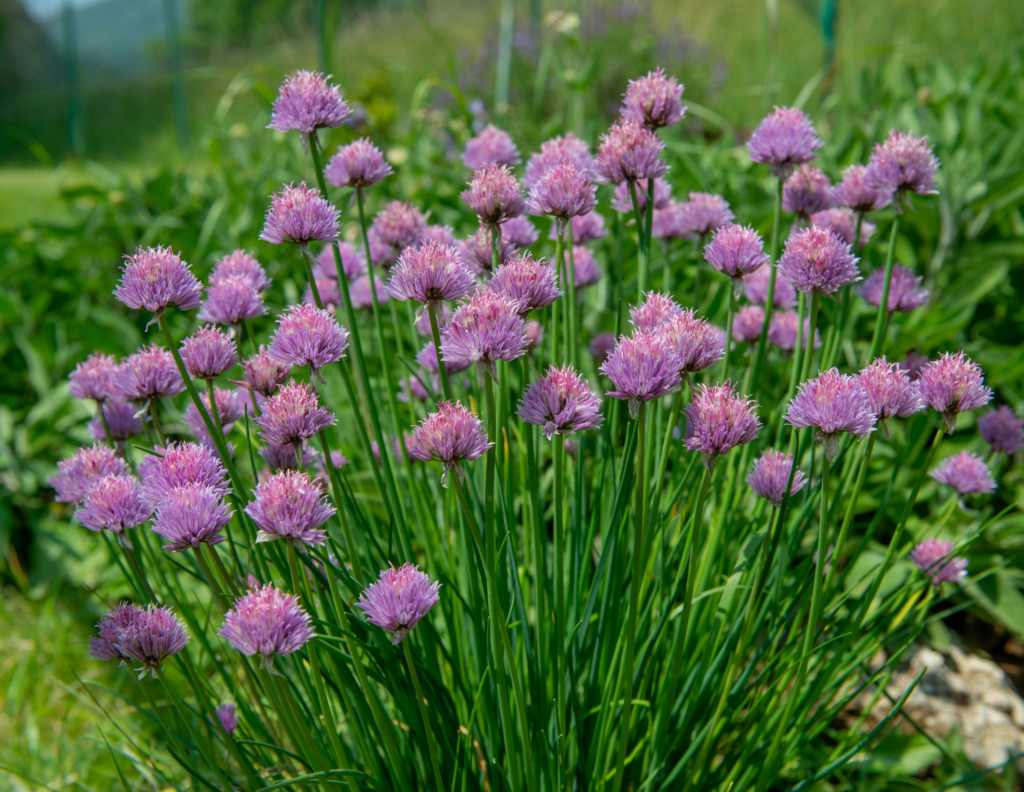
Common Chives (Allium schoenoprasum) – The standard variety with thin, tubular green leaves and light purple flowers. Their mild onion flavor makes them perfect for everyday cooking.
Forged & Grown — The Shop
Handpicked products chosen to fit the way we cook, grow, and create. Nothing generic — every item earns its place.
Visit the Shop


Garlic Chives (Allium tuberosum) – Also known as Chinese chives or Asian chives, these have flat leaves rather than hollow ones and white flowers. They offer a distinct garlic-onion flavor that’s slightly stronger than common chives.
Giant Siberian Chives – A larger, more cold-hardy variety with thicker stems and a more robust flavor. They grow taller than standard chives (up to 2 feet) and have deeper purple flowers.
Fine Leaf Chives – A delicate variety with very thin leaves, perfect for garnishing and adding to dishes where texture matters.
Each variety has its strengths, with common chives being the most versatile for everyday cooking, garlic chives shining in Asian cuisine, and giant varieties making an impact in both gardens and hearty dishes.
Health Benefits
Chives may be small, but they offer surprising nutritional benefits in every snip. These slender herbs contain vitamins A, C, and K, along with folate, calcium, magnesium, and potassium.
The health advantages of adding chives to your diet include:
- Immune support: Their vitamin C content helps support immune function
- Anti-inflammatory properties: Chives contain quercetin, which has anti-inflammatory effects
- Bone health: Vitamin K in chives plays a role in bone metabolism and health
- Digestive aid: Like other alliums, chives can promote healthy digestion
- Antioxidant protection: Their sulfur compounds act as antioxidants in the body
Traditional medicine has long used chives to stimulate appetite, improve digestion, and treat minor wounds. Modern research confirms many of these benefits, particularly their antimicrobial properties and potential cancer-fighting compounds similar to those found in garlic.
How to Grow Your Own
Chives are one of the easiest herbs to grow, making them perfect for beginner gardeners. They’re perennial in most climates (USDA zones 3-10) and will return year after year with minimal care.
Soil requirements: Chives prefer well-draining, moderately fertile soil with a pH between 6.0-7.0. They’re not particularly fussy about soil quality.
Sunlight needs: Full sun to partial shade. In hotter climates, afternoon shade can be beneficial.
Water requirements: Keep soil consistently moist but not waterlogged. Once established, chives are fairly drought-tolerant.
Growing season: Early spring through late fall in most regions. Growth slows or goes dormant in winter.
Common challenges:
- Aphids can sometimes be a problem (though chives often repel many garden pests)
- Can become invasive through self-seeding if flowers are left to go to seed
- May need dividing every 3-4 years to maintain vigor
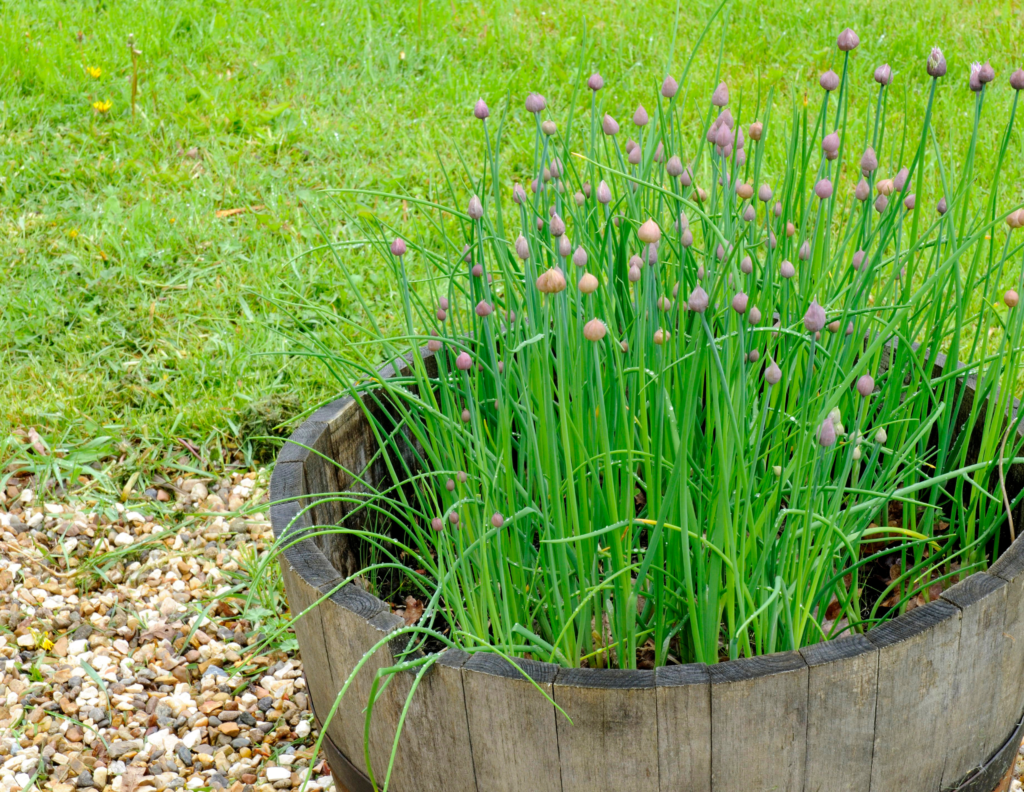
Indoor vs. outdoor growing: Chives grow well in containers, making them suitable for indoor growing near a sunny window. Outdoor plants tend to be more robust and flower more readily.
Tips for success:
- Harvest regularly to encourage new growth
- Cut leaves from the outside of the clump
- Cut stems down to about 2 inches above soil level when harvesting
- Divide clumps every few years in spring to maintain plant health
- Consider cutting flower heads to prevent self-seeding (unless you want the edible blossoms)
Basic Usage Guide
Chives offer a subtle onion flavor that enhances dishes without taking over. Their bright green color adds visual appeal as a finishing touch to many recipes.
Flavor profile: Mild, delicate onion flavor with grassy, fresh notes. Garlic chives have a more pronounced garlic-onion taste.
Best preparation methods:
- Snip fresh with scissors rather than chopping with a knife to prevent bruising
- Add at the end of cooking or as a garnish to preserve flavor and color
- For best flavor, cut chives just before using
Parts of plant that are usable:
- Leaves (the primary culinary part)
- Flowers (edible with a similar but milder flavor, great in salads)
- Bulbs (rarely used but edible)

Common combinations:
- Dairy products: sour cream, cream cheese, butter, cottage cheese
- Eggs in any form
- Potatoes: mashed, baked, or in potato salad
- Fish and seafood dishes
- Simple salads and dressings
- Soups as a garnish
- Compound butters and soft cheeses
Tips for maximizing flavor:
- Store properly to maintain freshness (see Storage Methods)
- Add fresh chives just before serving hot dishes
- Use scissors or very sharp knives when cutting to minimize flavor loss
- When cooking, add chives at the very end of the cooking process or as a garnish
Recipe Ideas
Classic Chive and Cream Cheese Spread
This simple spread pairs beautifully with bagels, crackers, or as a vegetable dip. Mix 8 oz softened cream cheese with 3 tablespoons finely snipped chives, 1 tablespoon lemon juice, and salt and pepper to taste. For extra flavor, add a small clove of minced garlic or a teaspoon of prepared horseradish.

Chive Blossom Vinegar
Harvest chive blossoms when fully opened but still fresh. Fill a glass jar halfway with the purple flowers, then cover with white wine vinegar. Seal and let steep in a dark place for 1-2 weeks. Strain and use in salad dressings or marinades for a beautiful pink vinegar with subtle onion flavor.
Chive Potato Soup
Enhance a classic potato leek soup by adding a generous handful of chopped chives just before serving. The bright green color and fresh flavor elevate the creamy soup, especially when paired with a dollop of herb-infused sour cream.
Chive and Lemon Butter Fish
Create a simple compound butter by mixing softened butter with chopped chives, lemon zest, and a pinch of salt. Place a slice on top of freshly cooked fish fillets and let it melt to create an instant sauce. This works beautifully with mild white fish like cod, halibut, or tilapia.
Storage Methods
Proper storage of chives helps maintain their delicate flavor and bright color. With the right techniques, you can enjoy their fresh taste year-round.
Fresh storage techniques:
- Stand upright in a glass with about an inch of water, like a bouquet
- Loosely cover with a plastic bag and refrigerate
- Change water every few days
- Alternatively, wrap in slightly damp paper towels and place in a plastic bag in the refrigerator
- Fresh chives should last 1-2 weeks with proper storage
Long-term preservation methods:
- Freezing is the best method for preserving chives while maintaining flavor
- Drying is possible but results in significant flavor loss
Freezing options:
- Snip into small pieces
- Spread on a baking sheet to freeze individually
- Transfer to airtight containers or freezer bags once frozen
- Alternatively, place chopped chives in ice cube trays with a little water or olive oil
Drying methods:
- Air dry in bunches in a warm, dark place
- Use a dehydrator on the lowest setting
- Oven drying on very low heat (but expect significant flavor and color loss)
Signs of spoilage:
- Yellowing or browning of the leaves
- Slimy texture
- Unpleasant smell
- Visible mold
Best practices for maintaining flavor:
- Freeze rather than dry when possible
- Cut just before using for the freshest flavor
- Harvest in the morning when essential oils are strongest
- Don’t wash until ready to use
Substitutes for Chives
Sometimes you may find yourself without chives but still need that mild onion flavor in your recipe. Fortunately, there are several good alternatives:
Green onion tops: The green parts of scallions (green onions) have a similar but stronger flavor. Use about half the amount called for in your recipe.
Leek greens: The green parts of leeks offer a very mild onion flavor. These work well in cooked dishes but are a bit tougher than chives.
Shallot greens: If you grow shallots, their greens make an excellent substitute with a delicate onion-garlic flavor.
Garlic chives: These have a distinct garlic note along with onion flavor. They work beautifully in Asian dishes or anywhere you want a hint of garlic.
Herb alternatives: In some recipes, especially egg dishes or with fish, fresh dill or tarragon can work as a different but complementary flavor profile.
For the best results, add these substitutes at the end of cooking just as you would with chives to preserve their flavor and color.
Frequently Asked Questions
1. Can I eat chive flowers? Yes! Chive flowers are completely edible and have a milder, slightly sweeter flavor than the leaves. They make beautiful garnishes, can be sprinkled in salads, or used to make chive blossom vinegar. The intact flowers can even be used as an edible garnish on canapés or elegant appetizers.
2. Why are my chives turning yellow? Yellowing chives usually indicate either overwatering, underwatering, or insufficient sunlight. Make sure your chives have well-draining soil and check that you’re not keeping the soil constantly soggy. If growing indoors, ensure they get enough light. Yellowing can also occur naturally at the end of the growing season.
3. Can I grow chives from grocery store herbs? Yes, you can sometimes root store-bought chives if they still have the white root ends attached. Place them in water until roots develop, then plant in soil. However, starting from seeds or purchasing established plants will generally yield better results.
4. Are chives the same as green onions? No, though they’re related and sometimes confused. Chives (Allium schoenoprasum) are a different species than green onions/scallions (Allium fistulosum). Chives are perennial herbs with much thinner, more delicate hollow stems, while green onions have thicker stems and a more pronounced bulb at the base.
5. Can pets eat chives? No, chives (like all alliums) are toxic to dogs and cats. They can cause digestive upset, damage to red blood cells, and even anemia if consumed in significant quantities. Keep chive plants and kitchen scraps away from pets.
6. How often can I harvest chives without harming the plant? Chives are quite resilient. You can harvest up to 1/3 of the plant every 2-4 weeks during the growing season without causing harm. Regular harvesting actually encourages new growth. Cut stems about 2 inches from the base.
7. Why aren’t my chives flowering? Chives typically flower in late spring or early summer, but young plants might not flower in their first year. Insufficient sunlight, over-harvesting, or improper growing conditions might prevent flowering. Chives also need a cold period (winter) to trigger blooming in the following spring.
Conclusion
Chives offer a perfect balance of versatility, ease of growing, and subtle flavor that makes them a valuable addition to any kitchen garden or herb collection. Whether you’re sprinkling them over morning eggs, stirring them into creamy dips, or using them as a finishing touch on elegant dinners, their bright color and gentle onion flavor enhance countless dishes.
Growing your own chives rewards you with years of harvests from a single planting, making them one of the most cost-effective herbs to cultivate. Their pretty purple flowers attract pollinators to your garden while also offering an edible garnish that adds visual interest to your plate.
Don’t relegate chives to mere garnish status – bring them center stage and discover how this humble herb can transform everyday cooking with minimal effort. Whether you’re an experienced chef or a kitchen novice, chives deserve a permanent spot in your culinary arsenal.


