Chervil: The Complete Guide to Growing, Cooking, and Using This Delicate French Herb
If parsley has a quieter, more refined cousin, it’s chervil. This feathery, anise-scented herb rarely gets top billing on a spice rack, yet French cooks have relied on it for centuries to finish everything from omelettes to cream soups. Once you know how to grow and use it, it earns a permanent spot in the herb bed.
Chervil is delicate in flavor and delicate in the garden, which is probably why it gets overlooked next to bolder herbs like basil or rosemary. Grow it in the wrong season and it bolts before you get a real harvest. Cook it too long and its flavor disappears entirely, so timing is everything with this one.
As an Amazon Associate I earn from qualifying purchases and sometimes recommend products from other sellers at no extra cost to you. For more details see my disclosure policy and privacy policy.
What Is Chervil?
Chervil (Anthriscus cerefolium) is a member of the Apiaceae family, the same botanical family that includes parsley, carrots, dill, celery, and fennel. Its feathery, fern-like leaves look almost identical to flat-leaf parsley at first glance, but a closer look and a quick taste give it away. Chervil has a softer, lighter green leaf and a flavor that leans toward anise and mild licorice rather than parsley’s grassy freshness.
Forged & Grown — The Shop
Handpicked products chosen to fit the way we cook, grow, and create. Nothing generic — every item earns its place.
Visit the Shop


The herb is native to the Caucasus region and parts of Western Asia and Southeastern Europe, and it was carried across the continent by the Romans, who used it in cooking and folk remedies. By the Middle Ages, chervil had become a fixture in European monastery gardens, prized both as a culinary herb and as a traditional spring tonic. Some old European customs even tied chervil soup to Maundy Thursday, eaten as a symbolic dish to mark the start of spring growth after winter.
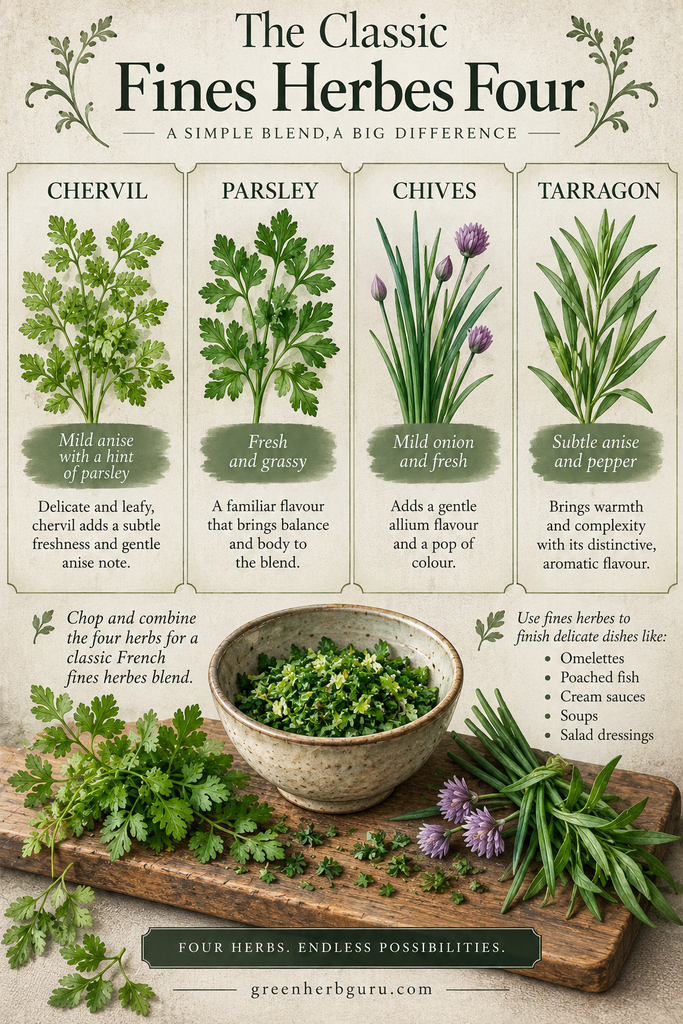
Chervil’s real reputation, though, comes from French cooking, where it earned the nickname “gourmet’s parsley.” It’s one of the four herbs in the classic French fines herbes blend, alongside parsley, chives, and tarragon, used to finish delicate dishes like omelettes, poached fish, and cream sauces without overwhelming them. Chervil’s subtlety is exactly why French cooks value it: it adds a whisper of anise and freshness rather than dominating a dish.
Chervil also shows up across several other European food traditions, not just French. German and Austrian kitchens use it in Frankfurter grüne Soße, a cold green sauce built from a mix of fresh herbs, and Polish cooking includes chervil in some traditional spring soups for the same reasons the French do, as a herald of the new growing season. In most of these traditions, chervil is treated the same way: added fresh, at the end, and never cooked hard.
A quick safety note before you head out to the garden. Chervil belongs to the same plant family as several genuinely dangerous look-alikes, including poison hemlock (Conium maculatum) and wild chervil, also called cow parsley (Anthriscus sylvestris). These plants can grow in the same hedgerows, ditches, and waste ground where you might be tempted to forage, and mistaking them for the culinary herb has caused serious poisonings.
A few quick visual cues help tell them apart:
- Poison hemlock: hairless, ridged stem, often marked with purple or reddish blotches, with a musty, unpleasant smell when leaves are crushed
- Cultivated garden chervil: softer growth habit, stays low and compact, carries a familiar mild anise scent
- Wild, unidentified plants: never assume safety based on leaf shape alone, since several Apiaceae look-alikes share the same lacy foliage
Cultivated garden chervil that you grow from a known seed packet is safe, but never harvest a feathery, parsley-like plant from the wild unless you are completely certain of its identification. Penn State Extension has a clear side-by-side guide to telling poison hemlock and wild chervil apart, and it’s worth a read before any wild foraging near Apiaceae-family plants.
Common Varieties
Chervil doesn’t have the sprawling list of named cultivars you’d find with basil or mint, but there are a few distinctions worth knowing before you buy seed.
Common or plain-leaf chervil is the standard culinary type, with flat, fern-like foliage and the classic mild anise flavor. This is what you’ll find in most seed catalogues simply labeled “chervil,” and it’s the right choice for fines herbes and most French-style cooking.
Curly chervil has more tightly ruffled leaves, similar to the relationship between flat-leaf and curly parsley. The flavor is close to the plain-leaf type, though some cooks find it slightly milder. It’s often grown as much for its decorative garnish appeal as for cooking.
‘Brussels Winter’ chervil is a cold-hardy strain bred for extending the harvest into cooler months. It’s a useful choice if you want chervil later into autumn or in a mild-winter climate, since standard chervil bolts and fades quickly once summer heat arrives.
It’s worth knowing that chervil is sometimes confused with sweet cicely (Myrrhis odorata), another feathery Apiaceae herb with a similar anise note. Sweet cicely is a true perennial with larger, softer leaves and a sweeter flavor, and while it’s a lovely herb in its own right, it isn’t a direct substitute in recipes calling specifically for chervil.
Seed catalogues occasionally list chervil under a handful of other names, including French parsley, garden chervil, or salad chervil, all of which refer to the same standard culinary type. Unless a listing specifically flags a novelty strain like ‘Brussels Winter’, you can generally treat these names as interchangeable when buying seed.
Health Benefits
Chervil is a genuinely nutrient-dense leafy herb, even though it’s typically used in small quantities. Fresh chervil provides notable amounts of vitamin C, vitamin A in the form of carotenoids, and smaller contributions of iron, magnesium, and potassium. Because it’s usually sprinkled over a finished dish rather than eaten by the cupful, its practical nutritional impact is modest, but it’s a genuinely healthful addition to a meal rather than an empty garnish.
Traditionally, chervil has a long history in European folk medicine as a mild diuretic and digestive aid, and old herbals describe it as a gentle spring tonic meant to “purify the blood” after winter. Modern research on chervil specifically is limited compared with better-studied herbs like peppermint or ginger, so it’s best to think of these traditional uses as historical context rather than established medicinal claims. If you’re interested in the broader research on culinary herbs and health, the NCCIH’s overview of herbal supplement safety is a solid starting point for understanding what is and isn’t well studied.
As with any Apiaceae-family herb, it’s sensible to be cautious with large medicinal-style doses during pregnancy, and anyone taking medication or managing a health condition should check with a doctor or pharmacist before using chervil beyond normal culinary amounts. Using a pinch of chopped chervil to finish a soup or omelette is a different matter entirely from taking it as a concentrated remedy, and the culinary use carries essentially none of the same considerations.
Fresh herbs like chervil also contribute small amounts of dietary fiber and a range of plant compounds called flavonoids, which are present across most leafy Apiaceae herbs including parsley and dill. The amounts in a typical serving are modest, so it’s more accurate to think of chervil as a flavorful bonus alongside a generally varied, vegetable-rich diet rather than a stand-alone health food.
How to Grow Your Own
Chervil is a cool-season annual, and understanding that single fact solves most of the problems people run into with it. It thrives in mild, cool conditions and bolts, meaning it rushes to flower and turns bitter, as soon as the weather heats up.
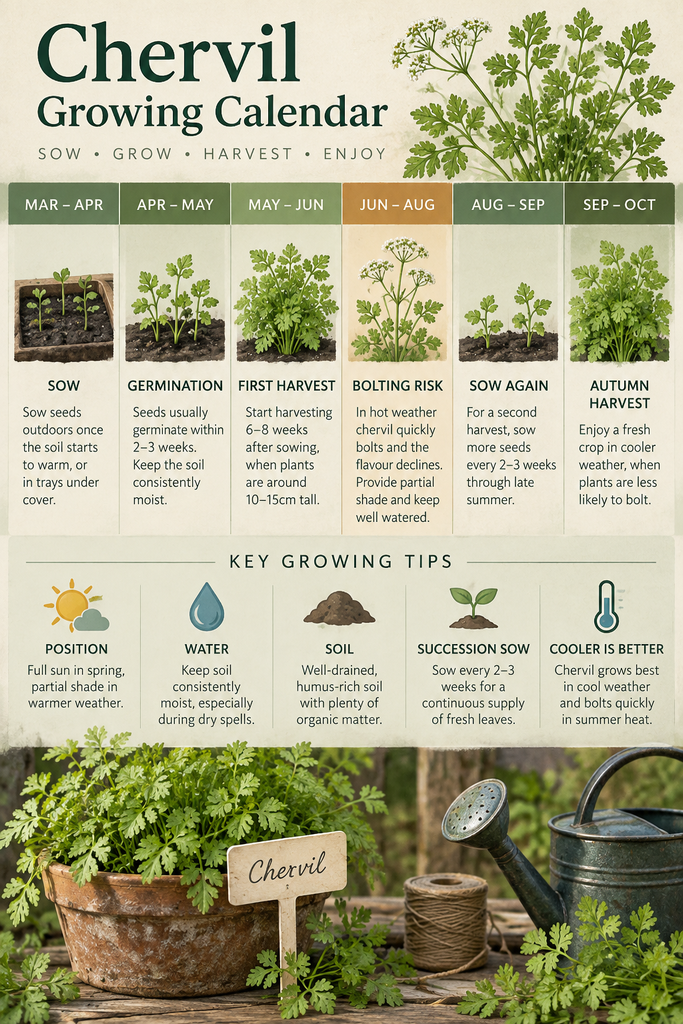
Soil requirements. Chervil likes loose, well-draining soil that’s rich in organic matter. A soil that stays consistently moist without becoming waterlogged will keep the plant productive for longer before it bolts.
Sunlight needs. In cooler climates or during spring and autumn, chervil is happy in full sun. Once summer heat sets in, partial shade helps slow bolting and keeps the leaves tender for longer.
Water requirements. Keep the soil evenly moist. Chervil has shallow roots and dries out quickly, and drought stress is one of the fastest ways to trigger premature bolting.
Growing season. Chervil is best sown direct in early spring and again in early autumn for a second flush. It grows quickly, often ready to harvest within six to eight weeks of sowing.
Common challenges. Bolting is the main frustration gardeners run into, especially once daytime temperatures climb into the 75 to 80°F range. Succession sowing every two to three weeks through the cool months keeps a steady supply coming, rather than relying on one planting to last all season.
A couple of other issues worth watching for:
- Slugs and snails are fond of tender young leaves, so keep an eye out in damp weather
- Powdery mildew can show up in humid conditions with poor air circulation; space plants generously and water at the soil line rather than overhead
- Aphids sometimes cluster on new growth in spring; a strong spray of water or light insecticidal soap usually clears them without anything stronger
Indoor vs outdoor growing. Chervil does reasonably well in containers, including on a cool windowsill, as long as it gets consistent moisture and isn’t baked by direct summer sun through glass. Because it dislikes root disturbance, direct sowing into its final pot or garden bed works better than starting seedlings and transplanting them. A pot at least eight inches deep gives the taproot enough room to develop without becoming cramped.
Companion planting. Chervil is a good neighbor for radishes, lettuce, and other quick-growing cool-season crops, since it shares similar light and water preferences. Some gardeners also plant it near roses, on the theory that it helps deter aphids, though this is more garden folklore than proven pest control. What’s better documented is that chervil’s small flowers, when allowed to bloom, attract beneficial predatory insects like hoverflies, which help keep aphid populations down elsewhere in the garden.
Tips for success. Chervil has a delicate taproot and doesn’t transplant well, so direct sowing is strongly preferred over starting seed indoors and moving seedlings later. Thin seedlings to around six to eight inches apart once they’re a couple of inches tall, and harvest by snipping outer leaves rather than pulling the whole plant, which encourages continued production. Mulching lightly around the base helps retain the even soil moisture chervil needs and keeps the shallow roots from drying out on warm afternoons.
Harvesting chervil. Start harvesting once plants are four to six inches tall, snipping the outer leaves and leaving the center to keep producing. Morning is the best time to pick, before the day’s heat starts to soften the leaves and dull their aroma. Because chervil bolts quickly, it’s worth harvesting a little more generously than you would with a slower-growing herb like rosemary, rather than letting leaves sit and mature on the plant.
Basic Usage Guide
Chervil’s culinary identity comes down to one rule: heat destroys it. The essential oils that give chervil its anise-parsley flavor are volatile and fade quickly with cooking, so it’s almost always added at the very end of a recipe or used entirely raw, much like fresh basil or delicate herb garnishes.
Flavor profile. Chervil tastes like a gentler, more aromatic parsley with a background note of anise or mild licorice. It’s subtle rather than punchy, which is exactly why French cooking pairs it with other mild flavors instead of using it to dominate a dish.
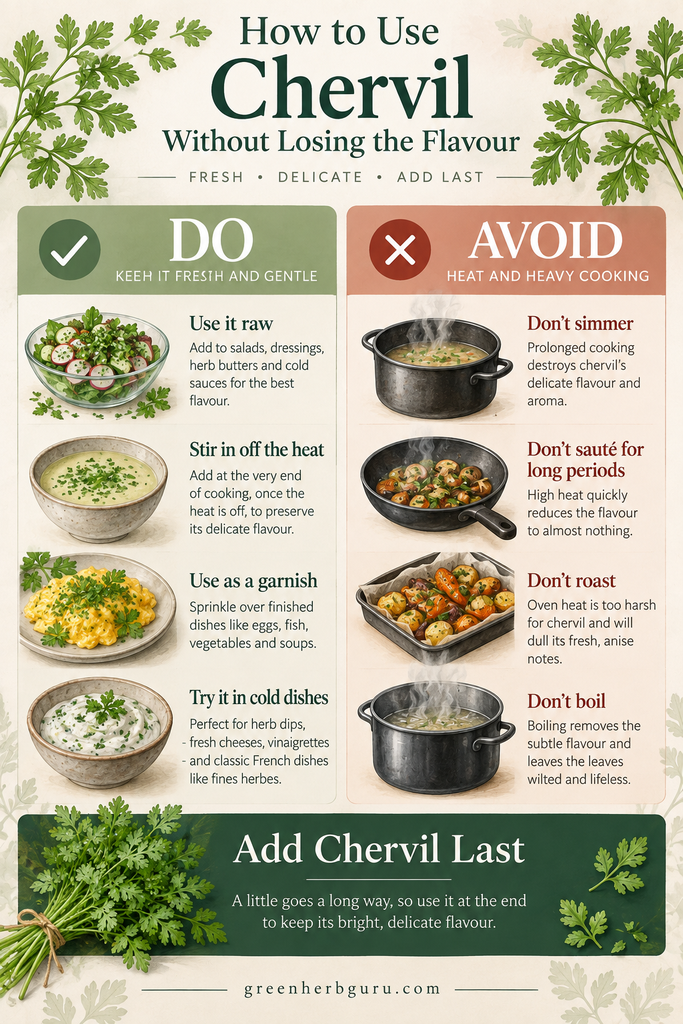
Best preparation methods. Chop chervil finely just before serving and stir it into a finished dish, or scatter whole small sprigs as a garnish. Avoid simmering, roasting, or sautéing it, since prolonged heat turns the flavor flat and slightly grassy.
Parts of the plant that are usable. The feathery leaves are the main culinary part. The small white flowers are edible too and make an attractive, mildly flavored garnish for salads and canapés.
Common combinations. Chervil pairs naturally with eggs, poached or pan-seared fish, chicken, potatoes, and cream-based sauces. It’s a key component of fines herbes alongside parsley, chives, and tarragon, a blend woven throughout our guide to herb and spice blends.
Tips for maximizing flavor. Add chervil at the very last moment, whether that’s off the heat, tableside, or straight into a cold dish. A little goes further than you’d expect, so start with a light hand and add more to taste.
Chervil also has a natural affinity for other mild, cool-toned flavors like leeks, spring peas, soft cheeses, and butter-based sauces, which is why so many French spring recipes lean on it. It tends to get lost next to bold, spicy, or smoky ingredients, so save it for dishes where its subtlety can actually come through rather than pairing it with anything too assertive.
Recipe Ideas
Chervil compound butter. Blend finely chopped fresh chervil into softened unsalted butter with a pinch of sea salt and a squeeze of lemon. Roll it into a log, chill, and slice a coin over grilled fish, roasted potatoes, or steamed vegetables.
Fines herbes omelette. Whisk eggs with a scant tablespoon each of finely chopped chervil, parsley, chives, and tarragon. Cook gently over low heat, folding the herbs in just as the eggs set, for a classic French bistro breakfast. Our lemon and herb roasted chicken uses a similar last-minute herb approach if you want to see the technique applied to a different dish.
Chilled chervil soup. Sauté leeks and potatoes in butter, add stock, and simmer until tender. Blend until smooth, stir in a generous handful of chopped fresh chervil off the heat, and chill before serving with a swirl of cream.
Chervil and shallot vinaigrette. Whisk together white wine vinegar, Dijon mustard, minced shallot, and olive oil, then fold in finely chopped chervil right before dressing a green salad.
Poached salmon with chervil cream sauce. Poach salmon fillets gently in a light court bouillon. Warm cream with a touch of white wine, remove from the heat, and stir through chopped chervil before spooning over the fish.
Spring pea and chervil soup. Sweat chopped spring onions in butter, add stock and fresh or frozen peas, and simmer briefly until just tender. Blend until smooth, then stir in a generous handful of chopped chervil off the heat for a bright, fresh finish that showcases the herb’s affinity for spring vegetables.
Storage Methods
Chervil is one of the more fragile herbs to keep on hand, and its short shelf life is part of why so many cooks reach for it fresh rather than dried.
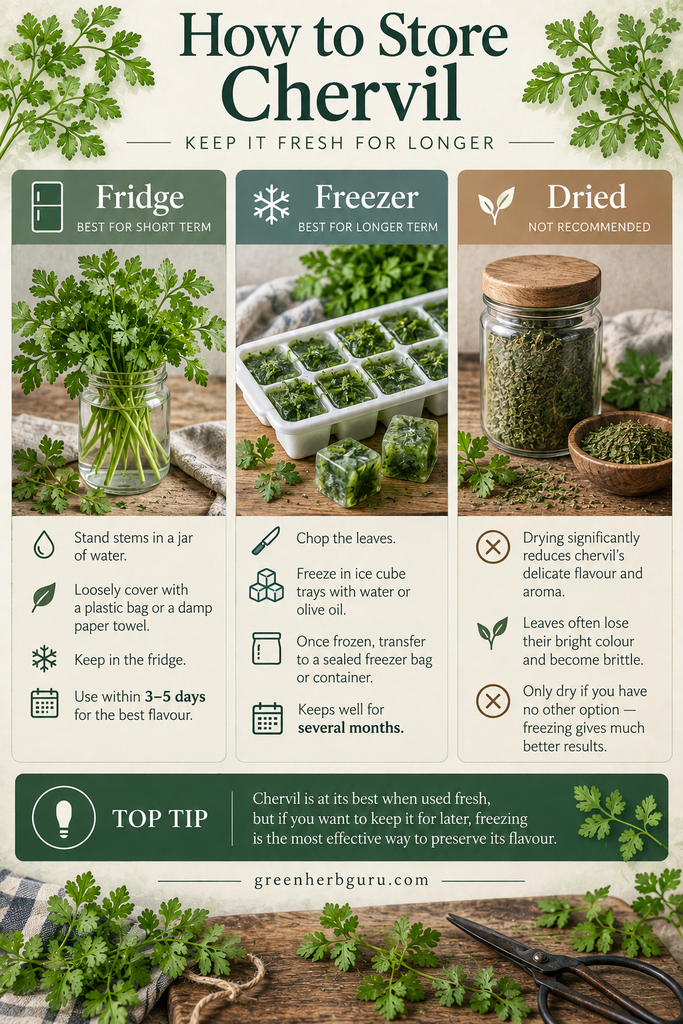
Fresh storage techniques. Treat chervil like a bouquet of flowers: trim the stem ends and stand the bunch upright in a glass of water, then loosely cover the leaves with a plastic bag and refrigerate. Change the water every couple of days. Stored this way, chervil generally stays usable for three to five days.
Freezing options. Freezing is the best way to preserve chervil’s flavor for longer than a few days. Chop the leaves finely and pack them into ice cube trays, topping each compartment with water or olive oil, then freeze and transfer the cubes to a labeled freezer bag. Drop a cube straight into soups, sauces, or pan juices near the end of cooking.
Drying methods. Chervil dries poorly compared with sturdier herbs like thyme or rosemary, and much of its delicate anise aroma is lost in the process. If you want to try it anyway, spread the leaves in a single layer and dry them somewhere dark and well-ventilated rather than in direct heat, then store the dried leaves in an airtight, light-blocking container and use them quickly.
Signs of spoilage. Fresh chervil that’s past its best will wilt, turn slightly slimy, or develop yellowing leaves and a sour smell. If the leaves feel slippery rather than simply soft, it’s time to compost the bunch and start fresh.
Best practices for maintaining flavor. Whichever storage method you choose, handle chervil as little as possible before use. Bruised or crushed leaves lose their essential oils faster than whole, undamaged ones, so wait to chop until you’re ready to cook, and add the fresh or thawed herb at the very last step.
Frequently Asked Questions
Is chervil the same as parsley? No, though they look similar and belong to the same plant family. Chervil has a softer texture and a distinct anise-like flavor, while parsley tastes fresh and slightly peppery without any licorice note.
Can I substitute another herb for chervil? A small amount of fresh tarragon mixed with parsley comes closest to chervil’s flavor profile in a pinch, since it captures both the mild herbal freshness and the anise note. It’s not a perfect match, but it works reasonably well in most recipes.
Is chervil safe during pregnancy? Using chervil in normal culinary amounts, as a garnish or finishing herb, is generally considered fine, but concentrated medicinal use of any Apiaceae-family herb is a different matter. If you’re pregnant and want guidance specific to your situation, check with your doctor or midwife.
How can I tell cultivated chervil from poison hemlock or wild chervil? Cultivated chervil grown from a labeled seed packet in your own garden is safe. Wild, unidentified feathery Apiaceae plants growing along roadsides, ditches, or hedgerows should never be harvested for the table unless you can positively identify them, since poison hemlock and wild chervil share the same lacy leaf shape. Penn State Extension’s comparison guide walks through the visual differences in detail.
Why did my chervil bolt so quickly? Heat and drought stress are the two most common triggers. Once daytime temperatures climb past the mid-70s Fahrenheit, chervil often rushes to flower regardless of how well it’s watered, which is why succession sowing through the cooler months works better than one big spring planting.
Can I grow chervil indoors? Yes, as long as it gets a cool spot with consistent moisture. Avoid a south-facing windowsill in summer, since the heat buildup behind glass can trigger bolting just as fast as an outdoor heatwave.
What does chervil taste like? Most people describe it as a gentler parsley with a whisper of anise or licorice in the background. It’s subtle rather than strong, which is why it’s typically used generously rather than sparingly.
Does chervil dry well? Not particularly. Its essential oils are volatile and fade quickly once the leaves are dried, so freezing chopped chervil in oil or water preserves the flavor far better than air-drying does.
What is fines herbes, and does it always include chervil? Fines herbes is a classic French herb blend of finely chopped parsley, chives, tarragon, and chervil, used to finish delicate dishes like omelettes and poached fish. Chervil is considered one of the four essential herbs in the traditional version, though some modern recipes simplify it to just parsley and chives.
Is wild chervil the same plant as the herb I cook with? No. Wild chervil, also called cow parsley (Anthriscus sylvestris), is a different species from culinary chervil (Anthriscus cerefolium) and isn’t grown for cooking. It also closely resembles poison hemlock, which is why it’s best left alone unless you’re confident in plant identification.
How much chervil should I use in a recipe? Because the flavor is subtle, most recipes call for one to two tablespoons of fresh chopped chervil per serving in a garnish or finishing role, similar to how you’d use fresh parsley. Start on the lighter side and taste as you go, since it’s easy to add more but hard to tone down an overly herbal dish.
Why is my chervil leggy and pale instead of bushy? Leggy, pale growth usually points to insufficient light or crowding. Thin seedlings promptly once they’re a couple of inches tall, and make sure the plant is getting at least a few hours of direct or bright indirect light each day, especially if it’s growing indoors.
Continue Your Journey
Chervil is at its best alongside the other herbs of French cooking, so if this guide has you thinking about a fuller fines herbes rotation, these are natural next stops:
- Complete guide to tarragon
- Full chives guide
- Ultimate parsley guide
- Guide to herb and spice blends
- Italian Herbs guide, for a different culinary tradition entirely
If you’re planning out a wider herb garden, our guide to planning your perfect herb garden and early spring herbs guide will help you fit chervil’s cool-season habits into the bigger picture. You can browse every write-up so far in our full herb profiles collection.
Want more herb-by-herb guides like this one delivered straight to your inbox? Sign up for the Green Herb Guru newsletter for seasonal growing tips, recipe ideas, and the occasional garden mishap story.