Sage: A Complete Guide to Growing, Cooking, and Using This Garden Classic
Sage has a habit of getting overlooked. It shows up once a year in the Thanksgiving stuffing, gets a nod in a butter sauce, and then spends the rest of the year forgotten in the spice rack.
That is a shame, because few herbs offer as much versatility for the effort. A single sage plant can season a year of roasted vegetables, flavor a soothing tea, and still have enough left over for a fragrant addition to homemade soaps.
This guide covers everything you need to grow sage successfully, understand what the research actually says about its health properties, and put it to work in your kitchen well beyond November. Whether you are starting your first pot on a sunny windowsill or looking to get more out of an established garden plant, there is a lot more to sage than its reputation as a once-a-year seasoning suggests.
As an Amazon Associate I earn from qualifying purchases and sometimes recommend products from other sellers at no extra cost to you. For more details see my disclosure policy and privacy policy.
Forged & Grown — The Shop
Handpicked products chosen to fit the way we cook, grow, and create. Nothing generic — every item earns its place.
Visit the Shop


What Is Sage?
Sage refers most commonly to Salvia officinalis, a perennial evergreen shrub native to the Mediterranean coast, particularly the regions bordering Italy and the Balkans. It belongs to the mint family, Lamiaceae, which explains its square stems and the way it shares growing preferences with relatives like rosemary, thyme, and oregano. The genus name Salvia comes from the Latin salvere, meaning “to save” or “to heal,” a nod to the plant’s long medicinal reputation stretching back to ancient Greek and Roman herbalists.
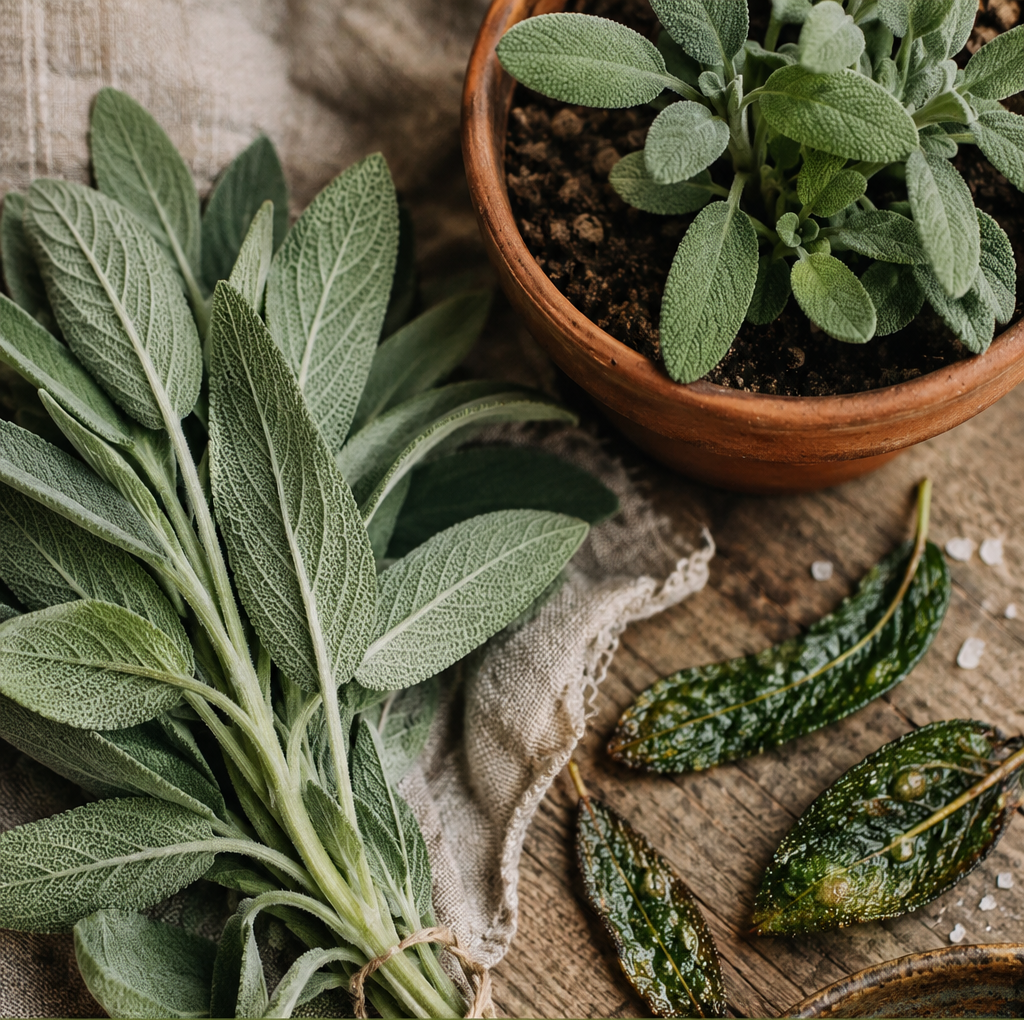
The soft, silvery-green, slightly fuzzy leaves are the plant’s signature feature, growing on woody stems that become more pronounced as the plant matures. In late spring or early summer, mature sage plants send up spikes of small blue-purple flowers that pollinators find irresistible. Left to its own devices, a healthy sage plant will happily live for four to five years or longer, gradually developing the gnarled, woody base characteristic of Mediterranean shrubs.
Sage has traveled widely since its Mediterranean origins. Medieval European monasteries grew it in physic gardens for its reputed healing properties, and the phrase “why should a man die while sage grows in his garden” appears in various forms throughout medieval herbal texts.
In Chinese and other Asian herbal traditions, related salvia species have their own long history of use, most notably Salvia miltiorrhiza, or Chinese sage, which is a completely different plant from the culinary sage covered in this guide. Today, sage is cultivated commercially throughout the Mediterranean, the United States, and increasingly in home gardens everywhere with a sunny spot to spare.
Common Sage Varieties
Not all sage is created equal, and the variety you choose will shape both the flavor in your kitchen and the look of your garden bed.
Common or Garden Sage (Salvia officinalis) is the standard culinary variety and the one most home cooks picture when they think of sage. It has broad, grey-green leaves with a soft, velvety texture and the classic earthy, slightly peppery, faintly piney flavor that defines sage in Western cooking. If you only grow one variety, this is the one to start with.
Purple Sage (Salvia officinalis ‘Purpurascens’) is a striking ornamental variety with young leaves that emerge deep purple before mellowing to a purple-green as they mature. It has a flavor very close to common sage, making it a good pick if you want a plant that earns its place in a flower bed as much as an herb garden.
Golden Sage (Salvia officinalis ‘Icterina’) brings variegated yellow-green leaves to the herb garden and a slightly milder flavor than the standard variety. It tends to be a bit less cold-hardy than common sage, so gardeners in cooler zones may want to treat it as an annual or bring it indoors for winter.
Tricolor Sage (Salvia officinalis ‘Tricolor’) layers cream, purple, and green on the same leaf, making it one of the most visually striking varieties. Like golden sage, it is slightly less hardy and slightly milder in flavor, and it is often grown as much for looks as for the kitchen.
Berggarten Sage (Salvia officinalis ‘Berggarten’) has larger, rounder leaves than common sage and rarely flowers, which means the plant puts more energy into leaf production. Many cooks find it has a slightly more concentrated flavor, making it a favorite for drying.
Pineapple Sage (Salvia elegans) is a different species entirely, grown more for its bright red flowers and genuinely pineapple-scented leaves than for savory cooking. It works beautifully in fruit salads, desserts, and herbal teas, but it will not substitute for common sage in a stuffing or brown butter sauce.
It is also worth clearing up a common point of confusion: White Sage (Salvia apiana) is a distinct species native to the southwestern United States, botanically related but different from culinary sage. It holds deep cultural and ceremonial significance for many Indigenous communities and has faced serious overharvesting pressure from commercial wild-harvesting in recent years. If white sage interests you for any reason, look for material from growers who cultivate it sustainably rather than wild-harvested sources, and be mindful that its traditional uses carry cultural weight beyond a simple ingredient swap.
Health Benefits of Sage
Sage has one of the longer medicinal reputations of any culinary herb, and modern research has actually validated some of that traditional use, though with real caveats worth understanding before you reach for a supplement.
The leaves are rich in antioxidant compounds, particularly rosmarinic acid and carnosic acid, the same family of polyphenols found in rosemary and other herbs studied for reducing inflammation. These compounds help protect cells from oxidative stress and are part of why Mediterranean herbs as a category have drawn so much research interest in recent years.
Cognitive function is where sage has attracted some of the most interesting clinical attention. Several small human trials have looked at sage extract and essential oil for memory and attention, with some promising short-term results, particularly in older adults. The research is genuinely interesting, but it remains preliminary, based on small sample sizes, and should not be read as sage being a substitute for any prescribed cognitive support or treatment.
Traditional use of sage for menopausal hot flashes and night sweats has some supporting research behind it as well, with a handful of clinical studies reporting reduced frequency and severity of symptoms in participants taking standardized sage extracts. As with the cognitive research, this is promising rather than conclusive, and anyone considering it for menopause symptoms should talk with a healthcare provider first, especially if already taking hormone therapy or other medications.
Sage’s astringent and antimicrobial properties are behind its long folk history as a gargle for sore throats and a rinse for mouth and gum health, and this is one of the gentler, lower-risk traditional uses. A simple strong sage tea, cooled and used as a gargle, is a mild and generally well-tolerated approach that many people already use at home.
A safety note that deserves real attention: sage, particularly its essential oil, contains a compound called thujone, which is neurotoxic in large amounts and has been linked to seizures in cases of excessive or concentrated use. Culinary amounts of fresh or dried sage in cooking are considered safe for most healthy adults, but a few groups should take extra care.
- Sage essential oil should never be taken internally
- Anyone with a seizure disorder should be cautious with concentrated sage preparations of any kind
- Sage is generally advised against in medicinal amounts during pregnancy and breastfeeding, since traditional use includes reducing milk supply, and high-dose sage has been linked to uterine stimulation
- Anyone pregnant, nursing, managing epilepsy, or taking sedative or anticonvulsant medications should talk with their doctor before using sage beyond normal cooking amounts
As always, check with a healthcare provider before starting any new supplement.
How to Grow Sage
Sage is one of the more forgiving Mediterranean herbs to grow, and once established, it tends to reward a bit of neglect more than heavy attention.
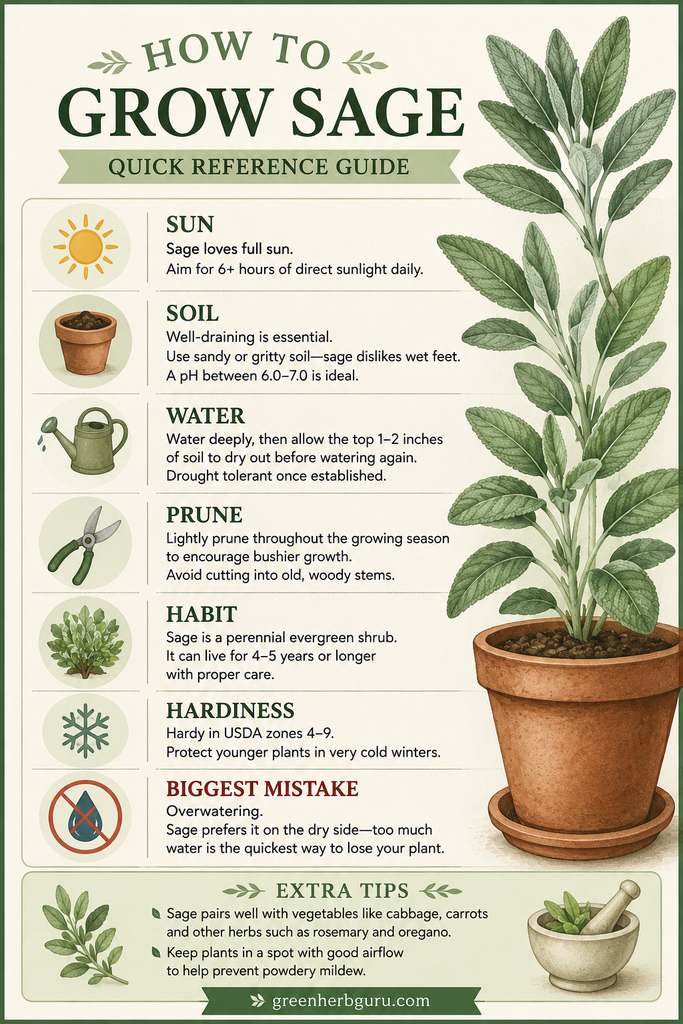
Sunlight: Sage wants full sun, ideally six or more hours of direct light a day. In particularly hot summer climates, a little afternoon shade can help prevent leaf scorch, but in most regions, more sun means a bushier, more flavorful plant.
Soil: Well-drained soil is non-negotiable for sage. This is a plant that evolved on rocky Mediterranean hillsides, and soggy roots are the fastest way to kill it.
A sandy or gritty loam works best, and if your native soil holds water, raised beds or containers with drainage holes will serve sage far better than a heavy clay bed. Amending with a bit of compost at planting time is helpful, but avoid rich, constantly fertilized soil, which tends to produce leggy growth with a weaker flavor.
Watering: Once established, sage is genuinely drought-tolerant and prefers to dry out between waterings. Overwatering is the most common way home gardeners lose a sage plant, usually through root rot. Water deeply but infrequently, and let the top inch or two of soil dry out completely before watering again.
Growing season and hardiness: Common sage is a hardy perennial in USDA zones 4 through 8, meaning it can survive winter outdoors in most temperate climates with minimal protection, particularly once established for a season or two. In colder zones, a layer of mulch around the base can help protect the roots through winter. Golden and tricolor varieties are somewhat less cold-hardy and may need extra winter protection or container growing in colder regions.
Starting sage: Sage can be started from seed, but germination is slow and somewhat unreliable, so many gardeners prefer starting with a nursery seedling or propagating from cuttings or division of an established plant. Softwood cuttings taken in late spring root readily in a well-draining potting mix, and dividing an established clump every few years both refreshes the plant and gives you new plants for free.
Pruning: Regular light pruning throughout the growing season keeps sage bushy rather than leggy and encourages fresh new growth, which has the best flavor. In early spring, a harder prune back to just above the woody base helps rejuvenate an older plant, though avoid cutting into completely bare wood, since sage does not always regrow reliably from old wood.
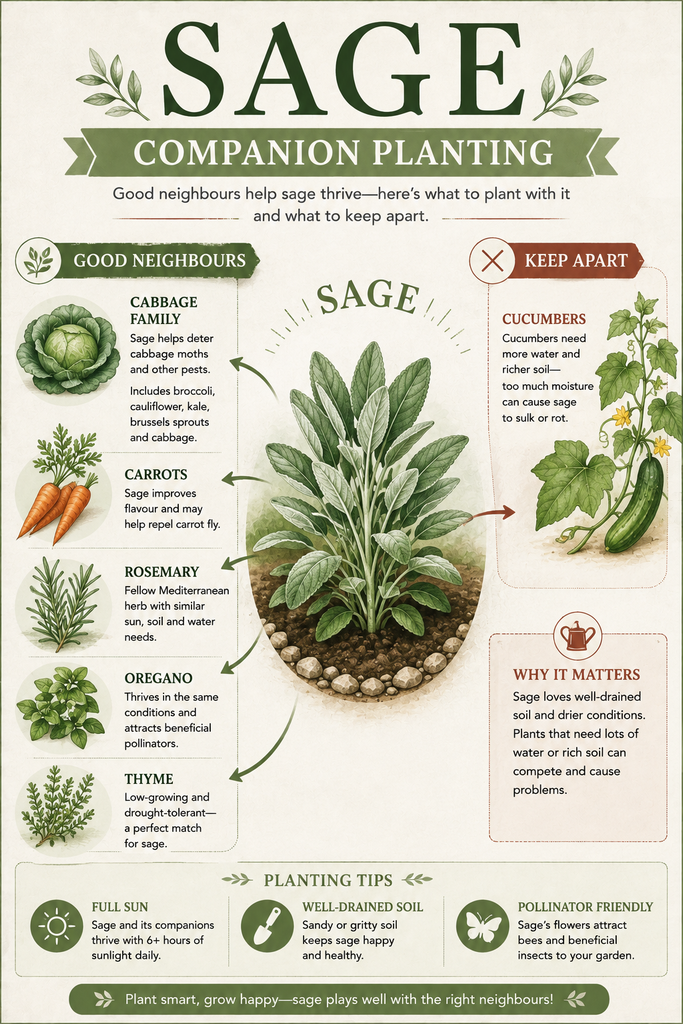
Companion planting: Sage grows comfortably alongside other Mediterranean herbs like rosemary and oregano that share its preference for sun and dry soil. In the vegetable bed, it has a mix of traditional friends and one plant to keep it away from.
- Plant near cabbage family crops, where it is traditionally used to help deter cabbage moths
- Plant near carrots, where it is traditionally used to help repel carrot flies
- Avoid planting too close to cucumbers, which prefer more consistently moist soil and tend to struggle in the same dry conditions sage thrives in
Indoor growing: Sage can be grown indoors year-round with a south-facing window or supplemental grow light, though it tends to be leggier and less productive indoors than in full garden sun. A terra cotta pot, which allows excess moisture to evaporate through the porous walls, helps replicate the well-drained conditions sage prefers. If you are just planning out a windowsill or garden herb collection, sage combines well with other sun-loving herbs that share similar watering needs.
Common problems: Powdery mildew can appear on sage in humid conditions with poor air circulation; thinning the plant and watering at the base rather than overhead helps prevent it. Root rot from overwatering is the most common cause of a struggling or dying sage plant. Leggy, sparse growth usually signals either too little sun or soil that is too rich, both of which are simple to correct.
Basic Usage Guide
Sage has a distinctive flavor profile: earthy and slightly bitter, with peppery, piney, and faintly musky notes that become more pronounced when the leaves are cooked in fat. This is part of why sage pairs so naturally with rich, fatty foods. It cuts through richness while adding depth, which is exactly why it shows up so often with pork, poultry, and butter-based sauces.
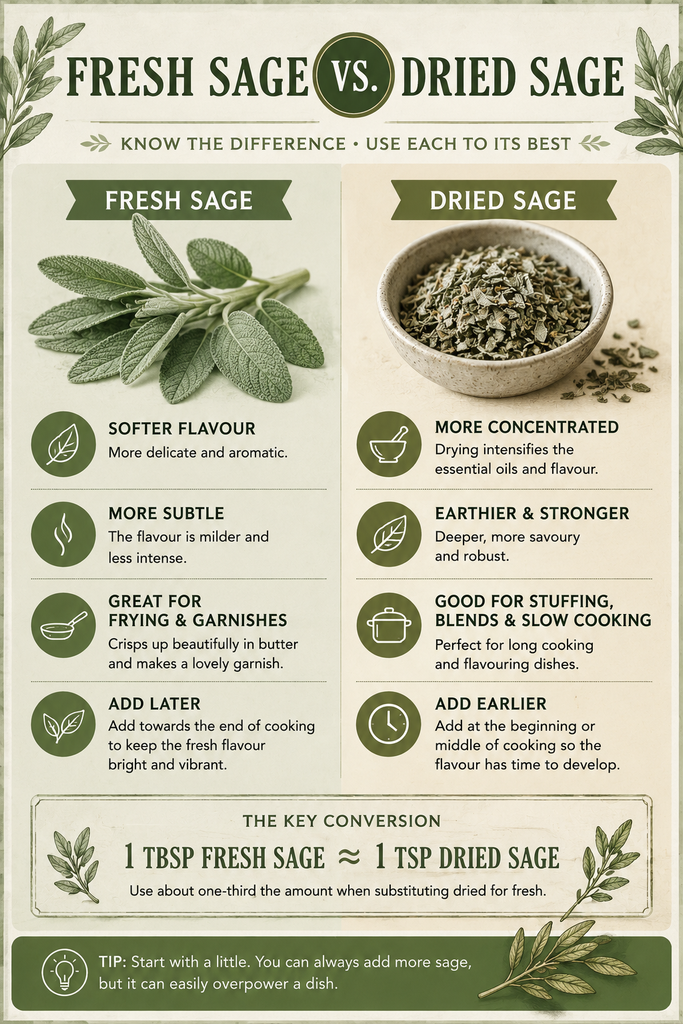
Fresh sage has a softer, more subtle version of this flavor compared to dried, which concentrates and intensifies as the leaves lose moisture. As a general substitution rule, one tablespoon of fresh chopped sage is roughly equivalent to one teaspoon of dried sage, similar to the ratios covered in our broader guide to spice uses and substitutions. Because dried sage has such a concentrated, sometimes musty flavor if it has been sitting too long, it is worth checking freshness before using an older jar in an important dish.
Both fresh whole leaves and dried, crumbled leaves are commonly used in cooking, and the flower spikes are technically edible too, with a milder version of the leaf flavor that works nicely scattered over a salad or used as a garnish.
Sage’s most iconic culinary application is browned in butter, where the heat mellows its bitterness and crisps the leaves into a fragrant, nutty garnish perfect over pasta, gnocchi, or roasted squash. It is also a backbone flavor in poultry seasoning and traditional stuffing, works beautifully with pork in dishes like sage and onion sausages, and pairs well with beans, winter squash, and root vegetables. Sage is one of the classic herbs in Herbes de Provence blends alongside thyme, rosemary, and marjoram, and it shows up in many homemade Italian seasoning mixes and poultry seasoning blends for exactly the reason its flavor was built for.
For the best flavor, add sage relatively early in longer-cooking dishes to let its flavor mellow and integrate, but add it toward the end of quick sautés if you want its sharper, more pronounced character to come through.
Recipe Ideas
Brown Butter Sage Pasta: Melt butter in a skillet until it turns golden and smells nutty, then add fresh whole sage leaves and let them crisp for about a minute. Toss with any pasta shape, a generous amount of parmesan, and a splash of the starchy pasta water to bring the sauce together. This is one of the simplest ways to understand why sage and butter were made for each other.
Crispy Fried Sage Leaves: Fry whole fresh sage leaves briefly in a shallow layer of olive oil or butter until they turn a shade darker and become crisp, then drain on paper towels and sprinkle with a little salt. These make an elegant garnish for soups, roasted vegetables, or a simple risotto, and they keep their crunch for a few hours at room temperature.
Sage and Butternut Squash Risotto: Stir chopped fresh sage into a classic risotto along with roasted, cubed butternut squash, finishing with parmesan and a few crispy fried sage leaves on top. The earthy sweetness of the squash and the peppery bite of sage balance each other beautifully in this cool-weather comfort dish.
Herb-Roasted Chicken with Sage: Tuck fresh sage leaves along with butter under the skin of a whole chicken before roasting, then add a few more sprigs to the cavity with lemon and garlic. The sage flavor infuses the meat as it cooks and gives the pan drippings a wonderful base for a simple gravy.
Soothing Sage Tea: Steep two to three fresh sage leaves, or one teaspoon dried, in hot water for five to seven minutes, then strain. This traditional preparation is often used as a gentle gargle for a scratchy throat when cooled, or sipped warm with a little honey and lemon. Keep this to culinary amounts and occasional use rather than a daily large-quantity habit, particularly if you are pregnant, nursing, or managing a seizure disorder.
Storage Methods
Fresh storage: Store fresh sage sprigs like flowers, standing upright in a small glass of water in the refrigerator, loosely covered with a plastic bag. Changed water every few days, this method can keep sage fresh for up to two weeks, noticeably longer than simply wrapping it in a paper towel and bagging it in the crisper drawer.
Freezing: Sage freezes well and holds much of its flavor. Chop fresh leaves and pack them into ice cube trays topped with olive oil or melted butter, then pop the frozen cubes into a freezer bag once solid. These are ready to drop straight into a sauté or roasting pan whenever a recipe calls for sage, no thawing required.
Drying: Drying is the traditional way to preserve a sage harvest, and hardy Mediterranean herbs like sage handle the process particularly well. Bundle several stems together with twine and hang them upside down in a warm, dry, well-ventilated spot out of direct sunlight, the same approach described in our guide to early spring herb care for other hardy perennials.
Once fully dry and crumbly, usually one to two weeks depending on humidity, strip the leaves from the stems and store whole rather than crushed, since crushing releases the essential oils that carry the flavor and speeds up its decline.
Storage containers: Keep dried sage in an airtight glass jar away from heat, light, and moisture, ideally in a cabinet rather than a spot near the stove. Stored this way, dried sage retains good flavor for around a year, though it will not spoil in a harmful sense after that, just gradually lose potency.
Signs it is time to replace: Dried sage that has lost most of its aroma when crushed between your fingers, or that has turned a dull grey-brown rather than a soft grey-green, is past its prime for flavor even if it is not unsafe to use. Fresh sage that has gone slimy, developed dark spots, or smells off should be discarded.
Frequently Asked Questions
Is sage safe to eat every day? Culinary amounts used in normal cooking are considered safe for most healthy adults for regular use. Concentrated forms like sage supplements or essential oil are a different matter and should be used only under professional guidance, particularly for extended periods.
Can I grow sage indoors year-round? Yes, though it typically grows less vigorously than it would outdoors in full sun. A south-facing window and a well-draining pot are the two most important factors for success.
Why is my sage plant getting leggy and sparse? This usually points to either insufficient sunlight or soil that is too rich in nutrients. Moving the plant to a sunnier spot and cutting back on fertilizer usually helps, along with regular light pruning to encourage bushier growth.
Is white sage the same as the sage I cook with? No. White sage (Salvia apiana) is a different species with deep cultural and ceremonial significance, distinct from the Salvia officinalis used in cooking. They are related but not interchangeable, either in flavor or in appropriate use.
Can I substitute dried sage for fresh, or the reverse? Yes, using a ratio of about one teaspoon dried sage for every tablespoon of chopped fresh sage, since dried herbs are more concentrated. Add dried sage earlier in cooking to give it time to rehydrate and release its flavor.
Is sage safe during pregnancy? Medicinal or concentrated amounts of sage are generally advised against during pregnancy, and sage is traditionally associated with reducing milk supply during breastfeeding. Normal culinary use in cooked dishes is typically considered low risk, but anyone pregnant or nursing should check with their healthcare provider before using sage beyond occasional cooking.
What can I substitute for sage in a recipe? Rosemary or thyme can approximate some of sage’s earthy, piney character in a pinch, though neither fully replicates its distinctive flavor. Start with about half the amount called for and adjust to taste, since both substitutes have their own strong personalities.
Does sage repel pests in the garden? Sage has a traditional reputation for deterring cabbage moths and carrot flies when planted near those crops, likely due to its strong aromatic oils. It is a helpful companion plant, though not a guaranteed pest solution on its own.
How do I know when to harvest sage? Sage can be harvested lightly throughout its first growing season and more heavily once established, generally after the plant is at least six inches tall and has a few sets of full leaves. Harvest in the morning after dew has dried but before the heat of the day, when essential oil content and flavor are at their best.
Can dogs or cats be around sage safely? Culinary sage in small amounts is generally considered non-toxic to most pets, though concentrated forms like essential oils can be a different story and should be kept away from animals. As with any new plant around pets, it is worth confirming with a veterinarian familiar with the specific plant and your pet’s health history.
Why does my dried sage taste musty or dull? This usually means it has been stored too long or was exposed to heat, light, or moisture during storage. Dried sage is best used within about a year and stored in an airtight container away from the stove and direct sunlight.
Can I grow sage from seed? Yes, though germination tends to be slow and somewhat inconsistent compared to other herbs. Many home gardeners find more reliable results starting from a nursery seedling or propagating a cutting from an established plant.
Conclusion
Sage deserves a bigger role in the kitchen than its once-a-year reputation suggests. It is a genuinely low-maintenance perennial once it is settled into well-drained soil and plenty of sun, it dries beautifully for year-round use, and its earthy, peppery flavor has a way of making rich, simple dishes feel considered rather than plain. Between the classic brown butter sauce, a fragrant roast chicken, and a soothing cup of tea when a sore throat strikes, there is a lot of ground for one modest, silvery-leaved plant to cover.
Whether you are adding your first sage plant to a windowsill herb collection or finally putting an established garden plant to proper use, treating sage as a everyday herb rather than a holiday afterthought is one of the easiest upgrades you can make to your home cooking.
Continue Your Journey
- Rosemary: A Versatile and Aromatic Herb — another hardy Mediterranean perennial that pairs beautifully with sage in the garden and the kitchen
- The Ultimate Guide to Parsley — round out your herb bed with this versatile, easy-growing companion
- Chives: A Comprehensive Guide — a low-maintenance perennial herb that thrives in similar sunny conditions
- Your Complete Beginner’s Apothecary Guide — learn how sage and other kitchen herbs fit into a simple home wellness routine
- Planning Your Perfect Herb Garden — figure out where sage and its Mediterranean neighbors fit in your growing space
Want more herb-growing tips and seasonal recipes delivered straight to your inbox? Sign up for the Green Herb Guru newsletter and never miss a new guide.