
What Is Chimichurri? The Herb Sauce With a Disputed Past (And Endless Variations)
If you’ve ever stood over a hot grill wondering what to do with that big bunch of parsley slowly wilting in your kitchen, chimichurri is your answer. This punchy, oil-based herb sauce from Argentina and Uruguay is one of the most practical things you can make with a glut of fresh garden herbs — and once you understand how it works, you’ll never be short of ideas for using it.
Most people know chimichurri as a steak sauce. But that’s a bit like calling pesto a pasta topping and calling it a day. The real story of chimichurri — where it came from, why nobody can agree on what it’s called, and just how many ways you can make it — is far more interesting than its reputation suggests.
As an Amazon Associate I earn from qualifying purchases and sometimes recommend products from other sellers at no extra cost to you. For more details see my disclosure policy and privacy policy.
A Name Nobody Can Agree On
Before we get into the sauce itself, it’s worth spending a moment on the name, because it’s one of the best origin mysteries in food. No one has definitively settled the argument, and there are at least five credible theories competing for the title.
Forged & Grown — The Shop
Handpicked products chosen to fit the way we cook, grow, and create. Nothing generic — every item earns its place.
Visit the Shop


The most romantic version involves a 19th-century Irishman named Jimmy McCurry who rode with Argentine independence fighters and mixed up a sauce from local ingredients to recreate the flavours of the Worcestershire sauce he missed from home. Over time, “Jimmy McCurry” was apparently mangled by Argentine pronunciation until it became “chimichurri.” It’s a good story, though historians are divided on how much of it is true.
The most linguistically grounded theory points to Basque settlers, who brought herb-based sauces from Spain. The original word was likely tximitxurri — a Basque term loosely meaning “messy mixture” of oil, herbs, and spices — which gradually softened into the word we know today.
There’s also a British invasion theory, where captured soldiers during the failed British assault on the Río de la Plata in the early 1800s supposedly asked for condiments by saying “give me the curry,” which locals rendered phonetically.
And Argentine historian Daniel Balmaceda has argued the word comes from Quechua, the language of the Andean Indigenous peoples, where it was a general term for strong meat-preserving sauces.
The most widely accepted view is that chimichurri is a hybrid — European pantry staples like garlic, oil, and dried herbs folded into pre-existing Indigenous herb sauce traditions, shaped and named by the waves of Spanish, Basque, and other immigrants who settled the Río de la Plata region. The truth is probably a little bit of all of it.
What Chimichurri Actually Is
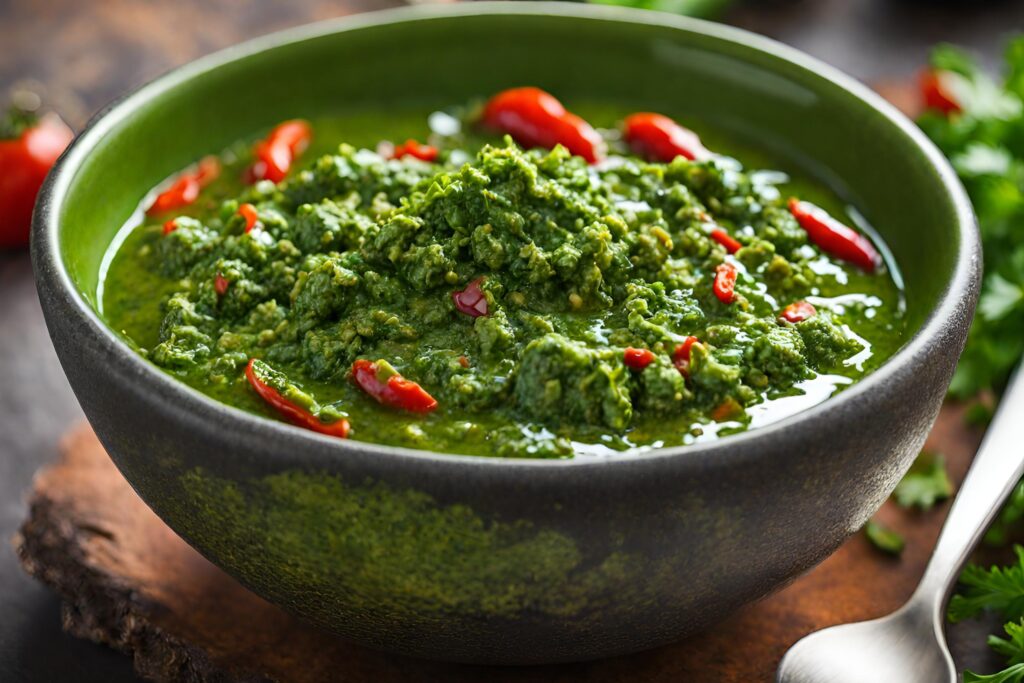
At its core, chimichurri is an uncooked herb sauce made from fresh herbs, garlic, oil, and vinegar. That’s it. There is no heat involved, which is one of the reasons it’s so good — the raw, bright flavours of the herbs are completely preserved, and the sauce takes about ten minutes to put together.
The classic green version (chimichurri verde) uses flat-leaf parsley as its base, with garlic, dried or fresh oregano, red wine vinegar, and oil. One thing that surprises a lot of people is that traditional Argentine recipes often used sunflower oil rather than olive oil — olive oil wasn’t widely available in Argentina historically, and many purists argue sunflower oil is actually more authentic. The sauce is traditionally hand-chopped for a rustic, chunky texture, though food processors are widely used today.
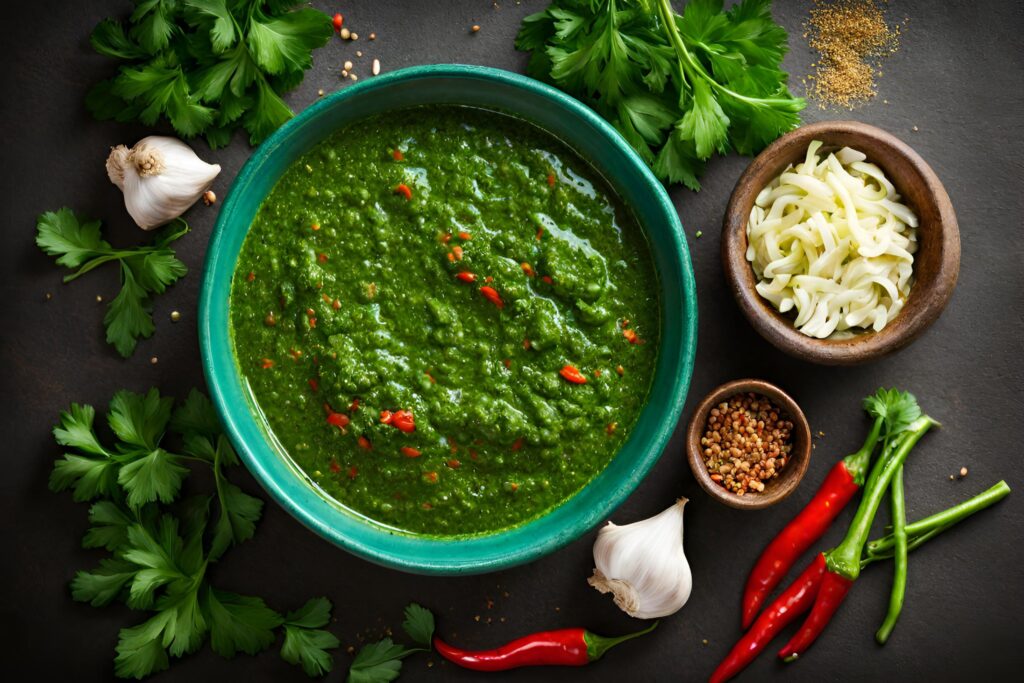
The red version, chimichurri rojo, is a different beast entirely. It adds roasted red peppers, smoked paprika, and fresh red chillies, making it smokier and bolder. It works particularly well with chicken, fish, and roasted vegetables, where the smoky depth complements rather than drowns the main ingredient.
The Herb Garden Angle: Why This Sauce Is Perfect for Growers
Here’s the thing that makes chimichurri especially relevant if you grow your own herbs: it is built for using up a glut. One Argentine chef put it well — “there are as many kinds of chimichurri as there are inhabitants in the Republic of Argentina.” The base formula is simple enough that almost any fresh herb you have growing can become the star.
🌿 Which Herb Should You Use for Chimichurri?
Find your best match based on what’s growing in your garden
Parsley is the classic starting point, and if you’ve been growing it for a while you’ll know it can get ahead of you fast. Chimichurri is arguably the best single-use for a big flat-leaf parsley harvest. If you’re growing mint — whether that’s spearmint, peppermint, or one of the other varieties covered in our guide to the mint family — it makes a beautiful chimichurri with lamb, with the fresh, almost floral flavour cutting through the richness perfectly.
Basil works too, lending a sweeter, more Italian-leaning quality to the sauce. Cilantro (coriander) is probably the most common global substitution for parsley, making a brighter, more citrus-forward version that pairs beautifully with fish tacos and grain bowls.
If you’ve been growing your own cilantro and find it bolts before you can use it all, chimichurri is an excellent rescue plan. Dill is an unusual but genuinely good option, especially paired with parsley and a little mint. And for the experimenters: marjoram, arugula, and even spinach have all found their way into garden herb chimichurris.
One important note on herb ratios: fresh oregano is quite pungent, so most recipes cap it at around 30% of the total herb mix to stop it dominating everything else.
The Variation Map: More Than Just Herb Swaps
Herbs are only one dimension of the chimichurri variation space. Understanding the others turns the sauce from a recipe into a method.
🍳 Build Your Own Chimichurri
Mix and match across the four dimensions — green = classic choice
Acid
Red wine vinegar is traditional, but it’s far from your only option. Lime juice shifts the sauce toward a brighter, Latin-fusion character and pairs brilliantly with fish and chicken. Lemon juice is widely used, especially in European-influenced versions. Apple cider vinegar brings a milder, slightly fruity note. Some chefs use high-quality cabernet vinegar for a more layered, wine-forward tang, and rice wine vinegar turns up in fusion versions where a subtle Asian umami note is welcome.
Umami Additions
This might sound surprising, but several chefs have started adding small amounts of umami ingredients to chimichurri. A few drops of fish sauce or Italian colatura add a subtle depth without tasting fishy. Capers and a splash of their brine introduce saltiness and an extra acidic punch. Smoked paprika is a popular bridge between the green and red versions, adding smokiness without changing the colour dramatically.
Texture
The traditional method is hand-chopping, which gives a rustic, chunky sauce where the individual herbs still have some presence. Blending creates a smoother, more emulsified consistency, closer to a vinaigrette. For something genuinely special, try smoked chimichurri — made by placing a hot coal directly into the finished sauce or infusing it with smoked butter. The depth of flavour is extraordinary. For a creamy, dip-like version, blending in half an avocado and reducing the oil gives you something close to a chimichurri-guacamole hybrid that works brilliantly on flatbreads and tacos.
Chimichurri Butter
One of the most versatile preparations is chimichurri butter — the herbs and flavourings blended into softened butter to create a compound butter. It melts beautifully over steaks, roasted vegetables, and corn. If you’ve made our crispy salmon with herb butter, you’ll already know how transformative an herbed butter can be — chimichurri butter takes that principle and runs with it.
Beyond the Grill: Uses You Haven’t Thought Of
Chimichurri is almost exclusively sold to people as a grilled meat sauce. Which is a shame, because its uses go much further.
- Salad dressing — thin with extra vinegar and spoon over grain bowls, quinoa, or roasted vegetable salads
- Marinade — particularly effective for chicken and fish, where the acid tenderises and the herbs infuse before cooking
- Eggs — spooned over fried or hard-boiled eggs, it’s one of those combinations that sounds odd and tastes brilliant
- Bread dip — served as a table condiment with crusty bread, it holds its own alongside olive oil
- Pizza drizzle — applied post-bake over a white pizza or flatbread
- Burger sauce — works as a condiment layer in both meat and plant-based burgers
- Grain bowls — spooned over farro, quinoa, or rice with roasted vegetables, it ties everything together
If you’re already exploring herb-based sauces and condiments, take a look at our homemade pesto guide — pesto and chimichurri occupy similar territory on the “fresh herb sauce” spectrum, and understanding both gives you a genuinely useful toolkit.
The Nutritional Side
One of chimichurri’s genuinely underrated qualities is how good it is for you, especially compared to the usual condiment alternatives. Mayo, shop-bought salad dressings, and ketchup don’t come close on the nutritional front.
Parsley is rich in vitamin K, vitamin C, iron, and antioxidants. Garlic contains allicin, a compound that has been associated with cardiovascular support and anti-inflammatory effects in research. Oregano has demonstrated antimicrobial properties in lab studies. Olive oil provides monounsaturated fats and polyphenols. And because chimichurri is never cooked, none of those heat-sensitive nutrients are lost in the process.
Per two tablespoons, chimichurri comes in at around 80 calories, virtually no sugar, and about 2 grams of carbohydrates — making it one of the more sensible condiment choices you can make. If you’ve been reading about the broader world of herbs that help reduce inflammation, chimichurri is a practical, daily way to get more of those herbs into your diet without it feeling like effort.
How to Make Classic Chimichurri Verde
This is the base recipe — from here, you can swap herbs, adjust the acid, and make it your own.
Makes: approximately 250ml (1 cup) Time: 10 minutes
Ingredients:
- 1 large bunch flat-leaf parsley (about 30g leaves, tightly packed)
- 3–4 garlic cloves, peeled
- 1 tsp dried oregano (or 1 tbsp fresh, roughly chopped)
- 3 tbsp red wine vinegar
- 6 tbsp olive oil (or sunflower oil for a more traditional version)
- ½ tsp dried chilli flakes, or to taste
- ½ tsp salt
- Black pepper to taste
Method:
Finely chop the parsley and garlic by hand for a traditional, rustic texture — or pulse briefly in a food processor if you prefer something smoother. Combine with the oregano, chilli flakes, salt, and pepper in a bowl. Stir in the vinegar first, then add the oil gradually and mix well. Taste and adjust the seasoning, acid, and heat to your preference. Leave to rest for at least 15 minutes before serving so the flavours can come together.
The sauce keeps well in the fridge for up to a week in a sealed jar. The oil may solidify slightly when cold — just bring it back to room temperature before using.
Variations to Try
Mint chimichurri: Replace half the parsley with fresh mint leaves. Excellent with lamb chops or spooned over halloumi.
Cilantro chimichurri: Replace the parsley with fresh coriander and use lime juice instead of red wine vinegar. Great with fish, tacos, and grain bowls.
Creamy chimichurri: Blend the finished sauce with half a ripe avocado and reduce the oil by half. Use as a dip or sauce for flatbreads.
Chimichurri butter: Beat 2–3 tablespoons of the finished herb mixture into 100g softened unsalted butter. Roll in cling film, chill, and slice onto hot steaks, corn, or roasted vegetables.
Every Culture Has a Chimichurri 🌍
How chimichurri compares to the world’s other classic green herb sauces
← scroll to see full table →
| Sauce | Herb Base | Acid | Oil | Texture | Best Uses |
|---|---|---|---|---|---|
|
Chimichurri
Argentina / Uruguay
|
Flat-leaf parsley, oregano | Red wine vinegar | Olive or sunflower oil | Chunky, rustic, uncooked | Grilled meat, eggs, grain bowls, marinade |
|
Pesto Genovese
Italy (Liguria)
|
Basil | None | Olive oil | Smooth, emulsified | Pasta, flatbreads, sandwiches, dressings |
|
Gremolata
Italy (Milan)
|
Parsley | Lemon zest (not juice) | None | Dry, finely chopped — a garnish | Scattered over osso buco, risotto, braises |
|
Chermoula
Morocco / North Africa
|
Parsley + cilantro | Lemon juice | Olive oil | Paste-like, deeply spiced | Fish, chicken marinades, dipping sauce |
|
Zhoug (Zhug)
Yemen / Middle East
|
Cilantro + parsley | Lemon juice | Olive oil | Smooth to chunky, fiery hot | Falafel, flatbreads, eggs, mezze |
|
Persillade
France
|
Parsley | None (sometimes lemon) | Butter or olive oil | Fine, crumb-like — added at end of cooking | Roasted garlic dishes, lamb, snails |
Storing Chimichurri
Fresh chimichurri keeps in the fridge for up to a week in a sealed jar or airtight container. The flavour actually develops and deepens over the first 24–48 hours as the garlic and herbs infuse into the oil — many people prefer it on day two.
For longer storage, chimichurri freezes well. Pour into an ice cube tray, freeze solid, then transfer the cubes to a bag. You’ll have individual portions ready to drop into a pan or thaw quickly for a weeknight dinner. This is especially useful if you’re preserving a bigger herb harvest — chimichurri is one of the most flavour-efficient ways to lock in the best of what you’ve grown.
The one thing to watch is oxidation. Parsley-based sauces will start to lose their bright green colour after a few days in the fridge, especially if the surface is exposed to air. Keep the jar full and topped with a thin layer of oil to slow this down.
Frequently Asked Questions
Can I use curly parsley instead of flat-leaf? You can, but flat-leaf parsley has a more robust, less bitter flavour that works better here. Curly parsley will work in a pinch, but the result will be slightly milder and less aromatic.
Is chimichurri gluten-free and vegan? The classic green version is naturally both gluten-free and vegan, making it a useful sauce to have in your repertoire. Always check any store-bought versions, as some may contain additives.
What’s the best way to serve chimichurri? At room temperature, ideally. Cold chimichurri straight from the fridge will have muted flavours — let it sit out for 20 minutes before serving.
Can I use lemon juice instead of red wine vinegar? Yes, and it works particularly well in cilantro-based versions. The flavour will be slightly brighter and less tangy than the red wine vinegar version.
How long should I leave chimichurri before serving? At minimum, 15 minutes. Ideally, make it a few hours ahead or even the day before. The resting time makes a real difference to how the flavours knit together.
Is chimichurri spicy? The classic version has a gentle heat from chilli flakes, but nothing overwhelming. You can dial the heat up or down entirely to your preference — or leave it out altogether.
What’s the difference between chimichurri and gremolata? Gremolata is the Italian cousin — a finely chopped mix of parsley, lemon zest, and garlic, used as a finishing garnish rather than a sauce. It’s drier and sharper than chimichurri, with no oil or acid. The two serve similar flavour-brightening purposes but are used in quite different ways.
Can children eat chimichurri? Yes, with a few adjustments. Simply reduce or leave out the chilli flakes, and consider using milder vinegar like apple cider vinegar rather than red wine vinegar for a gentler flavour.
Getting Started
Chimichurri is one of those sauces that rewards a bit of experimentation. Start with the classic parsley-and-red-wine-vinegar base, then swap in whatever herbs are growing fastest in your garden.
If you’ve been working on your herb growing skills — whether that’s planning your herb garden, getting into herbal infused oils, or building a beginner’s apothecary through our everyday herb remedies guide — chimichurri is a natural next step. It’s quick, it’s practical, it uses what you’ve grown, and it makes everything it touches taste better.
The fact that nobody can fully agree on where the name comes from seems entirely fitting for a sauce that refuses to be pinned down to one recipe, one herb, or one occasion.
Continue Your Journey
- The Ultimate Guide to Parsley: Everything You Need to Know — A deeper look at the chimichurri’s most classic herb
- Homemade Pesto: How to Make This Easy Sauce — The Italian cousin of the fresh herb sauce family
- Making Herbal Infused Oils at Home: A Safety-First Guide — Another great way to preserve fresh herb harvests
- How to Make Popular Herb and Spice Blends — Build your herb pantry further
- Viral Herb-Preservation Hacks: Save Your Harvest Before Frost Hits — Freeze, dry, and store your herbs at their best
Do you have a favourite chimichurri variation or a herb from your garden you’ve used in a green sauce? Share it in the comments below — we’d love to hear what combinations you’ve tried.
Want more herb growing tips, seasonal recipes, and garden-to-kitchen ideas? Sign up for the Green Herb Guru newsletter and we’ll land in your inbox when it matters most.


