
Multi-Herb Vinaigrettes and Dressings: One Ratio, Any Herb Glut
What’s the best way to use up three different herbs that are all ready to pick on the same day? Skip the single-herb recipe and build a vinaigrette instead. One base ratio of oil to acid works with almost any combination of fresh herbs, so instead of hunting for a recipe that calls for the exact handful growing in your pots, you build the dressing around what you’ve actually got.
This is a practical, no-waste approach for home cooks growing their own herbs: a base formula, four tried combinations, and the handling tricks that keep a fresh-herb dressing tasting bright instead of bitter or muddy.
As an Amazon Associate I earn from qualifying purchases and sometimes recommend products from other sellers at no extra cost to you. For more details see my disclosure policy and privacy policy.
🥗 The one ratio you need for any herb vinaigrette
A classic vinaigrette runs three parts oil to one part acid. That’s the starting point regardless of which herbs go in.
Forged & Grown — The Shop
Handpicked products chosen to fit the way we cook, grow, and create. Nothing generic — every item earns its place.
Visit the Shop


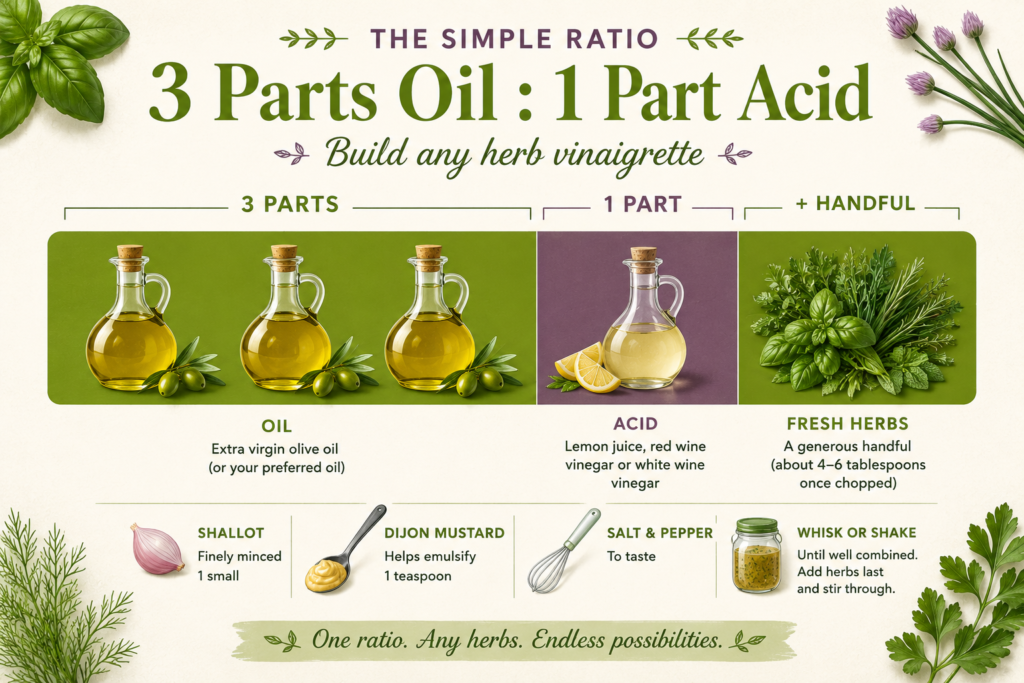
For a jar that makes roughly 250ml, a dependable base looks like this:
- 3 parts extra virgin olive oil (about 180ml)
- 1 part acid, either fresh lemon juice, red wine vinegar or white wine vinegar (about 60ml)
- 1 small shallot or a quarter of a small red onion, finely minced
- 1 teaspoon Dijon mustard (helps everything emulsify and cling to leaves)
- A generous handful of fresh herbs, roughly 4 to 6 tablespoons once chopped
- Salt and black pepper to taste
Whisk the acid, mustard, shallot, salt and pepper together first, then add the oil in a slow stream while whisking, or shake the whole lot in a jam jar with a tight lid. The herbs go in last, stirred through rather than blitzed, so you keep flecks of colour rather than a uniform green sauce. If you want it smoother, a quick pulse in a small food processor works too, just don’t over-process or the herbs turn bitter.
🌿 Four herb combinations worth trying
Once the base ratio is sorted, the herbs are where the personality comes in. These four combinations cover what tends to be growing at the same time in a home herb patch.
Basil, parsley and chive. Bright, grassy and all-purpose. This is the one to reach for with tomatoes, mozzarella, or any simple green salad that needs a lift without a strong theme. Equal parts of each herb works well here; if your basil guide plants are further ahead than the rest, let basil lead.
Dill, mint and tarragon. Cool and gently aniseed. This combination pairs naturally with cucumber, poached or grilled salmon, and warm new potatoes. Go lighter on tarragon than the other two; its flavour is stronger and can dominate if you’re not careful.
Rosemary, thyme and sage. The woody trio, and the one exception to “stir it straight in” (more on that below). Best against roasted vegetables, grain bowls, or a hearty roast chicken salad where the dressing needs to stand up to richer flavours.
Coriander, mint and chive. Zingy and fresh, built for slaws, noodle salads, and grilled fish. If coriander tends to divide opinion at your table, swap in extra parsley and keep the mint and chive.
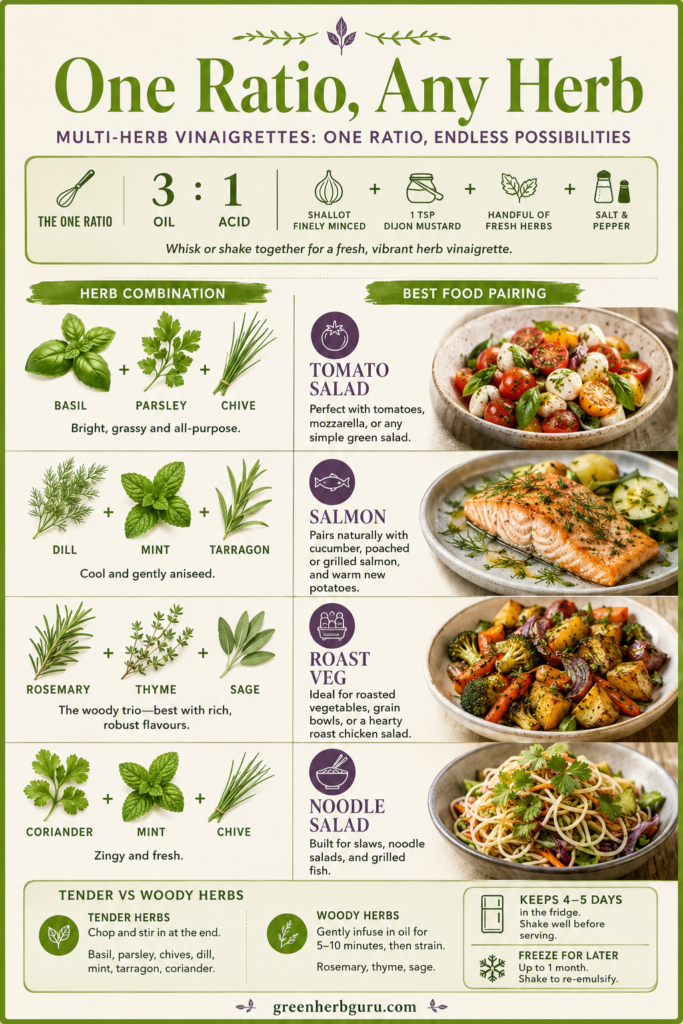
Don’t feel locked into these exact three-herb splits. If you’ve got four tender herbs going at once, use them all in smaller quantities rather than picking favourites; the ratio holds regardless of how many herbs make up that final handful.
🔪 Tender herbs vs woody herbs: why the method changes
Not every herb behaves the same way in a cold dressing, and this is the detail that trips people up most.
Tender, leafy herbs (basil, parsley, chives, dill, mint, tarragon, coriander) have soft cell walls that release flavour quickly. Chop them finely and stir them straight into the finished vinaigrette. They don’t need heat or time to work.
Woody herbs (rosemary, thyme, sage) have tougher, more fibrous leaves that stay tough and unpleasant to chew even when finely chopped, and their flavour is locked up more stubbornly. Rather than stirring them in raw, gently warm your oil with whole sprigs over the lowest heat for five to ten minutes, then let it cool completely and strain the sprigs out before building the rest of the dressing. This infuses the flavour into the oil without leaving woody bits in your mouth.
Mixing a tender and a woody herb in the same dressing (thyme with parsley, for example) works well too: infuse the woody one into the oil first, then stir the tender one in fresh at the end.
🧊 How long does fresh-herb dressing keep?
A vinaigrette made with fresh herbs and no dairy keeps in a sealed jar in the fridge for 4 to 5 days. The oil will solidify and cloud when cold; that’s normal. Let it sit at room temperature for 10 to 15 minutes and give it a good shake before serving.
Signs it’s turned: the herbs have gone from bright to properly dark and slimy rather than just slightly wilted, or the dressing smells sharp or off rather than herbal and fresh. Fresh herbs will fade in colour over a few days even when the dressing is still fine to eat, so use your nose as the main test rather than colour alone.
If you’ve made a woody-herb version with infused oil, that base oil (before the tender herbs and acid go in) keeps a little longer, closer to a week, since the herbs themselves have already been strained out.
📈 Scaling up when herbs are at their peak
Midsummer tends to produce more herbs than any one dressing can use. When that happens, scale the base ratio up rather than making several small batches: double or triple the oil and acid quantities, keep the same 3:1 ratio, and adjust the herb quantity to taste since a bigger batch of mixed herbs doesn’t always need to scale in a straight line.
A large batch (say, 750ml of finished dressing) is worth portioning into smaller jars and freezing what you won’t use within five days. Herb vinaigrettes freeze reasonably well for about a month; the texture separates on thawing, but a good shake brings it back together. This is a practical way to bank a strong herb harvest for the weeks when your garden goes quiet.
❓ Frequently asked questions
Can I use dried herbs instead of fresh in these vinaigrettes?
You can, but the flavour and ratio both change. Use about a third of the quantity of dried herb compared to fresh, and add them earlier so they have time to rehydrate slightly in the oil and vinegar.
Do I need to peel or de-stem the herbs first?
Remove any thick woody stems from rosemary and thyme before infusing. For tender herbs like parsley, dill and basil, thin stems are fine to chop and include; they carry flavour too.
Can I make this dressing without mustard for an allergy?
Yes. The mustard mainly helps the oil and acid emulsify and stay combined. Without it, whisk more vigorously just before serving, or shake the jar again, since it will separate faster.
What’s the best oil to use if I don’t have extra virgin olive oil?
A light, neutral oil such as sunflower or a mild rapeseed oil works, though you’ll lose some of the flavour extra virgin olive oil brings. Avoid very strong oils like sesame as the main base; those work better as a small flavour accent added in addition to, not instead of, the main oil.
🌱 The takeaway
A three-to-one oil-to-acid base takes whatever herbs are ready in your garden that week, tender herbs stirred in fresh and woody herbs infused into the oil first, and turns them into a dressing that keeps for four to five days in the fridge. Master that one ratio and you’ll never need a different herb dressing recipe again, just a different handful from the garden.
🪴 Continue your journey
Want to go deeper on the herbs behind these combinations? Our Ultimate Guide to Basil and Ultimate Guide to Parsley cover growing and using two of the workhorses in these blends, and our chives guide is worth a look if chives are new to your patch. If your harvest is coming in faster than you can dress salads, our guide to preserving fresh herbs covers drying, freezing and infusing so nothing goes to waste.
Want more no-waste ways to use what’s growing right now? Sign up for the newsletter and we’ll send fresh ideas straight to your inbox as the seasons turn.


