Oregano: The Complete Guide to Growing, Cooking, and Using This Mediterranean Staple
Few herbs pull double duty quite like oregano. It is the backbone of a good marinara, the finishing touch on a pizza, and one of the few kitchen herbs research has actually taken seriously for its antimicrobial punch. Most cooks reach for the dried jar without a second thought, yet oregano is also one of the easiest herbs to grow at home.
This guide covers what oregano actually is botanically, the varieties worth knowing, and what the research says about its health properties. It also walks through how to grow and harvest it successfully, and how to store it so it keeps its punch for months. Whether you are planting your first pot on a sunny windowsill or just want to understand why a pinch of oregano transforms a tomato sauce, this is the complete reference.
As an Amazon Associate I earn from qualifying purchases and sometimes recommend products from other sellers at no extra cost to you. For more details see my disclosure policy and privacy policy.
What Is Oregano?
Oregano’s botanical name is Origanum vulgare, and it belongs to the mint family, Lamiaceae, alongside relatives like basil, thyme, rosemary, and sage. That shared family explains a lot about oregano’s growing habits. Like its cousins, it prefers sun, tolerates poor soil, and produces small, fragrant leaves packed with aromatic oils.
Forged & Grown — The Shop
Handpicked products chosen to fit the way we cook, grow, and create. Nothing generic — every item earns its place.
Visit the Shop


Oregano is native to the hills of the Mediterranean basin and western Asia, where it still grows wild across rocky, sun-baked slopes in Greece, Italy, and Turkey. Its name comes from the Greek words oros (mountain) and ganos (joy), roughly translating to “joy of the mountain.” It is a nod to the wild hillsides where it has grown for thousands of years.
A quick history snapshot:
- The ancient Greeks associated oregano with happiness and wove it into wedding wreaths.
- Roman cooks were among the first to popularize it as a culinary seasoning across their empire.
- It became a defining flavor in southern Italian cooking over the following centuries.
- Its popularity took off across the rest of the world after American soldiers returning from Italy after the Second World War brought a taste for it home. That single shift is a big part of why oregano became a US pantry staple within a generation.
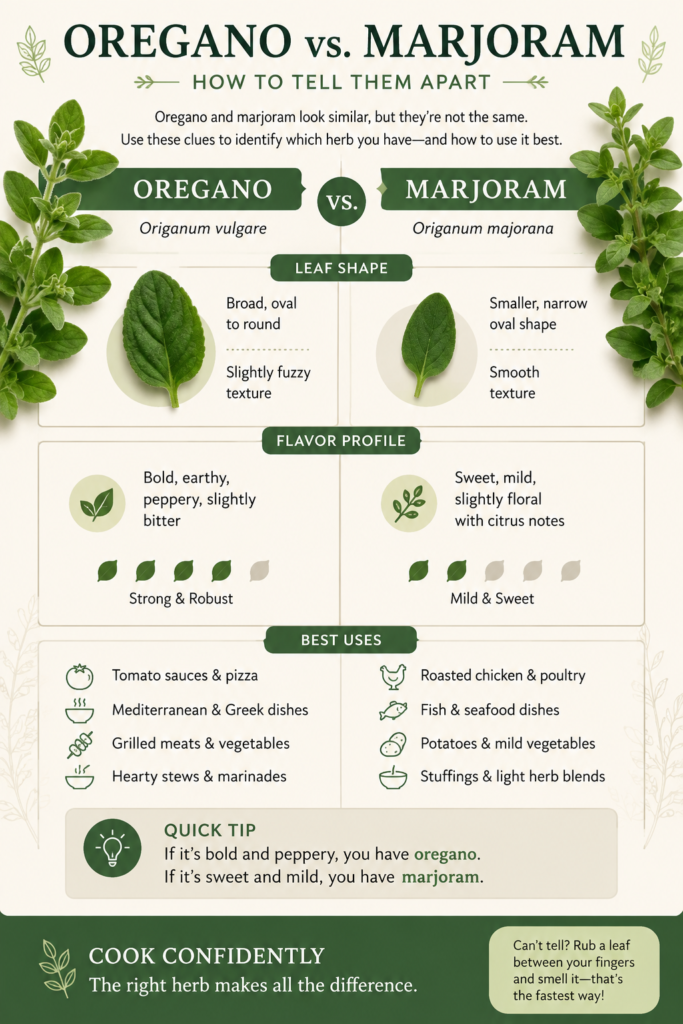
Oregano’s closest culinary relative is marjoram (Origanum majorana), which is in the same genus and often used interchangeably, though marjoram is sweeter and milder. It should not be confused with Mexican oregano (Lippia graveolens). That is a completely different plant from a different family that simply shares a similar flavor profile and name due to parallel culinary use in Mexican and Central American cooking.
Oregano Across Cuisines
Oregano’s reputation is often shorthand for “Italian herb,” but its actual culinary footprint is much wider. In Greek cooking, it is used more liberally and often paired with lemon, olive oil, and feta rather than tomatoes. In the eastern Mediterranean and parts of the Middle East, dried oregano is a core component of za’atar, the herb and sesame blend used on flatbreads and dips.
This range is part of why oregano keeps surfacing across so many regional cuisines rather than staying confined to one. It grows wild across a huge geographic band from the Mediterranean into western Asia, so multiple cultures independently discovered and cultivated it long before trade routes connected their kitchens.
Common Varieties
Not all oregano tastes the same, and the variety matters more than most home cooks realize.
- Greek oregano (sometimes labeled Origanum vulgare hirtum) is the variety most prized for cooking. It has a sharp, peppery, slightly bitter bite and the highest concentration of aromatic oils, which is why it holds up so well when dried. It is widely considered the gold standard for flavor intensity.
- Italian oregano is technically a hybrid between oregano and marjoram, giving it a milder, sweeter profile than Greek oregano. It works beautifully in tomato-based sauces and pizza where you want oregano’s aroma without an overpowering bite.
- Common oregano, sometimes called wild marjoram, is the variety most often found growing as an ornamental or ground cover in gardens. Its flavor is noticeably milder than Greek oregano, and while it is perfectly edible, it will not deliver the same punch in cooking.
- Golden oregano is a striking ornamental variety with chartreuse-yellow leaves. It has a milder flavor than Greek oregano and is often grown more for its visual appeal in borders and containers than for serious culinary use.
- Cuban oregano (Plectranthus amboinicus) is worth a quick mention because it turns up in nurseries labeled simply “oregano.” It is not a true oregano at all, but a succulent-leaved plant in a different genus, with a much stronger, almost camphor-like flavor used in Caribbean and Southeast Asian cooking.
For anyone growing oregano specifically to cook with, Greek oregano is the variety worth prioritizing. If you already have a pot of “oregano” from a garden center and are not sure which type it is, crush a leaf between your fingers. A sharp, peppery, almost medicinal aroma points to Greek oregano, while a milder, sweeter smell suggests Italian oregano or a marjoram-leaning hybrid.
Oregano Oil vs. Culinary Oregano
It is worth pausing on a distinction that trips a lot of people up: culinary oregano and “oregano oil” sold as a supplement are not really the same product in terms of strength.
- Culinary oregano (fresh or dried leaves) contains carvacrol and thymol in relatively low, food-safe concentrations. This is the form used in everyday cooking.
- Therapeutic-grade oregano oil is a concentrated extract, often standardized to a specific carvacrol percentage, and is many times more potent than anything you would get from seasoning a dish.
- Most of the antimicrobial research people reference when discussing oregano’s health benefits was conducted using this concentrated extract form, not the dried herb in a spice jar.
- Concentrated oregano oil should be diluted before topical use and is generally not recommended for long-term daily internal use without professional guidance, given its potency and potential interactions.
Keeping this distinction in mind helps set realistic expectations. Cooking with oregano is a flavorful, healthy habit, but it is a different category of exposure than taking a concentrated supplement.
Health Benefits
Oregano’s health reputation rests largely on two compounds: carvacrol and thymol. Both are phenols found in oregano’s essential oil, and both have been studied for antimicrobial activity in laboratory settings. Research reviewed by the National Center for Complementary and Integrative Health notes that oregano oil has shown antibacterial and antifungal effects in test-tube and animal studies, though NCCIH is careful to point out that rigorous human clinical trials are still limited.
Carvacrol in particular has been studied for its activity against a range of bacteria, including some antibiotic-resistant strains, largely because it disrupts bacterial cell membranes. That said, laboratory results on isolated compounds do not automatically translate into the same effect from sprinkling dried oregano on your pasta. The concentration of carvacrol in oregano oil extracts used in research is far higher than what you would get from culinary use.
Beyond its antimicrobial compounds, oregano is a genuinely nutrient-dense herb for how little of it people typically eat:
- Weight for weight, it carries meaningful amounts of vitamin K, iron, and manganese.
- It is rich in antioxidant compounds called flavonoids.
- Because it is used in small quantities as a seasoning rather than eaten in bulk, its practical nutritional contribution to a diet is modest, but the antioxidant density per gram is still notable.
- Traditional use across Mediterranean and Latin American herbal traditions includes digestive support, and some modern research has looked at oregano’s potential to support gut bacteria balance, though this area is still developing.
A safety note that matters here:
- Concentrated oregano essential oil is potent and should never be taken undiluted or used internally without professional guidance. It can irritate the digestive tract and interact with blood-thinning medications.
- Pregnant individuals should avoid medicinal-strength oregano oil and supplements, since traditional use associates high-dose oregano with uterine stimulation. Ordinary culinary amounts in cooking are considered safe.
- Anyone on blood thinners, or with a known allergy to plants in the mint family, should check with a healthcare provider before using oregano supplements or oil.
- Culinary use in food is a different category of exposure than concentrated extracts, and this section is not a substitute for medical advice.
How to Grow Your Own
Oregano is one of the most forgiving herbs a beginner gardener can start with. It evolved to survive on rocky Mediterranean hillsides with minimal water and poor soil, and it carries that toughness into the garden.
- Sunlight. Oregano wants as much direct sun as you can give it, ideally six to eight hours a day. It will survive on less, but flavor intensity drops noticeably in shadier conditions.
- Soil. Oregano actually prefers poor, well-draining soil over rich, heavily amended beds. Overly fertile soil pushes the plant toward leafy, watery growth with a diluted flavor. A gritty, free-draining potting mix suits it far better than compost-heavy beds.
- Watering. Let the soil dry out between waterings. Oregano is far more likely to suffer from overwatering and root rot than from drought stress, and established plants can go surprisingly long between waterings.
- Growing season and hardiness. Oregano is a hardy perennial in most temperate climates, generally surviving winters down to USDA zone 4 with some dieback, and staying evergreen in milder zones. It can also be grown as an annual in short-season climates or overwintered indoors.
- Starting from seed vs. cuttings. Oregano seed germinates reliably but slowly, often taking two to three weeks, and named varieties like Greek oregano do not always come true from seed. Starting from a nursery plant or cuttings is more reliable for a known flavor profile.
- Container growing. Oregano thrives in pots, which also helps control its spreading habit. A container at least eight inches wide with drainage holes, filled with a gritty mix, works well on a sunny patio or windowsill.
- Common challenges. The most frequent problem is leggy, sprawling growth, usually solved with more light or a hard prune. Root rot from overwatering is the next most common issue. Oregano is largely pest-resistant thanks to its aromatic oils, though it can occasionally attract aphids on new growth.
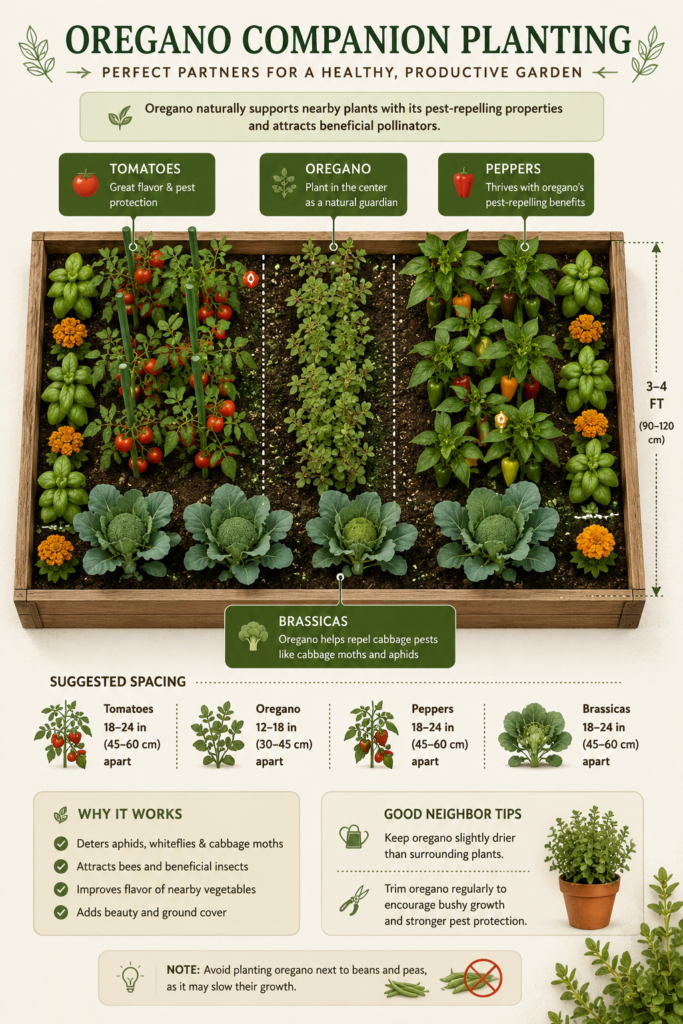
- Companion planting. Oregano pairs well with tomatoes, peppers, and brassicas like cabbage and broccoli, since its strong scent is thought to help deter some common pests. Its low, spreading habit also works well as a living ground cover beneath taller vegetables, and it attracts pollinators once it flowers.
- Pruning and dividing. Established plants benefit from being divided every three to four years, both to keep them vigorous and to create new plants for free. In spring, dig up a mature clump, gently separate it into rooted sections, and replant.
- Harvesting. For the best flavor, harvest just before the plant flowers, when aromatic oils are at their peak. Regular light harvesting encourages bushier growth, while a hard cut-back after flowering can prompt a fresh flush of tender new leaves.
Basic Usage Guide
Fresh and dried oregano behave differently enough in the kitchen that it is worth treating them as two separate ingredients.
- Fresh oregano has a brighter, slightly grassy quality alongside its characteristic peppery bite. It is best added toward the end of cooking, or used raw in dressings and salads, since heat mellows its fresher notes.
- Dried oregano is actually more potent than fresh, weight for weight, because drying concentrates its essential oils. This is somewhat unusual among herbs, most of which lose intensity when dried. It holds up well to long cooking times, which is why it is the standard choice for simmered sauces and pizza.
- Flavor profile. Oregano’s flavor is warm, peppery, slightly bitter, and faintly earthy, with a sharpness that sets it apart from milder relatives like sweet marjoram or basil.
- Parts of the plant used. The leaves are the primary culinary part, used fresh or dried. The small flowers that appear before the plant sets seed are also edible and carry a milder version of the same flavor.
- Common pairings. Oregano is a natural partner for tomatoes, garlic, olive oil, lemon, feta and other salty cheeses, olives, and grilled or roasted meats. It appears constantly alongside basil, thyme, and rosemary in Mediterranean and Italian cooking.
- Substitution ratio. As a general rule, use one teaspoon of dried oregano in place of one tablespoon of fresh, since dried herbs are roughly three times more concentrated by volume.
Fresh-to-Dried Oregano Calculator
Convert between fresh and dried oregano using the standard 3:1 ratio.
Based on the standard 3:1 fresh-to-dried substitution ratio. Flavor intensity can vary by variety and how recently the herb was dried.
- Tips for maximizing flavor. Rubbing dried oregano between your palms before adding it to a dish helps release its essential oils. If a sauce is simmering for a long time, add oregano partway through rather than at the very start to preserve more of its punch.
- Buying tips. When buying dried oregano, look for a vivid green color rather than faded brown-green, since color fade often signals age and lost potency. For fresh oregano at a grocery store or market, leaves should look perky and unwilted, without dark or slimy patches on the stems.
Recipe Ideas
- Classic marinara base. Sauté garlic in olive oil, add crushed tomatoes, and stir in one to two teaspoons of dried oregano with a pinch of red pepper flakes. Simmer for twenty to thirty minutes, adding fresh basil at the very end. For a full seasoning blend built around this same combination, this homemade Italian seasoning mix is worth keeping on hand.
- Greek-style roasted vegetables. Toss zucchini, red onion, and bell peppers with olive oil, lemon juice, fresh or dried oregano, and salt, then roast until caramelized. Finish with crumbled feta and a scatter of fresh oregano leaves just before serving.
- Herb-crusted chicken or lamb. Combine dried oregano, garlic powder, lemon zest, salt, and olive oil into a rub, and let meat marinate for at least thirty minutes before cooking. It pairs naturally with the same herb combinations used in herbes de Provence-style dishes.
- Oregano and lemon dressing. Whisk together olive oil, lemon juice, minced garlic, finely chopped fresh oregano, salt, and pepper. It works equally well on a Greek salad, drizzled over grilled fish, or spooned over roasted potatoes.
- Oregano and white bean dip. Blend cooked white beans with olive oil, garlic, lemon juice, and a generous spoonful of chopped fresh oregano. It is a quick showcase for oregano used raw rather than cooked, and it works well alongside crusty bread or raw vegetables.
Storage Methods
- Fresh oregano keeps for one to two weeks in the refrigerator if wrapped loosely in a slightly damp paper towel. Alternatively, treat it like cut flowers by trimming the stems and standing them in a small glass of water on the counter, loosely covered with a plastic bag.
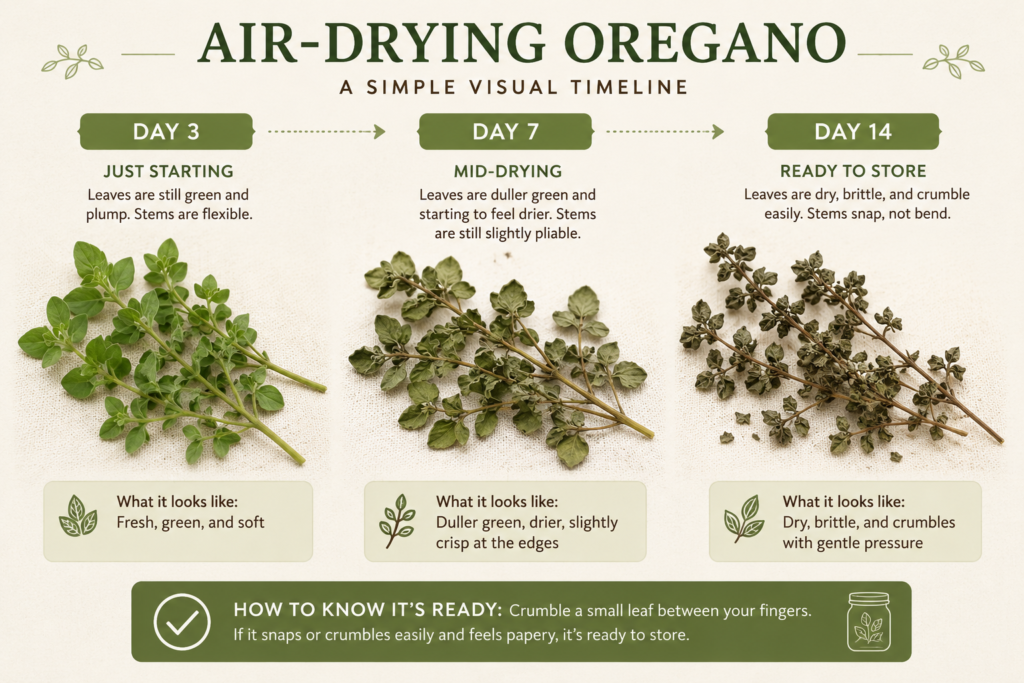
- Drying is the traditional and most popular way to preserve oregano, since it actually intensifies rather than dilutes the flavor. Hang small bundles of stems upside down in a warm, dry, well-ventilated spot out of direct sunlight for one to two weeks, until the leaves crumble easily. A food dehydrator or a low oven with the door propped open speeds this up considerably.
- Freezing works well for preserving fresh flavor rather than the more concentrated dried version. Chop fresh oregano and freeze it in ice cube trays with a little water or olive oil, then transfer the cubes to a labeled freezer bag.
- Oregano-infused oil is another popular method, though it carries a real safety consideration. Fresh herbs stored in oil at room temperature can create the anaerobic conditions in which Clostridium botulinum, the bacteria responsible for botulism, is able to grow. Homemade oregano oil should always be refrigerated and used within about a week, or made using dried oregano instead, which carries much lower risk.
- Signs of spoilage. Dried oregano rarely spoils, but it loses potency over time, typically within one to three years. If it no longer has a strong aroma when rubbed between your fingers, it is time to replace it. Fresh oregano that has turned slimy, black, or developed a sour smell should be discarded.
- Best practices. Store dried oregano in an airtight container away from heat, light, and moisture, ideally in a cupboard rather than directly above the stove.
Frequently Asked Questions
Is oregano the same as marjoram? No, though they are closely related and sometimes used interchangeably. Oregano has a sharper, more peppery, slightly bitter flavor, while marjoram (Origanum majorana) is sweeter and milder.
Why does dried oregano taste stronger than fresh? Drying concentrates oregano's essential oils rather than diminishing them, which is somewhat unusual among culinary herbs. This is why recipes typically call for less dried oregano than fresh when substituting one for the other.
Can I grow oregano indoors year-round? Yes, as long as it gets enough light, ideally from a south-facing window or a supplemental grow light. Indoor oregano grows more slowly and less bushy than outdoor plants, but it is a reliable option for a small space, similar to other Mediterranean herbs suited to a beginner's windowsill herb garden.
Why is my oregano plant leggy and sparse? Leggy growth almost always points to insufficient light or a plant that has not been pruned in a while. Moving it to a sunnier spot and giving it a hard trim usually encourages fuller, bushier regrowth within a few weeks.
Is oregano safe during pregnancy? Ordinary culinary amounts of oregano used in cooking are considered safe during pregnancy. Concentrated oregano oil supplements and medicinal-strength doses are a different matter, and pregnant individuals should avoid these and consult a healthcare provider.
Can dogs or cats eat oregano? Small amounts of culinary oregano are generally considered non-toxic to dogs and cats. Concentrated oregano oil should never be given to pets without veterinary guidance, as it can cause digestive upset.
What can I substitute for oregano in a recipe? Marjoram is the closest substitute, using a slightly larger quantity since it is milder. Thyme or a pinch of Italian seasoning blend can also work in a pinch, though the flavor profile will shift.
Does oregano come back every year? Yes, in most temperate climates oregano is a hardy perennial that dies back in winter and returns reliably in spring, generally surviving down to USDA zone 4 with some dieback.
Is Greek oregano different from regular oregano? Greek oregano is a specific, more pungent variety of Origanum vulgare prized for its strong flavor, making it the preferred variety for serious cooking. "Regular" or common oregano sold in some nurseries is often milder and better suited to ground cover.
How much dried oregano is too much in a recipe? Oregano's flavor is potent and can quickly turn bitter if overused. As a general guideline, one to two teaspoons of dried oregano is usually enough to flavor a dish that serves four.
Can I use oregano flowers, or just the leaves? Oregano's small flowers are edible and carry a milder version of the leaf's flavor, making a pretty garnish. Most cooks focus on the leaves for actual seasoning, since they carry a much higher concentration of flavor.
Why does my dried oregano taste like nothing after a year in the cupboard? Dried herbs gradually lose their essential oils to evaporation over time, especially if stored somewhere warm or in direct light. It is worth doing the rub-and-sniff test periodically rather than assuming an old jar is still potent.
Conclusion
Oregano earns its place as a kitchen staple honestly. It is forgiving enough to grow with minimal fuss on a sunny windowsill, and versatile enough to anchor everything from a weeknight marinara to a Greek-style salad. It is also interesting enough botanically that researchers are still studying what its aromatic compounds can do.
Start with a single pot in a sunny spot, let it dry out between waterings, and you will likely find it one of the lowest-maintenance, highest-reward herbs in your growing lineup.
Continue Your Journey
- Your Complete Beginner's Apothecary Guide: Simple Herb Remedies for Everyday Wellness
- Homemade Italian Seasoning Mix Recipe
- How to Start a Micro Herb Garden in a Small Space
- The Best Herbs and Spices to Help Reduce Inflammation
- Essential Herbs and Spices: Elevate Every Kitchen Dish
- [Herbs Around the World: How Different Cuisines Use Fresh and Dried Herbs — add live link once confirmed]
Want more herb-by-herb growing and cooking guides delivered straight to your inbox? Subscribe to the Green Herb Guru newsletter for seasonal tips, recipes, and remedies.