
Fenugreek: The Complete Guide to Growing, Cooking, and Using This Warming Spice Herb
Fenugreek is one of the few plants that gives you two ingredients in one. The fresh green leaves are a slightly bitter cooking herb, and the small golden seeds are a toasty spice that smells somewhere between maple syrup and caramelized sugar. Both are staples across India, the Middle East, and North Africa, yet most home herb gardens in the US never see a fenugreek plant.
That is a missed opportunity, because fenugreek is quick, compact, and forgiving. You can pick leaves about three to four weeks after sowing, sprout the seeds in a jar on the counter, or let a few plants run to seed and harvest your own spice. This guide covers how to buy, sow, harvest, cook with, and store fenugreek, plus what the research says about its health claims and who should be careful with it.
As an Amazon Associate I earn from qualifying purchases and sometimes recommend products from other sellers at no extra cost to you. For more details see my disclosure policy and privacy policy.
What Is Fenugreek?
Fenugreek (Trigonella foenum-graecum) is an annual herb in the Fabaceae family, which makes it a legume and a relative of peas, beans, and clover. It grows up to about 2 feet (60 cm) tall, with clover-like leaves made of three small leaflets and pale flowers that give way to thin, curved seed pods. Each pod holds a row of small, hard, golden-brown seeds.
Forged & Grown — The Shop
Handpicked products chosen to fit the way we cook, grow, and create. Nothing generic — every item earns its place.
Visit the Shop


The plant is thought to come from southeastern Europe and western Asia, and the species name means Greek hay in Latin, a nod to its long history as animal fodder. In the kitchen it goes by methi in Hindi and several other Indian languages. India is the world’s largest producer, and a large share of the fenugreek traded globally as a spice comes from there.
A Very Old Kitchen and Medicine Plant
Fenugreek has been used as a food, spice, and medicine for thousands of years. Ancient Egyptians cooked with it, used it medicinally, and burned it as incense in religious ceremonies. It spread along trade routes and settled into regional cooking from Gujarat to Ethiopia, where it still anchors some of the best-known spice blends.
Fenugreek and Its Relatives
Fenugreek is a legume, so it sits closer to clover and alfalfa than to any kitchen herb. It is not related to fennel, despite the similar name, and the two taste nothing alike. If you grow both, our guide to fennel covers the aniseed-flavored plant that often gets mixed up with it.
Like other legumes, fenugreek can work with soil bacteria to capture nitrogen. Garden Organic points out that it does not always do so, which is why it is best thought of as a bonus rather than a reliable soil improver.
Common Types and Forms of Fenugreek
Most gardeners meet fenugreek in one of two plant types, and cooks meet it in several forms. Knowing the difference helps you buy the right seed and use the harvest well.
Two Types of Plant
The common large-seeded type has bigger leaves and white flowers. It is cut once and does not regrow well after flowering, so it needs successional sowing every couple of weeks if you want a steady supply of leaves.
The smaller-leafed type is hardier and has yellow flowers. According to Garden Organic, it can be cut several times and regrows after harvest. Botanical names for these types vary between seed suppliers, so go by the flower color and the description on the packet rather than the Latin name alone.
Five Forms in the Kitchen
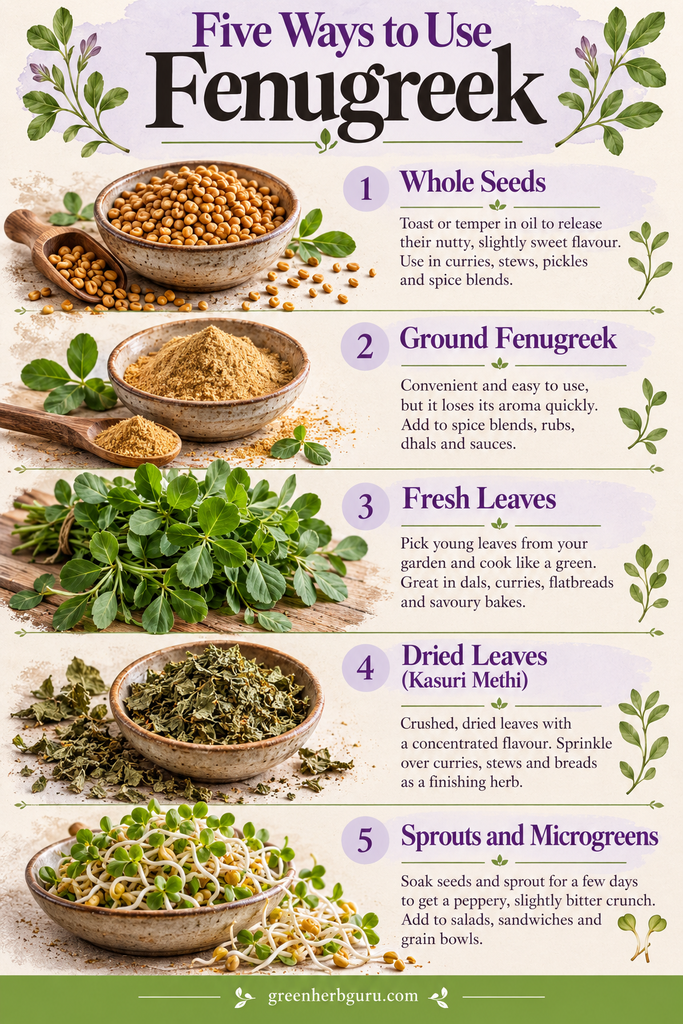
- Whole seeds: hard, angular, and golden brown, sold in the spice aisle and used toasted or tempered in oil.
- Ground fenugreek: convenient but loses its aroma quickly, so buy small amounts.
- Fresh leaves: sold in bunches at Indian and Middle Eastern grocers, and the easiest form to grow yourself.
- Dried leaves, or kasuri methi: a crushed, dried leaf that works as a finishing herb in curries and breads.
- Sprouts and microgreens: the seeds soaked and rinsed for a few days, with a peppery, slightly bitter crunch.
What Does Fenugreek Taste Like?
Fenugreek is bitter first and sweet second, and the way you handle it decides which side wins. Raw seeds are pungent and bitter, while lightly toasted seeds turn nutty and mellow, with a sweet note that reminds many cooks of maple syrup or burnt sugar. Fresh leaves taste green and slightly bitter, closer to a mild mustard green with a faint curry scent.
The gap between a good and a bad fenugreek dish is almost always heat. Seeds that go past golden brown into dark brown turn acrid and can spoil a whole pot, so toast them gently and pull them off the heat as soon as they smell warm and sweet. A little goes a long way, and most recipes use a quarter to half a teaspoon of seeds for a dish that serves four.
How to Grow Your Own Fenugreek
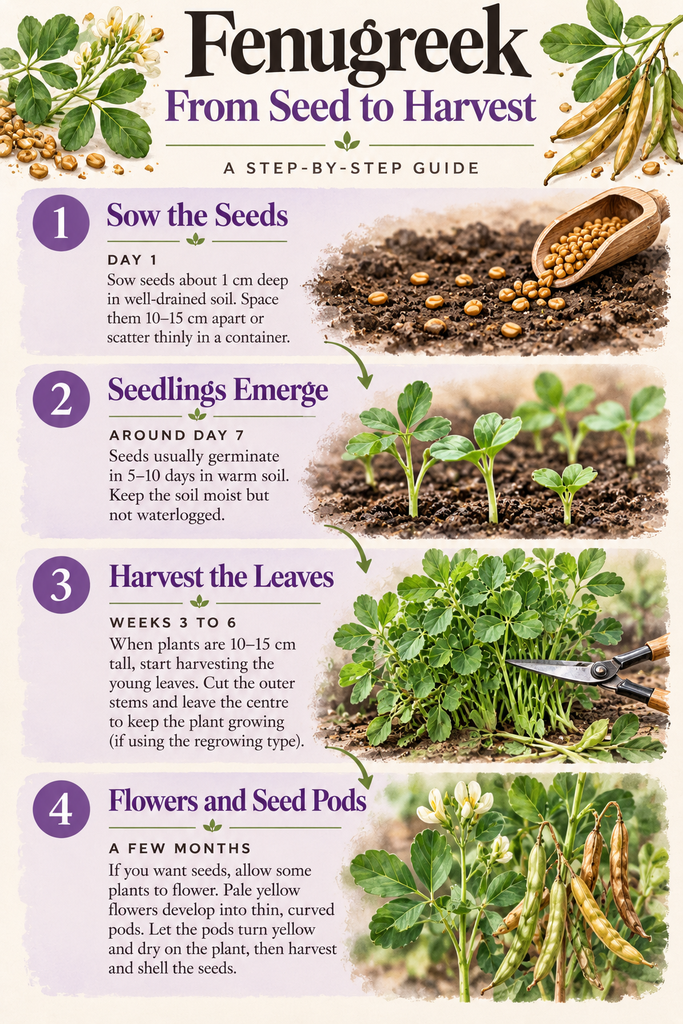
Fenugreek is one of the faster herbs you can grow from seed. Leaves can be harvested in as little as three to four weeks, and a full crop of seed pods follows a few months later if you let the plants mature. It is also cheap, because the seed from a grocery store spice jar will usually germinate.
Choosing Seed
You have two reliable options. Garden seed packets labeled for fenugreek or methi are the safest choice, and Garden Organic recommends using seed sold for sprouting or cooking rather than seed that may have been treated with fungicide. Plain spice-aisle seed from an Indian grocer works well if it is fresh and untreated, and it costs a fraction of the price.
Old, dull, or very dark seed germinates poorly, so choose seed that looks bright golden and smells sweet when you crush one.
When to Sow
Fenugreek likes mild to warm weather and does not tolerate cold well, so sow after the last spring frost. Many growing guides suggest sowing from late spring through late summer, and it makes a good gap filler in any bed that will sit empty for six to eight weeks. In warm regions it also grows through the cooler months, which is how it is grown on a large scale across northern India, where sowing happens in the last week of October and the first week of November.
For a steady supply of leaves, sow a short row every two to three weeks rather than one big planting. Our herb garden planning guide will help you decide where a quick, short-lived crop like this fits among your perennials.
Soil, Sun, and Water
Fenugreek grows in almost any average, well-drained soil with a neutral to slightly acidic pH. Heavy, waterlogged soil is the main thing to avoid. It does best in full sun, though a little afternoon shade is fine in hot climates.
Keep the soil evenly moist but never soggy. Water gently at the base so the seedlings are not flattened, and mulch lightly if the weather turns hot and dry.
Sowing Step by Step
Fenugreek has a taproot and dislikes being moved, so sow directly where the plants will grow. Prepare the bed by loosening the soil and raking it smooth.
- Make shallow drills about half an inch (1 cm) deep, spaced roughly 8 inches (20 cm) apart.
- Sprinkle the seeds along each drill, aiming for a seed every inch or two.
- Cover lightly, firm the soil with the back of a rake, and water gently.
- Expect germination within about a week in warm soil.
- Thin seedlings to about 2 inches (5 cm) apart for leaf crops, or up to 6 inches (15 cm) apart if you want plants to mature and set seed.
The thinnings are edible, so add them to a salad or a sandwich.
Growing Fenugreek in Containers and on a Windowsill
Fenugreek is well suited to pots, and a container has a useful advantage: you can bring it indoors if a late frost threatens. Choose a pot at least 6 inches (15 cm) deep with drainage holes, fill it with a light, free-draining potting mix, and sow seeds about an inch apart.
A sunny windowsill with four or more hours of direct light is enough for a leaf crop. A self-watering container can help if you tend to forget a pot on a warm sill, and our guide to self-watering plant pots for herbs explains what to look for. If you are short on space, our micro herb garden guide shows how to build a small growing setup on a balcony or doorstep.
Growing Fenugreek Sprouts and Microgreens
Sprouting is the fastest route from seed to plate, and it needs no soil. Garden Organic’s method is simple: soak the seed overnight, rinse it well, and leave it in a slightly damp jar on its side, rinsing twice a day, or use a bean sprouter. Sprouts are ready in about four to six days, when the tails are around an inch long.
Fenugreek sprouts taste bitter on their own, so mix them with milder sprouts such as alfalfa or mung bean. Always rinse sprouts thoroughly, and keep them refrigerated, because warm, damp conditions favor bacteria.
Caring for Plants as They Grow
Fenugreek needs very little attention once it is up. Water during dry spells, pull weeds while the seedlings are small, and thin crowded rows so air can circulate. A light feed of liquid seaweed or fish emulsion every few weeks helps if you are cutting leaves heavily, though plants in decent soil rarely need it.
Harvesting Leaves
Start picking when the plants are 4 to 6 inches tall, which is usually about three to six weeks after sowing depending on the weather. Snip stems just above a leaf node. On the smaller-leafed type, this encourages regrowth and you can cut again in two to three weeks.
Harvest in the morning for the best flavor, and use the leaves fresh or freeze them. Plants that start to flower produce increasingly bitter leaves, so pick before the blooms open, or sow another row.
Harvesting Seed
If you want your own spice, leave a few plants alone. Flowers form, followed by thin pods that gradually turn from green to yellow. Garden Organic advises letting the pods ripen and turn yellow on the plant, then harvesting shortly before they split open.
Cut the whole stems, hang them in a paper bag in a warm, dry spot for a couple of weeks, then thresh the pods to free the seeds. Because fenugreek seed is cheap and easy to buy, home seed saving is more about enjoyment than economy, though home-saved seed makes a fine crop for the next season.
Common Problems
Fenugreek rarely suffers from serious pests or disease in home gardens. The problems you are most likely to see are simple ones:
- Poor germination: usually old seed, cold soil, or seed sown too deep.
- Yellowing leaves and rot: almost always overwatering or heavy soil, so improve drainage.
- Powdery mildew: a white coating on leaves in humid conditions, which you can reduce by spacing plants and watering the soil rather than the foliage.
- Bolting: plants flower early in hot weather, so sow in succession and pick often.
- Aphids: a blast of water or a wipe with soapy water usually settles them.
Cooking with Fenugreek
Fenugreek rewards cooks who treat each form differently. Seeds want heat, fresh leaves want salt or a quick blanch, and dried leaves want a final sprinkle at the end. If you are building out a spice shelf, our guide to essential herbs and spices shows where fenugreek fits among the basics.
Using the Seeds
Whole seeds are most often dry-toasted or fried briefly in hot oil or ghee at the start of a dish, a technique known as tempering. Toast them in a dry pan over medium heat for 30 to 60 seconds, shaking constantly, until they smell sweet and turn light golden. Cool and grind them if the recipe calls for powder.
Fenugreek seeds are a core ingredient in many spice blends. They appear in curry powders, in the Bengali five-spice mix panch phoron, in sambar powder from South India, and in berbere from Ethiopia and Eritrea. If you like to make your own mixes, our guide to popular herb and spice blends is a good place to start.
Using Fresh Leaves
Fresh fenugreek leaves are the base of dishes such as aloo methi, a dry potato and fenugreek stir-fry, and methi thepla, the soft Gujarati flatbreads. They also go into dals, egg dishes, flatbread doughs, and stuffed parathas.
The leaves are naturally bitter. To soften them, wash and chop them, toss them with a little salt, and let them sit for 10 to 15 minutes before squeezing out the liquid. A quick blanch in boiling water also works, and a pinch of sugar or a little cream can balance what remains.
Using Dried Leaves (Kasuri Methi)
Kasuri methi is the finishing touch in many North Indian curries, including butter chicken and paneer dishes. Rub a tablespoon of the dried leaves between your palms over the pot in the last minute of cooking, so the aroma lifts rather than cooks away. The flavor is more concentrated and savory than fresh, with a deep, almost celery-like note.
You can make your own by air-drying fresh leaves on a rack away from direct sun. Our guide to air-drying, dehydrating, and oven-drying herbs compares the methods, and fenugreek’s soft leaves do well with the gentlest of them.
Using Sprouts
Sprouted fenugreek is often added to salads, grain bowls, and sandwiches, and it appears in some Indian lentil and vegetable dishes. Its bitterness stands up to strong dressings, so a sharp lemon vinaigrette or a spoonful of yogurt works well. Use them raw only if you are comfortable with the usual food safety cautions that apply to all sprouts.
What Fenugreek Pairs With
Fenugreek is a team player. Its bitter-sweet profile sits well with:
- Potatoes, cauliflower, and other mild vegetables that soak up spice
- Lentils, chickpeas, and other pulses
- Chicken, lamb, and paneer
- Yogurt, cream, and butter, which soften its edge
- Cumin, coriander seed, turmeric, mustard seed, and chili
- Fresh cilantro, which is the natural herb partner. Our beginner’s guide to growing cilantro shows how to grow it alongside.
For a wider look at how other cuisines use fresh and dried herbs, our Herbs Around the World guide gives the bigger picture.
Four Easy Fenugreek Recipe Ideas
1. Simple aloo methi. Fry cubed potatoes in oil with cumin seeds until golden, add a large bunch of chopped, salted fresh fenugreek leaves, and cook until the leaves wilt and the potatoes are tender. Finish with salt, turmeric, and a squeeze of lemon.
2. Tempered dal. Cook red lentils until soft. In a small pan, fry half a teaspoon of fenugreek seeds, a teaspoon of cumin, and sliced garlic in ghee for under a minute, then pour the sizzling mixture over the dal.
3. Methi thepla. Knead whole wheat flour with chopped fresh fenugreek, yogurt, a little oil, turmeric, chili, and salt. Roll thin and cook on a hot griddle until speckled.
4. Homemade fenugreek-finished curry. Make your favorite creamy chicken or vegetable curry, then crush a tablespoon of kasuri methi over the top just before serving. It is the easiest way to give a home curry the aroma of a restaurant one.
Health Benefits and Safety Notes
Fenugreek has a long history in traditional medicine, and it is one of the most studied culinary herbs in the research literature. The evidence is mixed, and a food herb is not a treatment. Treat everything in this section as general information, not medical advice.
What the Research Suggests
The most studied use is blood sugar. Some small trials suggest fenugreek seed may modestly lower blood sugar after meals in people with type 2 diabetes, likely because its soluble fiber and plant compounds slow sugar absorption. Fenugreek has also been used to support breast milk supply, and it has been studied for cholesterol and appetite, but the evidence for these uses is limited and inconsistent.
The U.S. National Center for Complementary and Integrative Health (NCCIH) has a plain-language summary of this research and its limits on its fenugreek page. The short version is that results are promising but not strong enough to recommend fenugreek as a treatment for any condition.
Who Should Be Careful
Fenugreek in normal cooking amounts is generally considered fine for most people. The concerns arise with larger, medicinal doses such as supplements and concentrated teas.
- Pregnancy and breastfeeding: NCCIH advises against amounts larger than those found in food during pregnancy, and anyone considering it for milk supply should speak to a healthcare provider first. Our herbal tea safety guide explains how to think about herbs and pregnancy more broadly.
- Diabetes and blood sugar medication: fenugreek may lower blood sugar, so combining medicinal doses with diabetes medication could push levels too low. Check with a doctor or pharmacist first.
- Blood thinners and surgery: some drug information sources warn that fenugreek may affect blood clotting, and suggest stopping supplements ahead of surgery. Ask your healthcare provider.
- Legume allergies: because fenugreek is a legume, people allergic to peanuts, chickpeas, or other legumes should be cautious.
- Digestive upset: larger amounts can cause gas, bloating, or diarrhea.
Some people notice that fenugreek gives sweat or urine a maple-syrup smell when taken in larger amounts. It is considered harmless, but it is a sign the dose is well beyond what you would eat in a curry.
If you are building a home herbal routine, our beginner’s apothecary guide puts these cautions into a wider safety framework.
How to Store Fenugreek
Each form of fenugreek stores differently, and getting this right protects the flavor you worked to grow or buy.
Seeds and Ground Fenugreek
Keep whole seeds in an airtight jar in a cool, dark cupboard. They hold their flavor for a year or more, while ground fenugreek fades much faster, so grind small batches as needed. A freshly toasted and ground batch smells noticeably richer than a jar that has sat for months.
Fresh Leaves
Wrap unwashed fresh leaves in a damp paper towel and store them in a container in the refrigerator, where they keep for three to four days. Wash just before use, and discard any leaves that turn slimy or yellow. For longer storage, chop the leaves and freeze them flat in a bag, or freeze them in ice cube trays with a little oil or water. Our guide to freezing fresh herbs walks through the steps, and the complete guide to preserving fresh herbs covers the other methods.
Dried Leaves
Store kasuri methi in an airtight container away from light and heat. It stays fragrant for around six months, then gradually fades. Crush it between your fingers as you use it to wake the aroma.
Sprouts
Refrigerate sprouts in a clean, breathable container, rinse them daily, and use them within three to four days. Throw them out if they smell sour or look slimy.
Fenugreek Substitutes
There is no perfect swap, because fenugreek’s maple-and-bitter flavor is unusual. For seeds, a pinch of mustard seed with a tiny amount of brown sugar or maple syrup gets you part of the way in a curry or spice blend. For kasuri methi, a little fresh spinach or mustard greens with a pinch of celery seed gives a similar savory, slightly bitter note. Leave it out if a recipe uses only a pinch, as the dish will still taste good.
Frequently Asked Questions
Is fenugreek a herb or a spice? Both. The leaves are used as a herb, fresh or dried, and the seeds are used as a spice. The plant is the same, and each part tastes different.
How long does fenugreek take to grow? Leaves can be picked about three to four weeks after sowing, while some sources give up to six weeks depending on weather. Seed pods take a few months to mature.
Can I grow fenugreek from the seeds I buy at the grocery store? Usually yes. Choose fresh, bright golden seed that has not been treated, and check germination by sprouting a few in a damp paper towel first.
Does fenugreek come back every year? No. Fenugreek is an annual, so it completes its life cycle in a single season. Let a few plants set seed and you can sow again the next year.
Can fenugreek grow indoors? Yes. It does well on a bright windowsill in a pot at least 6 inches deep, and sprouts need no light-heavy setup at all.
Why does my fenugreek taste so bitter? Bitterness comes from over-toasted seeds, mature leaves, or plants that have started to flower. Toast seeds only until fragrant, pick leaves young, and salt chopped leaves before cooking.
What is the difference between fenugreek and kasuri methi? Kasuri methi is simply dried fenugreek leaf. It is used as a finishing herb, while whole fenugreek seeds are a cooking spice.
Is fenugreek safe to eat while pregnant? Fenugreek in the small amounts used in cooking is generally considered fine, but NCCIH advises against larger amounts during pregnancy. Check with a healthcare provider before using supplements or strong teas.
Does fenugreek lower blood sugar? Some small studies suggest it may help modestly, but the evidence is not strong enough to recommend it as a treatment. If you take diabetes medication, talk to a doctor before using it in medicinal amounts.
What can I use instead of fenugreek? Mustard seed with a small touch of brown sugar can stand in for the seeds, and spinach or mustard greens with a little celery seed can stand in for dried leaves. Neither matches the real thing exactly.
Bringing Fenugreek Into Your Kitchen and Garden
Fenugreek is a short-season plant with a long culinary reach. A packet of seed gives you sprouts in days, fresh leaves in weeks, and a homegrown spice by the end of the season. Treat the seeds gently with heat, salt the leaves before cooking, and save the dried leaf for the final minute, and fenugreek will repay you in almost every pot it touches.
Sow a short row this season and taste what a freshly picked methi leaf is supposed to taste like. If you only grow one new herb this year, make it one that works as a leaf, a spice, and a sprout.
Continue Your Journey
Fenugreek is one of several kitchen herbs and spices worth knowing well. Explore our Herbs Around the World guide for how cuisines use herbs differently, learn more about chervil and tarragon for delicate French flavor, and read our profiles of thyme and bay leaf for two kitchen staples. For gardeners building a home apothecary, start with our beginner’s guide to everyday medicinal herbs.
Never miss a growing guide or garden-to-kitchen recipe. Sign up for the Green Herb Guru newsletter and get fresh herb wisdom delivered straight to your inbox.


