How to Store Herbal Remedies: Oils, Honeys, Salts and Dried Herbs
You spend an afternoon making a beautiful jar of herbal oil or honey, label it with a flourish, and tuck it away. Three months later you open the cupboard and wonder whether it is still good. That small moment of doubt is exactly what this guide is for.
Homemade herbal preparations do not all age the same way. An oil, a honey and a jar of salt each spoil for different reasons, and the fix is different every time.
Below you will find the simple principles that apply to everything, then a section for each type of preparation. There is a quick-reference shelf-life table and a “when to throw it out” checklist at the end. Everything here is general home-storage guidance, drawn from traditional use, and not medical advice.
As an Amazon Associate I earn from qualifying purchases and sometimes recommend products from other sellers at no extra cost to you. For more details see my disclosure policy and privacy policy.
Forged & Grown — The Shop
Handpicked products chosen to fit the way we cook, grow, and create. Nothing generic — every item earns its place.
Visit the Shop


🫙 The Core Rules That Apply to Everything
Every homemade herbal preparation is happiest in the same basic conditions. Keep it cool, dark, airtight, clean and dry.
Light and heat break down aromatic compounds, air turns oils rancid, and damp or dirty equipment introduces microbes.
Before you fill anything, wash your jars and lids in hot soapy water and let them dry completely. Some makers also sterilise jars with boiling water or a hot oven. Either way, the jar must be bone dry before it is filled.
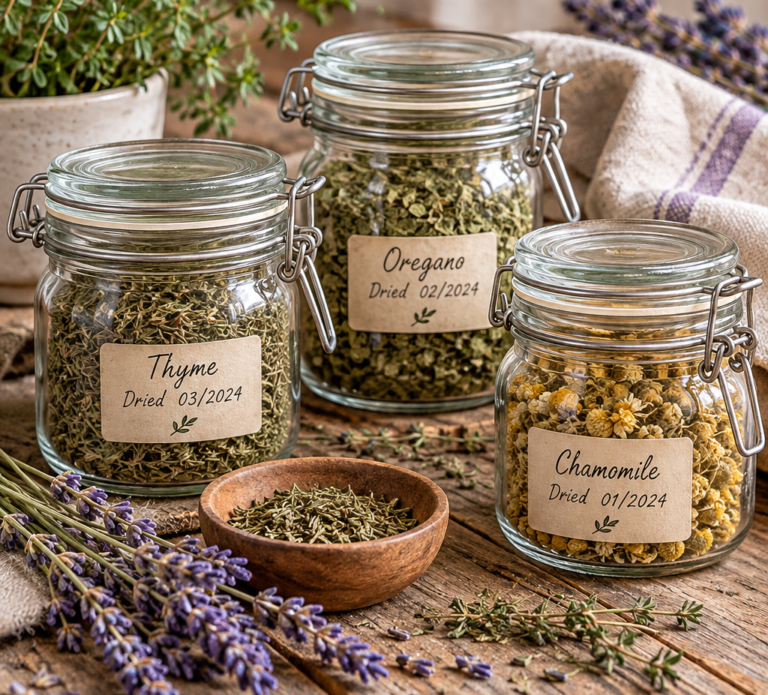
Use glass wherever you can. Airtight glass herb and spice jars do not hold smells, and they are easy to clean properly. Dark or amber glass, or simply a closed cupboard, keeps light off the contents.
Label and date every jar
Write the contents, the date made and the date by which you plan to use it. Memory is unreliable, and a jar of unlabelled golden liquid could be almost anything.
A simple batch log helps too. A notebook or a note on your phone, with the date, ingredients and the herb form (fresh or dried), is plenty. It also tells you which batches deserve repeating.
🫒 Infused Oils: Oxygen, Light and Water Are the Enemies
Herbal infused oils spoil in two ways. The oil can go rancid, which is a quality problem, and water from fresh plant material can allow harmful bacteria to grow, which is a safety problem.
This is why our safety-first guide to making herbal infused oils leans on dried herbs. Dried herbs contain far less water, so the oil stays on the safer side.
Fresh herbs and garlic in oil: a clear safety note
Fresh herbs and garlic packed into oil create a low-oxygen, low-acid, moist environment. That is the kind of place where the bacteria that cause botulism can grow, and the risk is serious.
Please do not keep fresh herb or garlic oils at room temperature, and do not store them for long periods. If you make a fresh herb oil for a meal, keep it in the fridge and use it within a few days. When in any doubt, bin it.
Dried herbs are the safer route for oils you want to keep. Make sure the herbs are fully dry and crisp before they go into the oil.
How long do dried-herb oils keep?
If you use dried herbs and good-quality oil and store the jar properly, an infused oil may keep for roughly six months to a year. The oil you choose matters, because some oils go off faster than others. Olive oil is steadier than many nut and seed oils.
Keep the jar in a cool, dark cupboard. If you want to stretch its life, some makers keep a smaller working bottle out and the rest in the fridge. Cold oil may turn cloudy or solid, and it clears again at room temperature.
Signs an oil has turned
- A sharp, paint-like or crayon-like smell, which points to rancidity.
- A bitter or sour taste.
- Cloudiness that does not clear, bubbles, or any sign of mould.
- Water droplets in the bottom of the jar.
Please do not confuse infused oils with essential oils. They are completely different products, made in different ways and stored differently. Essential oils are not covered here.
🍯 Herbal Honeys: Why Honey Keeps and When It Does Not
Honey is a naturally low-water food, which is a big part of why it lasts. Few microbes can thrive in something that dry and sugary.
The trouble starts when you add fresh herbs. Fresh leaves and petals carry water, and a wetter honey can start to ferment. That is why our guide to herbal honey and syrups is careful about method.
Dried versus fresh herbs in honey
Dried herbs add far less moisture, so they are the lower-risk choice for honey you plan to keep. Honey made with dried herbs, stored sealed in a cool, dark cupboard, can last many months and often longer.
If you use fresh herbs, treat the honey as short-term. Keep it in the fridge, use it within a few weeks, and watch it closely. Some makers strain the herbs out after a few weeks to cut the moisture risk.
Signs of fermentation
- Bubbles, fizzing or foam on the surface.
- A sour, yeasty or alcoholic smell.
- A honey that has become noticeably thinner and runnier.
- Any mould on the surface.
Crystallised honey is not spoiled. It is just honey doing what honey does, and a gentle warm water bath will soften it again.
An important note on babies
Honey, including herbal honey, should never be given to babies under 12 months. It can carry spores that cause infant botulism. Store herbal honeys out of reach of small children and label them clearly.
🧂 Herbal Salts and Sugars: Moisture Is the Enemy
Herbal salts and sugars are among the easiest preparations to store, as long as they stay dry. Salt is a natural preservative, so a well-made herb salt can keep its character for a long time.
The catch is that herbs must be completely dry before they are mixed in. Fresh, damp herbs make salt clump and can bring mould. Our guide to DIY herbal salts and sugars covers the drying step in detail.
Keeping them loose and fragrant
Sugars attract moisture even more readily than salt, so they clump sooner in a humid kitchen. Keep them well away from the kettle and hob.
A few small habits help:
- Use a dry spoon every time, never a damp one.
- Add a small food-safe desiccant packet to jars kept in a steamy kitchen.
- Break up soft clumps with a clean, dry fork. Hard, damp clumps mean it has taken on too much water.
- Keep the lid tight straight after use.
Expect the aroma to fade before the product becomes unsafe. A good herb salt may keep its scent for a year or so, and it will still be perfectly usable after that, just milder.
🌿 Dried Herbs, Tea Stocks and Tinctures
Dried herbs for teas and home preparations follow the same rules as culinary herbs, though the stakes feel higher because you are using them more carefully. For culinary detail, see our guide to how long dried herbs last and I will not repeat it all here.
Jars versus bags, glass versus tin
Glass jars are the best all-round choice. They are airtight and do not hold smells. Tins also work well, because they block light entirely.
Paper or resealable bags suit short-term storage only. They let air in, and the herb fades faster.
If you dry your own herbs, make sure they are truly crisp before you jar them. A little leftover moisture can lead to mould in a sealed container. Our comparison of air-drying, dehydrating and oven-drying explains how to get a reliable result, and a budget food dehydrator takes the guesswork out of damp autumn weather.
The potency fade timeline
Dried herbs do not suddenly go bad. They fade gradually, losing aroma and flavour first.
Whole dried leaves and flowers tend to be at their best for roughly six to twelve months when home-dried. Roots, barks and seeds often hold up longer. Crushed or powdered herbs fade faster, so crush only what you need.
Tinctures
If you keep alcohol-based tinctures, store them in tightly capped dark glass bottles in a cool cupboard. Because of the alcohol, they generally keep much longer than oils or honeys, often a few years if stored properly. Always label them clearly. Tinctures contain alcohol, so keep them away from children and take care with pregnancy and medications.
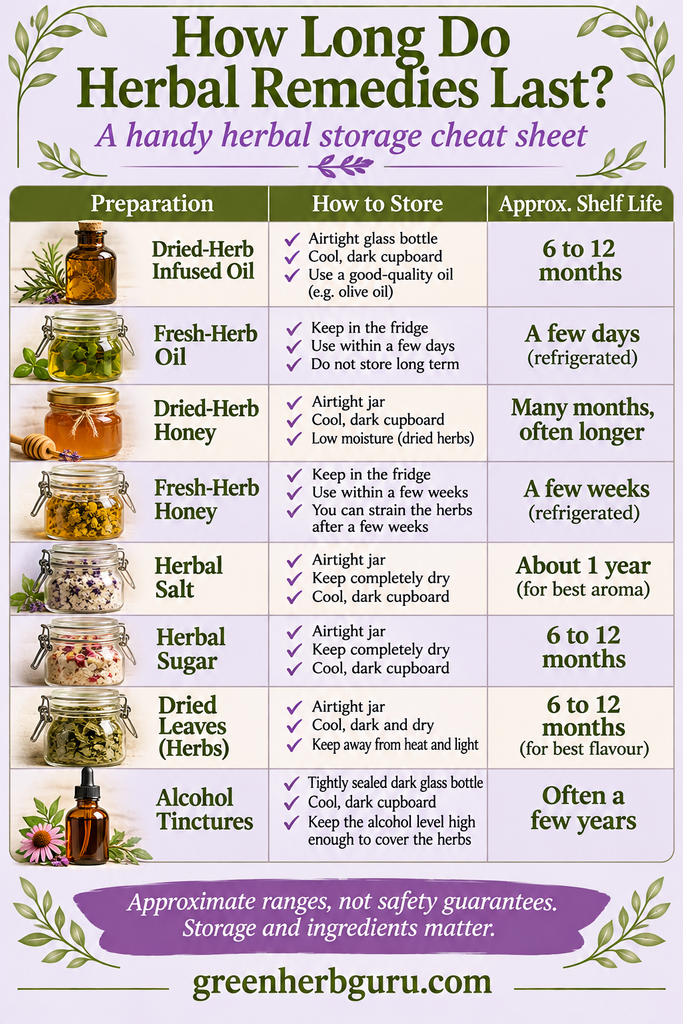
📊 Quick-Reference Shelf-Life Table
These are rules of thumb, not guarantees. Your kitchen, your ingredients and your storage all change the result. The ranges assume clean equipment and proper storage.
| Preparation | Where to keep it | Rough shelf life if stored properly | Main thing to watch |
|---|---|---|---|
| Oil with dried herbs | Cool, dark cupboard | About 6 to 12 months | Rancid smell, cloudiness, water droplets |
| Oil with fresh herbs or garlic | Fridge only | A few days | Botulism risk, so do not keep at room temperature |
| Honey with dried herbs | Cool, dark cupboard, sealed | Many months, often longer | Fizzing, sour smell |
| Honey with fresh herbs | Fridge | A few weeks | Fermentation, mould |
| Herbal salt | Dry cupboard, airtight | About a year for best aroma | Clumping, damp |
| Herbal sugar | Dry cupboard, airtight | About 6 to 12 months | Hard clumps, damp |
| Dried herbs (home-dried leaves) | Cool, dark, airtight | About 6 to 12 months for best flavour | Mould, musty smell |
| Tinctures | Dark bottle, cool cupboard | Often a few years | Cloudiness, off smell |
🗑️ When to Throw It Out
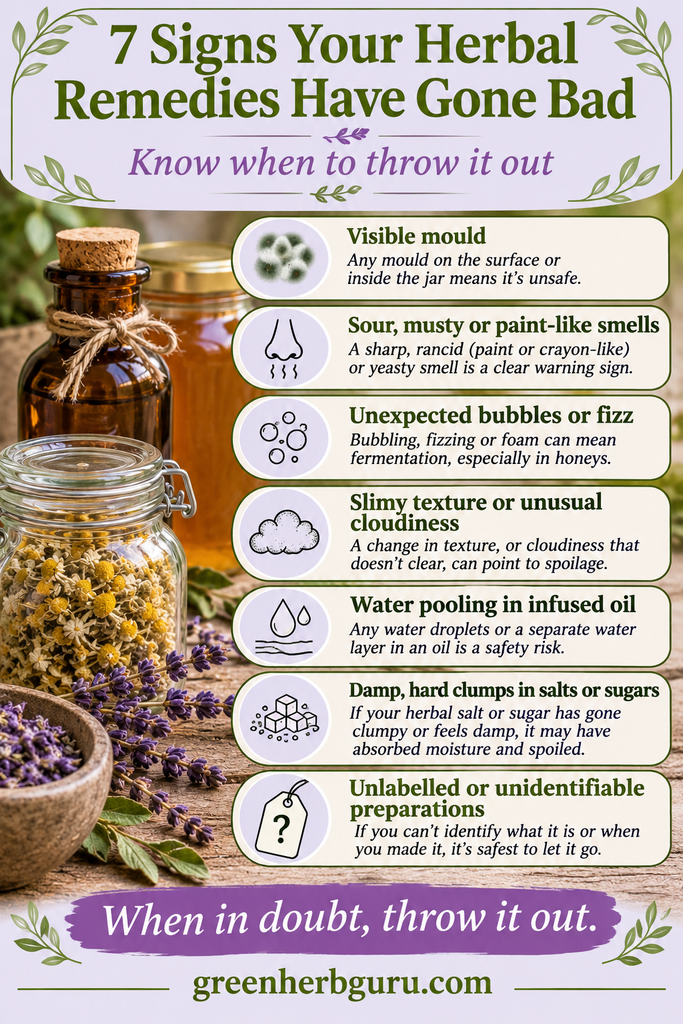
Quality loss is one thing, and spoilage is another. These are the signs to throw something away without a second thought:
- Any visible mould, whether fuzzy, white, green or black.
- A sour, rotten, musty or paint-like smell.
- Bubbling or fizzing in a preparation that should be still.
- Slimy texture or cloudy liquid that was clear before.
- Water pooling in an oil, or damp clumps in salt or sugar.
- Anything fresh-herb-based that has been left at room temperature when it should have been chilled.
- Anything you cannot identify, date or remember making.
My rule is simple: if you are unsure, do not use it. Herbs are inexpensive, and no jar is worth a stomach upset.
📓 Labelling and the Batch Log
A tidy label is the cheapest piece of safety equipment you own. Use waterproof labels or a permanent marker that does not smudge.
On each label, write the preparation, the herb and whether it was fresh or dried, the date made, and a use-by date. That is enough to answer almost every “is this still good?” question.
Keep a simple batch log alongside, noting what worked and what spoiled early.
✅ A Quick Safety Note
Herbs are plants with real effects, and traditional use is not the same as proven benefit. This guide covers how to store preparations, not what they will do.
If you are pregnant or breastfeeding, taking prescription medication, or have a health condition, check with your GP or pharmacist before using any herbal preparation. Herbs can interact with medicines, and some are not recommended in pregnancy. Our guide to herbal tea safety covers pregnancy, medications and everyday limits in more detail.
Keep every preparation out of reach of children, and never give honey to babies under 12 months. Any herbal oil or salve you plan to put on skin should be patch-tested first on a small area, as some people react to plants.
For a wider introduction to building your own herbal kit, start with our beginner’s apothecary guide.
❓ Quick Questions
Can I keep herbal oil on the kitchen counter? Oils made with dried herbs generally do better in a cool, dark cupboard than on a bright counter. Fresh herb and garlic oils must be refrigerated and used within days.
Why has my herbal honey gone fizzy? Fizzing usually means fermentation, often from extra moisture from fresh herbs. It is best discarded.
🌱 Continue Your Journey
- Freezing Fresh Herbs: Ice Cube Trays, Herb Butter Logs and Batch Prep
- How to Make Herbal Tea Blends for Beginners
- Chamomile for Sleep and Calm: A Beginner’s Guide
- The Complete Guide to Preserving Fresh Herbs: Drying, Freezing, and Infusing
- Viral Herb-Preservation Hacks: Save Your Harvest Before Frost Hits
Love herbs as much as we do? Join the Green Herb Guru newsletter for seasonal growing tips, preserving guides and kitchen herb inspiration.