Herbal Teas Safely: Pregnancy, Medications and Everyday Limits
A warm mug of chamomile before bed or a ginger tea to settle your stomach feels like one of the gentlest things you can do for your body. Most of the time, that instinct is right. But herbal tea sits in an odd middle ground between food and medicine, and a few simple safety habits make the difference between a daily ritual that supports you and one that quietly works against you.
This guide walks through how much herbal tea is genuinely fine to drink, what pregnancy changes about the picture, and which herbs are worth a second thought if you take regular medication. None of this is about fear. It is about drinking your tea with the same common sense you would apply to any other plant-based remedy.
As an Amazon Associate I earn from qualifying purchases and sometimes recommend products from other sellers at no extra cost to you. For more details see my disclosure policy and privacy policy.
How Much Herbal Tea Is Actually Too Much?
For most healthy adults, herbal tea is a low-risk daily habit. A couple of cups of a given herb per day, brewed at a normal strength, sits comfortably within what most health resources consider safe for general use.
Forged & Grown — The Shop
Handpicked products chosen to fit the way we cook, grow, and create. Nothing generic — every item earns its place.
Visit the Shop


Where things shift is in the word “regular.” Drinking three or four strong cups of the same herb every day for months starts to look less like a beverage and more like a medicinal dose, and that calls for a bit more thought and the occasional break. Brewing strength matters too: a standard cup made with one to two teaspoons of dried herb steeped for five to ten minutes is a very different thing from a concentrated decoction or tincture, even if both start with the same plant.
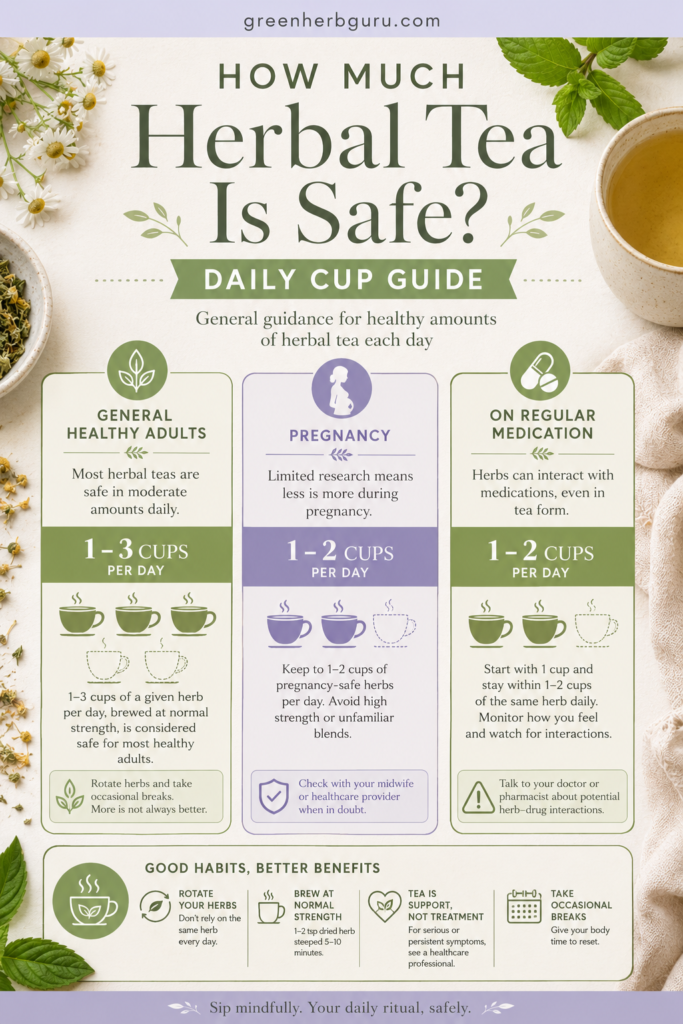
A few habits keep your everyday tea routine on the sensible side of that line:
- Rotate your herbs. Alternating between mint, lemon balm, ginger, and chamomile across the week spreads out your exposure to any single plant compound, rather than loading up on one herb for weeks on end.
- Stick to normal brewing strength. Save concentrated blends or decoctions for occasional, considered use rather than your everyday cup.
- Treat herbal tea as support, not treatment. It is well suited to mild, occasional symptoms like a restless evening or a sluggish digestion. Anything more serious or persistent — ongoing pain, unexplained bleeding, dark stools, or a mood shift that will not lift — deserves a conversation with a doctor, not another cup of tea.
If you are still working out which blends suit which moments of your day, Mint Teas 101 and our guide to building your own herbal tea blends are good starting points, and the art of brewing herbal tea covers the steeping basics in more depth.
Why “Natural” Doesn’t Automatically Mean Safe
It’s an easy assumption to make: a tea made from a plant must be gentler than a pill made in a lab. Mayo Clinic researchers push back on that idea directly, pointing out that there is no consistent legal definition of “natural” on a product label, and that plenty of plant-based remedies carry real pharmacological punch (Mayo Clinic, “Natural vs. safe”).
Herbal teas are also far less standardised than most people realise. The strength of active compounds can vary from one batch, brand, or even teabag to the next, and labels do not always disclose every ingredient in a blend. That variability is exactly why a herb that’s fine in modest amounts can become a problem at higher, more frequent doses — your body has no way of knowing the difference between “natural” and “synthetic” once a compound is in your bloodstream.
A handful of well-documented examples make the point clearly:
- Chamomile has been linked to a higher bleeding risk and noticeable drowsiness, especially alongside alcohol or blood-thinning medication.
- Ginseng and ginkgo can raise bleeding risk further still when combined with anticoagulants.
- Valerian carries a strong sedative effect that can interact with other sedating medications, which is part of why some clinicians recommend stopping it at least two weeks before surgery.
- Licorice root, taken in large or long-term amounts, can raise blood pressure and disrupt electrolyte balance.
None of this means these herbs are off-limits. It simply means that “it’s just tea” is not quite the full story, and it’s worth knowing where the actual risk sits before you reach for a third or fourth cup.
Herbal Tea During Pregnancy: What the Guidance Says
Pregnancy is the one stage of life where “limited evidence” becomes the operative phrase for almost every herb. Most herbal teas have not been studied in pregnant women for ethical reasons, so guidance tends to lean cautious by default rather than wait for data that may never arrive.
The NHS frames it simply: if you keep herbal tea to around one to two cups a day during pregnancy, you should be fine, while flagging that certain herbs can carry more risk in the first trimester specifically (NHS, “Foods to avoid in pregnancy”). The American Pregnancy Association adds useful nuance here too, noting that most commercial herbal tea brands stick to ingredients considered reasonably safe in normal amounts, while home-brewed, high-strength, or unfamiliar blends deserve more scrutiny (American Pregnancy Association, “Herbal Tea in Pregnancy”).
Several herbs come up again and again as “generally fine in food-level amounts” during pregnancy:
- Peppermint for nausea and digestion
- Ginger for morning sickness
- Lemon balm for sleep and calm, in moderate amounts
- Raspberry leaf, typically introduced later in pregnancy and discussed with a midwife first, as it’s associated with toning the uterus ahead of labour
On the other side of the ledger, blue cohosh and black cohosh are widely advised against because of their potential to stimulate the uterus, and very strong or concentrated hibiscus and valerian blends warrant extra caution. Even pregnancy-marketed blends that lean heavily on licorice are usually capped at a specific number of cups for the same blood pressure reasons mentioned above. If you’re exploring calming evening blends during pregnancy, our piece on mint and lemon balm for calm evenings and the growing guide for lemon balm from garden to teacup both flag the pregnancy-specific notes worth reading first.
The simplest version of all this guidance: check any regular herbal tea habit with your midwife or doctor, keep it to a cup or two of a well-known herb rather than a rotating medicinal dose, and treat “detox,” weight-loss, or hormone-balancing teas as something to skip entirely while pregnant.
Herbs and Medications: A Two-Way Conversation
If you take regular medication, herbal tea stops being a one-way decision and becomes something closer to a conversation between two active substances in your body. The National Center for Complementary and Integrative Health is direct about this: herbs can change how your body absorbs, processes, or clears a drug, sometimes making a medication less effective and sometimes intensifying its side effects (NCCIH, “6 Tips: How Herbs Can Interact With Medicines”).
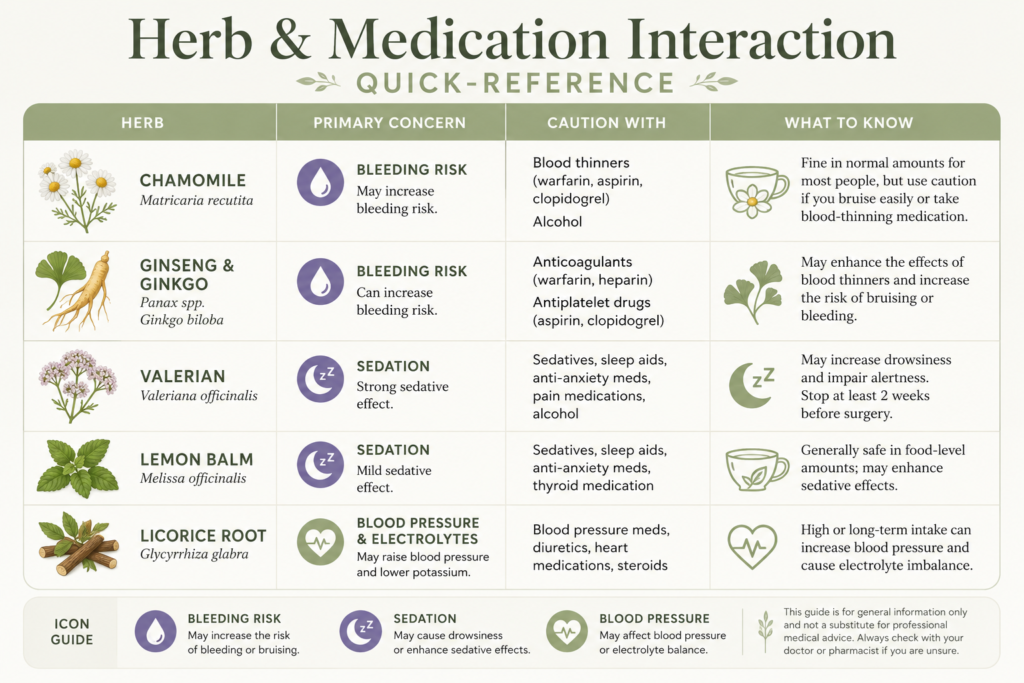
A few patterns show up consistently across the research:
| Herb / Tea | Main Concern | Who Needs Extra Caution |
|---|---|---|
| Chamomile | Possible bleeding risk; added drowsiness with alcohol or sedatives | People on blood thinners or sedatives; pregnancy |
| Ginseng or ginkgo | May raise bleeding risk with anticoagulants | Anyone on blood thinners, or ahead of surgery |
| Valerian | Strong sedation; interacts with many prescriptions | People on sedatives, pre-surgical patients, pregnancy |
| Lemon balm | Mild sedative effect; possible thyroid medication interaction | People with thyroid conditions or on sedatives |
| Licorice-heavy blends | Can raise blood pressure, disturb electrolytes | People with high blood pressure, heart disease, pregnancy |
St John’s wort deserves a special mention even though it is less common in everyday tea blends, because it speeds up how the liver processes a wide range of medications — including some antidepressants, blood thinners, and hormonal birth control — which can quietly make those medications less effective (Mayo Clinic, “Herbal supplements and heart medicines may not mix”). If you’re building a herbal toolkit for everyday wellness, our beginner’s guide to everyday medicinal herbs and rosemary for focus, circulation and everyday wellness both take the same evidence-led approach to weighing benefit against caution.
The practical takeaway is simple: tell your doctor or pharmacist about any herbal tea you drink regularly, particularly if you live with heart disease, depression or anxiety, diabetes, thyroid issues, or take blood thinners. Watch for new symptoms after starting a tea habit, such as unusual bruising, unexpected drowsiness, mood shifts, or digestive upset, and treat those as a signal to pause and ask questions.
Who Should Take Extra Care
A handful of groups benefit from treating “everyday medicinal” tea use with a bit more deliberation than the average healthy adult would need.
- Pregnant or breastfeeding people, for all the reasons covered above.
- Anyone on regular prescription medication, especially blood thinners, antidepressants, sedatives, or thyroid treatment.
- Children, whose smaller bodies process active compounds differently and who generally need much smaller, more diluted servings — or none at all for stronger herbs like valerian.
- Pets, who can react badly to herbs that are entirely fine for humans; cats in particular are sensitive to several common kitchen and tea herbs, so loose leaves and used teabags are best kept well out of paws’ reach.
None of these groups need to avoid herbal tea altogether. They just benefit from a quick check with a doctor, pharmacist, vet, or pediatrician before turning an occasional cup into a daily habit.
Simple Rules for Everyday Herbal Tea Drinking
Strip away the caveats and a handful of straightforward habits cover almost every situation:
- Keep any single herb to one or two cups a day for sustained, ongoing use.
- Rotate between a few favourites — iced herbal teas in summer, warming winter blends in the colder months — rather than drinking the same herb year-round.
- Brew at normal strength rather than reaching for concentrated decoctions for daily use.
- Mention regular herbal tea habits to your doctor or pharmacist, the same way you’d mention a supplement.
- Skip “detox,” weight-loss, or hormone-balancing blends, which tend to carry the least evidence and the most concentrated doses.
- Pay attention to how your body responds, and treat new or unusual symptoms as a reason to pause.
If you’re just getting started with herbal wellness more broadly, our complete beginner’s apothecary guide is a good place to build a foundation, and herbal teas for immune health covers a related angle worth bookmarking for cold season.
Frequently Asked Questions
Is it safe to drink herbal tea every day? For most healthy adults, yes, as long as you keep to a moderate amount of any single herb and rotate between a few varieties rather than relying on one herb exclusively.
How many cups of chamomile tea are safe per day? A couple of cups a day is generally considered low-risk for most adults, though anyone on blood thinners, sedatives, or who is pregnant should check with a doctor first because of the bleeding and drowsiness concerns noted above.
Can I drink herbal tea in early pregnancy? Many common herbs are fine in food-level amounts, but guidance leans cautious in the first trimester specifically. Sticking to one to two cups of a well-known, pregnancy-checked herb and confirming with your midwife is the safest approach.
Does herbal tea interact with antidepressants or blood thinners? It can. St John’s wort, ginkgo, ginseng, and valerian are among the herbs most often flagged for interactions with these medication types, so it’s worth mentioning your tea habits to your prescriber.
Is decaffeinated herbal tea automatically free of risk? Not necessarily. Most herbal teas are naturally caffeine-free, but the active plant compounds that cause interactions or pregnancy concerns have nothing to do with caffeine, so the same moderation guidance still applies.
A Cup Worth Enjoying
Herbal tea earns its place as one of the gentlest, most approachable parts of a herbal wellness routine, and for the vast majority of people, a daily cup or two of a well-known herb is nothing to overthink. The goal isn’t to second-guess every sip — it’s to know which situations call for a little extra care, whether that’s pregnancy, a regular prescription, a young child, or a curious pet.
Treat your tea cabinet the way you’d treat any other part of your wellness routine: with curiosity, a bit of variety, and an open conversation with your doctor or midwife when something new comes into the mix.
Continue Your Herbal Journey
- Digestive and Calm Evening Herb Teas — gentle mint and lemon balm blends for winding down at night
- Your Complete Beginner’s Apothecary Guide — the foundational guide for building a home herbal wellness routine
- Making Herbal Infused Oils at Home — another safety-first guide for a different herbal preparation method
- The Mint Family — a closer look at the herbs behind so many calming, digestion-friendly teas
Do you already rotate your herbal teas, or do you tend to reach for the same trusted blend every day? Tell us in the comments — we’d love to know what’s brewing in your kitchen.
Want more research-backed herbal guides like this one delivered straight to your inbox? Subscribe to the Green Herb Guru newsletter for weekly tips on growing, brewing, and using herbs safely at home.


