
Rosemary Hair Rinses and Scalp Oils: DIY Recipes and Safety Tips
If your social media feed has been full of rosemary water sprays and dramatic “before and after” hair transformations, you’re not alone. Rosemary has become one of the most talked-about ingredients in the natural hair care world — and while the hype is a little ahead of the science, there’s genuine reason to be interested. This herb has a long history of use in scalp and hair care, and some promising (if early) research to back it up.
The good news is that you don’t need expensive products or complicated routines to try it yourself. A simple rosemary hair rinse or a jar of homemade infused oil costs very little to make and uses the same herb you might already have growing on your windowsill. This guide will walk you through exactly how to make both — along with honest information about what rosemary can realistically do for your hair and scalp, and when it’s time to put down the herb jar and call a professional.
A note on safety: The information in this post is for general interest and educational purposes only. It is not medical advice. If you are experiencing significant hair loss, scalp problems, or any concerning symptoms, please consult a GP or dermatologist rather than relying on home remedies. Always patch test new preparations before applying them to your scalp, and seek professional guidance if you are pregnant, breastfeeding, or taking prescription medications.
As an Amazon Associate I earn from qualifying purchases and sometimes recommend products from other sellers at no extra cost to you. For more details see my disclosure policy and privacy policy.
What Does Rosemary Actually Do for Hair?
Before we get into recipes, it’s worth understanding what the research actually says — because viral content and scientific evidence don’t always align.
Forged & Grown — The Shop
Handpicked products chosen to fit the way we cook, grow, and create. Nothing generic — every item earns its place.
Visit the Shop


The Science Behind the Trend
The most-cited piece of research in the rosemary hair world is a small 2015 trial that compared rosemary oil to 2% minoxidil (the active ingredient in many hair loss treatments) for androgenetic alopecia — the kind of hair thinning linked to hormones and genetics. After six months, both groups saw similar hair count improvements, and the rosemary oil group reported less scalp itching as a side effect. That’s an encouraging result, but it came from one small study, and the researchers used a specific preparation of rosemary essential oil — not the same thing as a homemade rinse or infused oil.
Newer research is exploring rosemary-based blends for scalp quality and regrowth, but the body of evidence is still building rather than settled. What the science suggests is that rosemary may support scalp circulation and has antimicrobial and anti-inflammatory properties that could benefit scalp health. That’s a more modest but genuinely useful claim — and it’s a realistic way to think about what you’re adding to your routine.
The honest framing here is that rosemary works best as a supportive scalp-care ingredient — something that may help with mild thinning, itch, or dullness, especially alongside good nutrition, stress management, and medical advice where needed. It is not a proven cure for significant hair loss, and if a reel is promising overnight regrowth, that’s marketing rather than medicine.
Where Rosemary Fits in a Hair Care Routine
Rosemary works well as a gentle, low-cost addition to an existing routine. It pairs particularly well with scalp massage, which independently supports circulation. The infused oils and rinses in this guide are enjoyable to use, smell wonderful, and at worst, will simply give you a pleasant hair wash day. At best, over consistent weeks and months of use, some people do see improvements in scalp condition and hair quality. Just keep the timeline realistic — the clinical trial ran for six months, not six days.
If you’re already exploring rosemary as part of a wider herbal wellness practice, our guide to rosemary for focus, circulation and everyday wellness covers the broader picture of what this herb may offer. And if you’re curious about the general world of DIY herbal preparations, the post on making herbal infused oils at home is a great companion read before you start.
Rosemary Hair Rinse: The Simple Water-Based Method
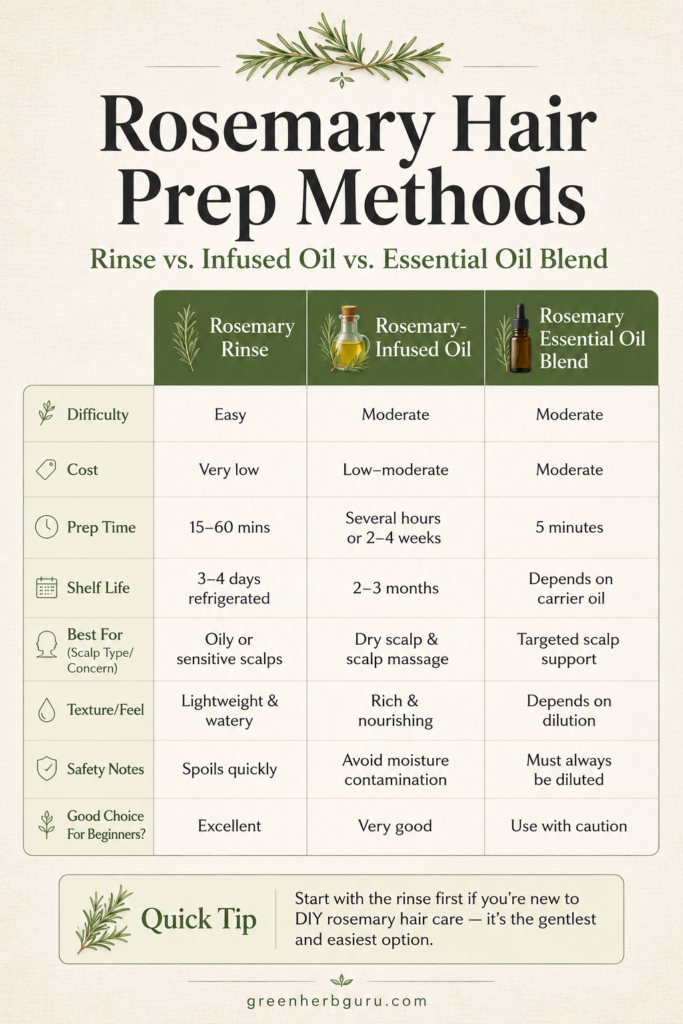
The rosemary water rinse is probably the preparation you’ve seen most on social media — a cooled herbal brew poured over clean hair and worked into the scalp. It’s easy to make, quick to use, and gentle enough for most people to try without any special ingredients.
How to Make a Basic Rosemary Hair Rinse
This method uses dried or fresh rosemary steeped in hot water — essentially the same process as making a strong herbal tea, then using it on your scalp.
What you need:
- 2–3 tablespoons dried rosemary, or several fresh sprigs
- 3 cups (approximately 700ml) of just-boiled water
- A heatproof bowl or jug
- A fine sieve or muslin cloth
- A clean spray bottle or pour bottle
Method:
- Add the rosemary to your bowl or jug and pour over the just-boiled water.
- Cover and leave to steep for 15–60 minutes off the heat — longer steeping gives a stronger brew.
- Allow to cool completely to lukewarm, then strain out all plant material through a fine sieve.
- Transfer the clear liquid to a clean bottle.
After shampooing, slowly pour the cooled rinse over your scalp and hair, gently massage for a minute or two, then either leave it in or rinse lightly with cool water. Starting with a leave-in approach gives the rosemary compounds more contact time, but rinse-off works too if you prefer.
Storage and Shelf Life
Homemade herbal waters have no preservatives, which means they spoil faster than you might expect. Keep your rinse in the fridge and use it within three to four days. If it looks cloudy, develops an off smell, or shows any sign of mould, discard it immediately and make a fresh batch. This isn’t a prep-once-and-forget preparation — it’s best made in small, fresh batches.
Start with once or twice a week and see how your scalp responds. Some people use it every wash day; others find once a week is plenty.
Rosemary-Infused Oil for Scalp Massage
The infused oil method gives you something richer and more nourishing — ideal for a pre-shampoo scalp massage. Unlike rosemary essential oil (which is highly concentrated and needs careful handling), an infused oil made by steeping rosemary in a carrier oil is gentle, skin-friendly, and a genuinely lovely thing to use.
Choosing Your Carrier Oil
The carrier oil you choose makes a real difference to how the finished product feels on your hair and scalp. A few good options to consider:
- Jojoba oil — technically a liquid wax, it closely mimics the skin’s natural sebum and is well-tolerated by most scalp types, including oily ones
- Grapeseed oil — lightweight, non-greasy, and absorbs quickly; great if you find heavy oils weigh your hair down
- Light olive oil — more widely available and affordable; works well but may feel heavier, so it’s better suited to dry scalps or thick hair
Avoid highly refined or heavily scented oils. You want a clean, neutral base that will actually absorb rather than just sit on the hair shaft.
How to Make Rosemary-Infused Oil
What you need:
- Dried rosemary (fresh can introduce moisture, which causes spoilage)
- Your chosen carrier oil
- A clean, dry glass jar with a lid
- A fine strainer or muslin cloth
Cold infusion method (takes 2–4 weeks, but very simple):
- Fill a clean, dry jar about one-third full with dried rosemary.
- Pour your carrier oil over the herb until the rosemary is completely submerged, with at least 1–2cm of oil above the plant material — this keeps air away from the herb and prevents mould.
- Cap tightly and leave in a cool, dark place for two to four weeks. Gently shake or tilt the jar every few days to keep things moving.
- Strain through a fine cloth or muslin into a clean bottle, squeezing out as much oil as possible. Label the bottle with the date.
Warm infusion method (quicker — a few hours):
If you don’t want to wait, place the sealed jar in a saucepan of water on very low heat. You’re aiming for a gentle warm — not simmering — held for several hours. Allow to cool completely before straining.
Storing Your Infused Oil
Store your finished oil in a cool, dark spot, away from direct sunlight. Aim to use it within two to three months. The telltale sign that an oil has gone rancid is a sharp, paint-like smell rather than the pleasant herby scent of the fresh product. When in doubt, discard and make a new batch — it’s not worth applying a rancid oil to your scalp.

How to Use It
Apply a small amount of the infused oil to your fingertips and massage it gently into your scalp for two to five minutes, focusing on any dry or tight areas. Leave it on for 30 minutes to a few hours before shampooing — or overnight if your skin tolerates oilier treatments well. Wash out thoroughly with a gentle shampoo.
Start with once a week. Over-oiling the scalp can weigh hair down, and for people prone to seborrhoeic dermatitis (flaky, inflamed scalp) or scalp acne, too much oil may actually make things worse. Less is genuinely more here.
Using Rosemary Essential Oil Safely
If you’ve come across recipes that include rosemary essential oil — the highly concentrated, steam-distilled version — rather than a homemade infusion, there are some important things to know before you add it to your scalp.
Why Dilution Matters
Essential oils are not the same as infused oils. They’re extremely concentrated, and applying them undiluted directly to the scalp can cause burning, redness, contact dermatitis, or sensitisation — meaning repeated exposure to a diluted amount can eventually trigger a reaction too. This applies to rosemary essential oil just as it does to other popular choices like peppermint or tea tree.
Rosemary Essential Oil
Dilution Calculator
Find the right number of drops for safe scalp use
Select your oil volume and dilution strength to see guidance.
| Use case | Dilution | Drops per tbsp | Notes |
|---|---|---|---|
| First use / sensitive scalp | 1% | 3 drops | Patch test first; increase only if no reaction |
| General scalp massage | 2% | 6 drops | Recommended starting point for most people |
| Max leave-on scalp use | 3% | 9 drops | Not recommended for first-time users or sensitive skin |
| Added to shampoo / conditioner | 2% | 6 drops per fl oz | Rinse-off format; suitable for regular use |
| Avoid entirely if… | Pregnant, breastfeeding, epilepsy, taking anticoagulants or blood pressure meds. Speak to your GP first. | ||
For leave-on scalp products, a safe working dilution is around 2–3%, which works out to roughly 2–3 drops of rosemary essential oil per tablespoon (15ml) of carrier oil. Many aromatherapists recommend starting even lower than this, particularly if you have a sensitive scalp. If there's no irritation after a few uses, you can gradually work up to the standard dilution.
An alternative approach — and one that feels less fussy — is to add a few drops of rosemary essential oil to your regular shampoo or conditioner. A few drops per ounce of product is usually enough. This gives you a gentle "boost" without requiring a separate oily treatment, and the rinse-off format means the essential oil is on your scalp for a shorter time.
Always Patch Test First
Whether you're trying a new rosemary essential oil blend, your infused oil, or even a fresh batch of rinse, a patch test before applying to your scalp is worthwhile — especially if you have sensitive skin, a history of allergies, or skin conditions like eczema or psoriasis.
Simple patch test steps:
- Apply a small amount of the diluted product to the inner forearm or behind one ear
- Leave it undisturbed for 24–72 hours — don't wash that spot
- Watch for any redness, itching, burning, bumps, or flaking
If any irritation develops, wash the area gently with mild soap and water, stop using the product, and don't apply it to your scalp. A reaction on your forearm is much easier to manage than one across your entire scalp. Persistent or severe reactions need a GP or dermatologist's input, not more DIY adjustment.
Who Should Be Extra Careful (or Skip This Altogether)
Rosemary hair preparations are generally well-tolerated, but there are some situations where caution — or professional guidance — is the right call before experimenting.
You should speak to a healthcare provider before using concentrated rosemary products if you:
- Are pregnant or breastfeeding — rosemary in culinary amounts is fine, but concentrated preparations are a different matter
- Take anticoagulants (blood thinners), blood pressure medications, or lithium
- Have epilepsy — some evidence suggests high doses of rosemary may lower the threshold for seizures
- Have known plant allergies, particularly to the Lamiaceae (mint) family
This isn't a reason to panic if you've been happily using rosemary shampoo — it's a prompt to get informed advice if you fall into any of these categories.
When DIY Isn't Enough
One of the most useful things this post can do is be honest about when homemade hair care isn't the right tool for the job. Rosemary products are lovely for general scalp wellness and may support mild, diffuse thinning over time — but they are not a treatment for medical hair loss conditions, and trying to self-treat can sometimes delay getting the right help.
See a GP or dermatologist — rather than reaching for more herb recipes — if you experience:
- Sudden or patchy hair loss, or visible bald patches
- Scarring on the scalp
- Significant shedding over several consecutive weeks
- Hair loss accompanied by other symptoms (fatigue, scalp pain, changes in skin or nails)
These are situations where an underlying cause needs to be found, not just managed topically. A doctor can rule out conditions like alopecia areata, scalp infections, thyroid issues, iron deficiency, or hormonal imbalances — all of which require specific treatment, not herbal rinses.
It's also worth remembering that sleep, diet, and stress management have a far bigger impact on hair health than any single topical ingredient, no matter how viral it is. If you've been exploring herb-based wellness more broadly, our beginner's apothecary guide looks at how to build a genuinely useful home herbal toolkit — grounded in what herbs can realistically offer.
Quick Troubleshooting Guide
Even straightforward preparations can throw up a few questions. Here are the most common ones:
My infused oil smells strange — is it still okay to use? A pleasant herby scent is what you're after. If the oil smells sharp, sour, or paint-like, it's likely gone rancid and should be discarded. Rancid oils can cause irritation and are best not applied to the skin.
My rinse went cloudy in the fridge. Cloudiness in a homemade herbal water is usually a sign of bacterial or fungal growth — particularly if it wasn't there initially. Discard it and make a fresh batch, ensuring your bottle is scrupulously clean before you refill it.
I've been using it for three weeks with no change. Three weeks is very early — the most rigorous clinical research used a six-month timeline. Give it consistent use for at least two to three months before deciding it isn't working for you.
My scalp feels greasier since I started. Scale back the frequency or the amount of oil used. Not every scalp type responds well to oily treatments — some people do better with the water-based rinse alone.
Putting It All Together
Rosemary hair care is one of those cases where the viral version of something is a little ahead of the evidence — but the underlying idea is genuinely sound. A simple hair rinse or infused oil made with rosemary is easy, inexpensive, and pleasant to use. Applied consistently over months, with realistic expectations and proper dilution, it's a worthwhile addition to a hair care routine for many people.
Start with one preparation — either the rinse or the infused oil, not both at once — so you can actually assess how your scalp is responding. Patch test before your first use, keep an eye on shelf life, and remember that dilution is non-negotiable if you add essential oil to the mix.
Most of all, enjoy the process. Growing and using rosemary at home — whether for your scalp, your cooking, or your general wellbeing — is one of the most satisfying and accessible aspects of herb gardening. If you're curious about growing rosemary indoors versus outdoors and which suits your space best, that guide covers everything you need to get a healthy plant established. You can also explore the full picture of what rosemary can do for your health and wellness if you'd like to understand the broader evidence base.
And if you already have a jar of homemade rosemary oil on the go, it's worth knowing that the same preparation is the starting point for the DIY rosemary-infused oil guide on the site — so you're already ahead of the game.
Continue Your Journey
- Making Herbal Infused Oils at Home: A Safety-First Guide — Everything you need to know about making safe, effective herbal oils at home, covering carrier oil choices, preparation methods, and shelf life.
- Rosemary for Focus, Circulation and Everyday Wellness — A deeper look at the evidence behind rosemary's wellness claims, covering everything from memory to circulation.
- How to Make Homemade Rosemary Infused Oil — A step-by-step guide to the classic rosemary oil preparation, with tips for getting the best result.
- Rosemary Shampoo for Hair Growth: Does It Really Work? — An honest look at rosemary shampoo and what the evidence actually says about commercial rosemary hair products.
- How to Grow Rosemary Indoors vs. Outdoors — Ready to grow your own supply? This guide covers everything from soil to sunlight to keep your rosemary thriving.
Have you tried a rosemary hair rinse or scalp oil? We'd love to hear how you got on — drop your experience in the comments below. And if you'd like more herb-growing and DIY wellness ideas straight to your inbox, sign up for the Green Herb Guru newsletter.


