
Lemony Orzo with Spinach Pesto (Ready in 20 Minutes)
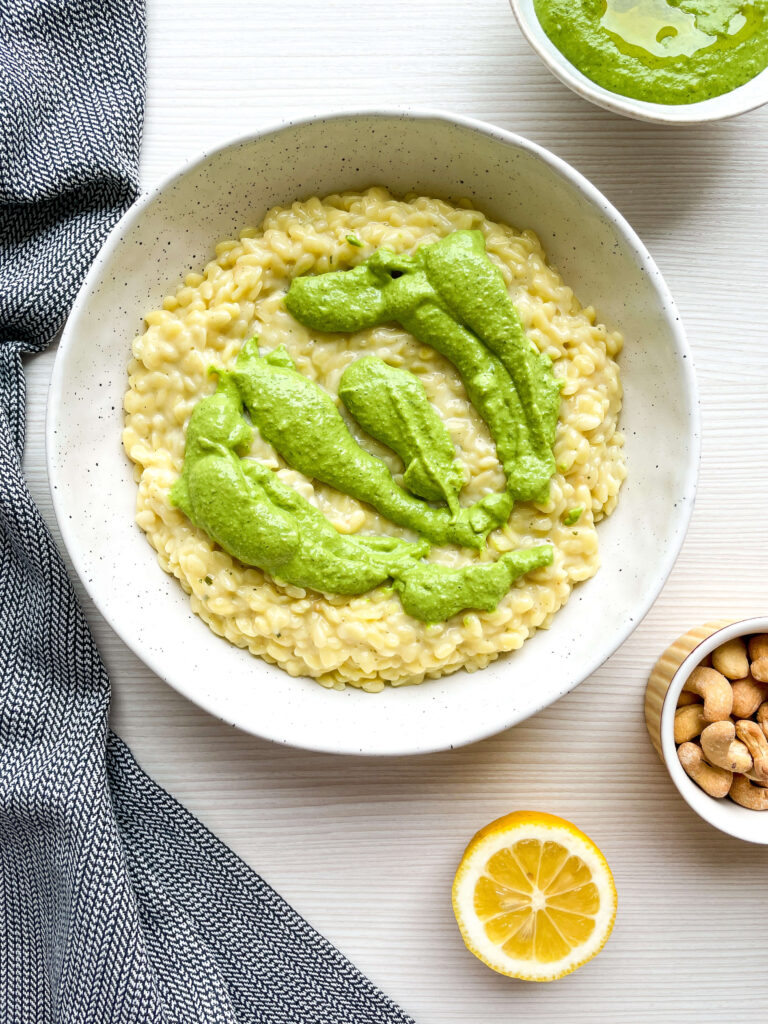
There’s something deeply satisfying about a dish that tastes like you’ve been in the kitchen for hours when it actually comes together in under 20 minutes. This lemony orzo with spinach pesto is exactly that kind of recipe — creamy, bright, and packed with fresh herb flavour, all from a handful of simple ingredients.
The orzo cooks right in vegetable broth, making it wonderfully rich and creamy without any fuss. Pair it with a vivid, walnut-based spinach and basil pesto, and you’ve got a meal that works just as well for a quick weeknight dinner as it does for impressing guests. Once you’ve tried it, you’ll wonder why you haven’t been cooking orzo this way all along.
As an Amazon Associate I earn from qualifying purchases and sometimes recommend products from other sellers at no extra cost to you. For more details see my disclosure policy and privacy policy.
Why You’ll Love This Recipe
- It’s genuinely quick. The whole thing is on the table in around 20 minutes, and most of that time is hands-off while the orzo simmers.
- Creamy without being heavy. Cooking the orzo in broth with a splash of cream gives you that comforting, silky texture without feeling stodgy.
- The pesto makes it. This spinach and basil pesto is fresher and more vibrant than anything from a jar — and you can make it while the orzo cooks.
- Endlessly adaptable. Serve it as a side, bulk it up with protein, or eat it as a vegetarian main — it works every way you try it.
What is Orzo?
If you haven’t cooked with orzo before, it’s a small pasta shaped like a large grain of rice. It’s widely used in Mediterranean and Middle Eastern cooking, and it has a lovely, slightly chewy texture when cooked well. Unlike traditional pasta that goes in a big pot of boiling water, orzo is brilliant cooked like a risotto — in stock, stirring occasionally — so every grain absorbs all that flavour. It’s found in most supermarkets alongside regular pasta, and it’s well worth keeping a bag in the cupboard.
Forged & Grown — The Shop
Handpicked products chosen to fit the way we cook, grow, and create. Nothing generic — every item earns its place.
Visit the Shop


Ingredients
- Orzo (2 cups): The base of the dish — look for standard dried orzo pasta in the pasta aisle. Measure it dry before cooking as it swells quite a bit as it absorbs the broth.
- Low sodium vegetable broth (3½ cups): This is what gives the orzo its depth of flavour. Low sodium works best here so you can control the seasoning at the end. You could swap in chicken broth if you’re not keeping the dish vegetarian.
- Heavy cream (¼ cup): Just enough to make the orzo incredibly creamy and glossy. A splash of crème fraîche or full-fat coconut cream works if you’d prefer a dairy-free version.
- Lemon, juiced (½ large): The real star of the show. Fresh lemon juice added off the heat keeps everything bright and sharp — don’t be tempted to use bottled lemon juice here.
- Walnuts (½ cup): The base of the pesto, giving it body and a slightly earthy richness. You can swap for pine nuts or blanched almonds if you prefer a milder flavour. If you have a few minutes, lightly toasting them in a dry pan first deepens the flavour considerably.
- Baby spinach leaves (2 cups): This is what turns the pesto that gorgeous deep green colour. Spinach is milder than basil on its own, which makes it a great base — use fresh leaves rather than frozen.
- Parmesan cheese, freshly grated (¼ cup): Freshly grated makes a real difference to the pesto texture. Pre-grated tends to be drier and doesn’t blend as smoothly. If you’re making this for strict vegetarians, swap for a vegetarian hard cheese.
- Basil leaves (½ cup): Fresh basil brings that classic pesto fragrance. You don’t need perfect-looking leaves — any fresh basil will do the job. If you grow your own, this recipe is a brilliant way to use up a glut.
- Garlic (1 medium clove): Just one clove keeps the pesto flavourful without being overpowering. If you love garlic, go ahead and add a little more.
- Extra-virgin olive oil (¼ cup): Use the best olive oil you have for the pesto — it really does show in the finished flavour.
- Sea salt and black pepper, to taste: Season generously at each stage for the best result.
Substitutions and Additions
- Make it vegan: Swap heavy cream for oat cream or coconut cream, and use a vegan parmesan or nutritional yeast in the pesto.
- Add protein: Stir through some shredded rotisserie chicken or pan-fried prawns at the end. White beans or chickpeas are a brilliant plant-based option.
- Swap the nuts: Pine nuts give a more traditional pesto flavour, while cashews make the pesto even creamier. For a nut-free version, sunflower seeds work surprisingly well.
- Add extra veg: A handful of frozen peas stirred in at the end of cooking is lovely, as is some wilted baby spinach stirred directly into the orzo.
- Extra lemon zest: If you love citrus, add some lemon zest to the pesto as well as the juice in the orzo — it gives even more brightness.
Instructions
Add the orzo and vegetable broth to a medium saucepan and bring to a steady simmer over medium heat.
Cook, stirring occasionally, until the orzo has absorbed most of the broth — around 6 to 8 minutes.
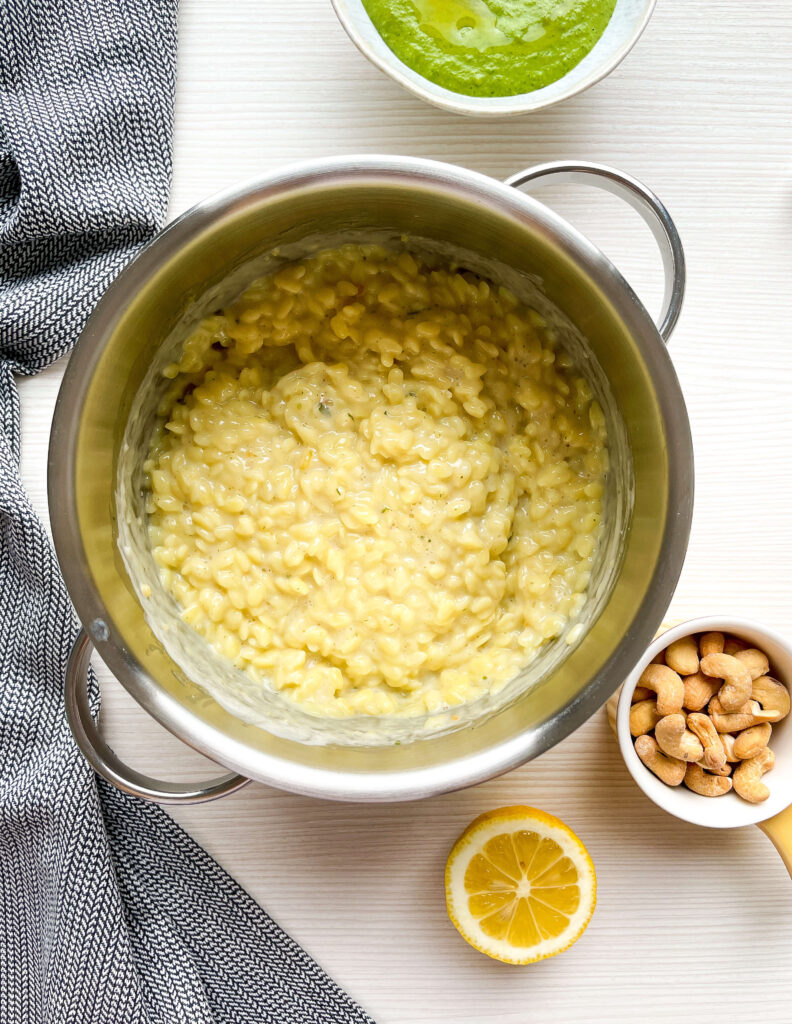
Pour in the heavy cream and continue cooking until the orzo is cooked through and very creamy, about another 2 to 3 minutes.
Remove from heat and stir in the fresh lemon juice. Season with salt and set aside.
While the orzo is cooking, make the pesto: add the walnuts, baby spinach, parmesan, basil, and garlic to a small blender or food processor.
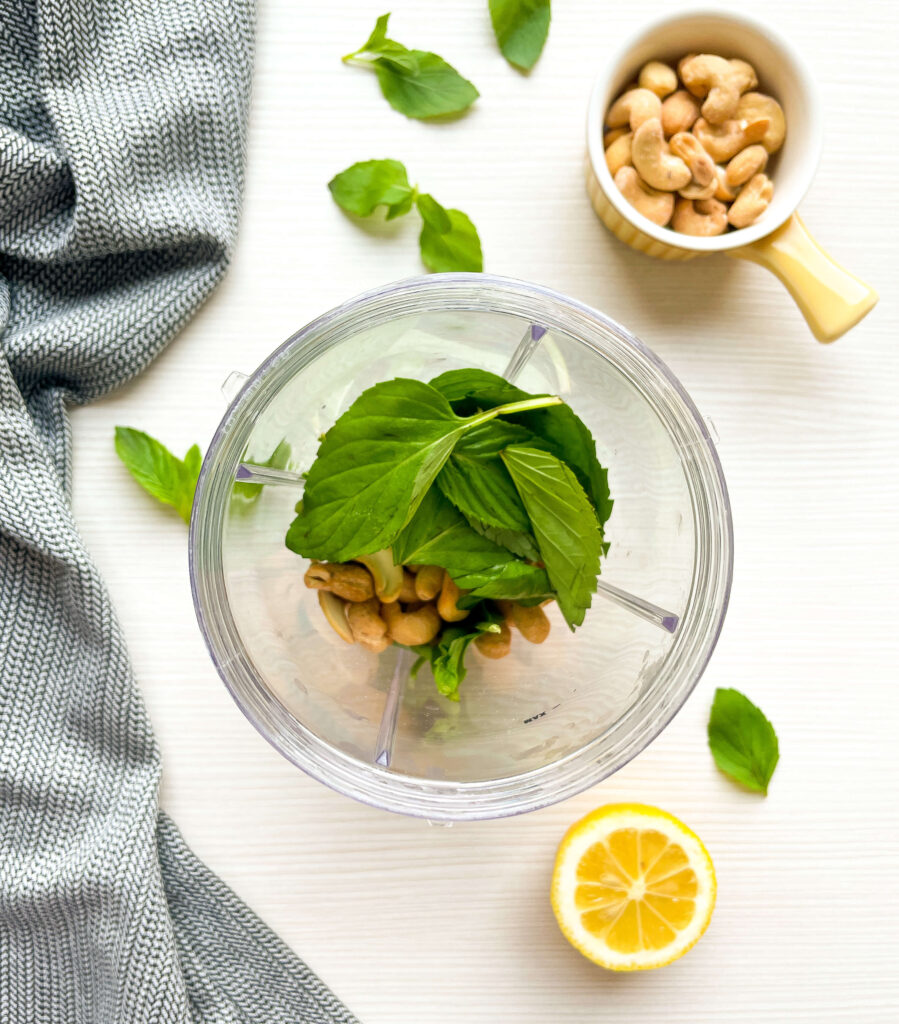
Blend until mostly smooth, then slowly drizzle in the olive oil until a thick, glossy pesto forms.
Season the pesto with salt and black pepper to taste.
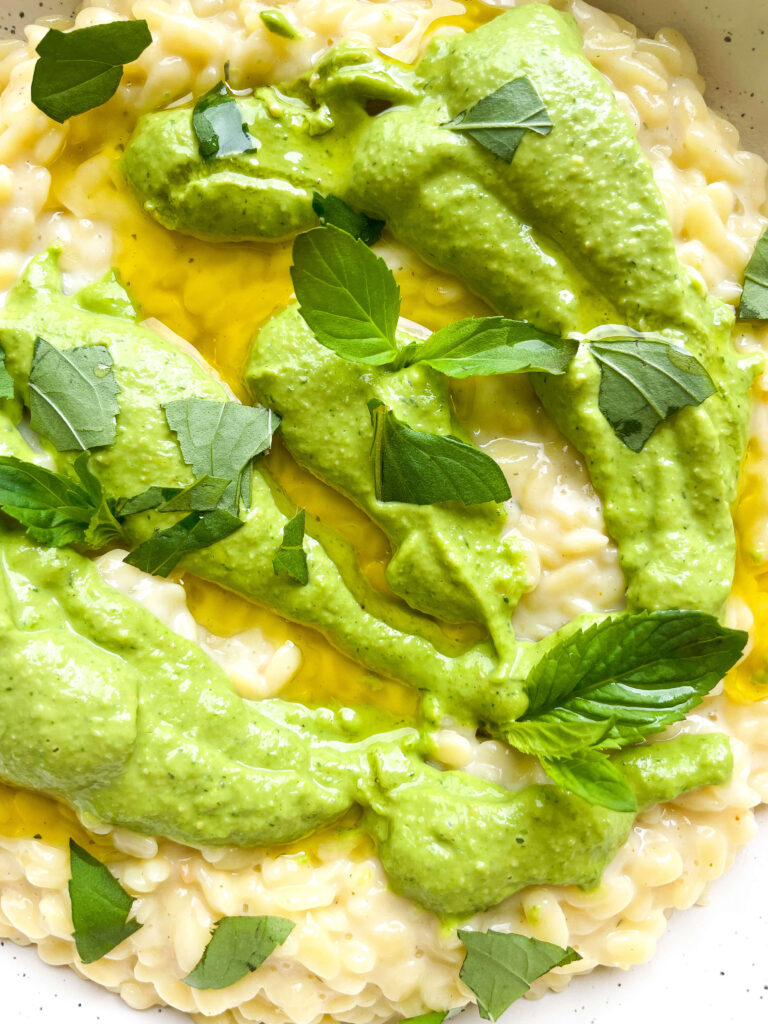
Serve the orzo in bowls with a generous dollop of spinach pesto on top. Stir it through at the table or let guests mix their own.
Recipe Tips
- Don’t overcook the orzo. Keep a close eye during that last couple of minutes with the cream — orzo can go from perfectly al dente to mushy quite quickly. You want it creamy but still with a little bite.
- Add lemon juice off the heat. Stirring in lemon juice while the pan is still hot can dull its brightness. Off the heat is the way to go.
- Blend the pesto in stages. Pulse the dry ingredients first before adding the oil — this stops the blender from just spinning the leaves around without catching them.
- Taste everything before serving. Both the orzo and the pesto need seasoning. Taste each one separately and adjust salt, pepper, and lemon before plating.
- Make extra pesto. This pesto keeps in the fridge for up to a week with a thin layer of olive oil on top, and it’s brilliant tossed through pasta, spread on sandwiches, or served with roasted vegetables.
Serving Suggestions
This orzo works beautifully as a standalone vegetarian main, especially with some good crusty bread on the side to mop up any creamy pesto that pools at the bottom of the bowl.
If you’re serving it as a side dish, it pairs really well with something simple and herby — think Roasted Rosemary Lemon Chicken or Baked Salmon en Papillote with Fresh Herbs and Capers. The creamy, citrusy orzo balances beautifully against both.
For a more casual spread, serve alongside the Herbed Cream Cheese Stuffed Mushrooms for a vegetarian dinner that feels genuinely satisfying without much effort.
A simple green salad with a sharp vinaigrette is all you need to round the meal out. If you want something more substantial, a handful of rocket and shaved parmesan alongside works perfectly.
Storage & Reheating
Storing: The orzo keeps well in the fridge for up to 3 days in an airtight container. Store the pesto separately if possible — it tends to soak into the orzo as it sits, which changes the texture slightly.
Reheating: Reheat gently in a saucepan over low heat with a splash of water or vegetable broth to loosen it back up. Avoid high heat, which can make it gluey. Stir in fresh pesto after reheating rather than before — it keeps the colour and flavour much better.
Freezing: The orzo itself doesn’t freeze well — the texture becomes very soft and clumpy once thawed. The pesto, however, freezes brilliantly. Spoon it into an ice cube tray, freeze until solid, and pop the cubes into a bag. Pull out a cube whenever you need a quick flavour boost for pasta, soups, or dressings. Take a look at our guide to herb preservation hacks for more ideas on making the most of fresh herbs year-round.
Recipe FAQ
Can I use a different pasta shape instead of orzo? Orzo gives the best creamy result when cooked in broth, but you could use other small pasta shapes like ditalini or stelline in a similar way. Larger shapes won’t absorb the broth as evenly, so you’d be better off cooking them separately and tossing them with the pesto.
My pesto looks too thick — how do I thin it out? Add a tablespoon of cold water or an extra splash of olive oil and pulse again. The consistency should be thick enough to hold its shape when dolloped but loose enough to stir through the orzo easily.
Can I use jarred pesto instead? You can, though the fresh spinach pesto really does make this recipe. If you’re short on time, a good quality fresh pesto from the chilled section is a better swap than shelf-stable jarred pesto, which tends to taste quite flat by comparison. For more ideas on how to use basil in cooking, head over to our guide on how to make homemade pesto.
Is this dish suitable for children? Yes — the mild, creamy flavour tends to go down well with kids. You could leave out the garlic or use half a clove for a milder pesto, and reduce the lemon juice slightly if they prefer less acidity.
Can I make the pesto ahead of time? Yes, and it’s a great time-saver. The spinach pesto keeps in the fridge for up to a week with a thin layer of olive oil poured over the top to prevent it browning. You can also use basil-infused olive oil as a finishing drizzle for an extra layer of herb flavour.
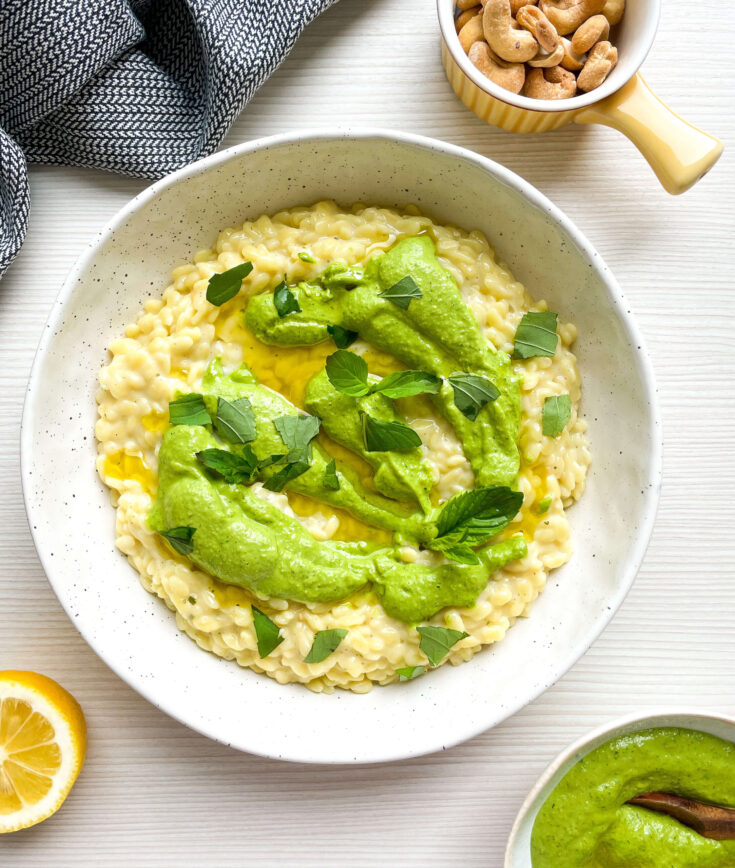
Lemony Orzo with Spinach Pesto
This creamy lemony orzo is cooked risotto-style in vegetable broth, then topped with a fresh, vibrant spinach and basil pesto. Ready in just 20 minutes and easy enough for any night of the week.
Ingredients
- 2 c. orzo
- 3-1/2 c. low sodium vegetable broth
- 1/4 c. heavy cream
- 1/2 large lemon, juiced
- 1/2 c. walnuts
- 2 c. baby spinach leaves
- 1/4 c. parmesan cheese, freshly grated
- 1/2 c. basil leaves
- 1 medium garlic clove
- 1/4 c. extra-virgin olive oil
- Sea salt and black pepper, to taste
Instructions
- Add the orzo and vegetable broth to a medium saucepan and bring to a steady simmer over medium heat.
- Cook, stirring occasionally, until the orzo has absorbed most of the broth — around 6 to 8 minutes.
- Pour in the heavy cream and continue cooking until the orzo is cooked through and very creamy, about another 2 to 3 minutes.
- Remove from heat and stir in the fresh lemon juice. Season with salt and set aside.
- While the orzo is cooking, make the pesto: add the walnuts, baby spinach, parmesan, basil, and garlic to a small blender or food processor.
- Blend until mostly smooth, then slowly drizzle in the olive oil until a thick, glossy pesto forms.
- Season the pesto with salt and black pepper to taste.
- Serve the orzo in bowls with a generous dollop of spinach pesto on top. Stir it through at the table or let guests mix their own.
Notes
Nutrition Information:
Yield:
4Serving Size:
1Amount Per Serving: Calories: 209Total Fat: 3gSaturated Fat: 1gUnsaturated Fat: 2gCholesterol: 2mgSodium: 90mgCarbohydrates: 40gFiber: 4gSugar: 5gProtein: 9g
Continue Your Journey
- Homemade Fresh Pesto: How to Make This Easy Sauce — master the classic basil version before experimenting with your own combinations.
- Essential Herbs and Spices: Elevate Every Kitchen Dish — a great starting point if you want to cook more confidently with herbs.
- One Pot Mushroom and Herb Rice — another fuss-free, herb-packed dish that comes together in one pan.
- Viral Herb-Preservation Hacks: Save Your Harvest Before Frost Hits — learn how to keep your fresh herbs (including basil) in top condition for longer.
- How to Make Basil-Infused Olive Oil at Home — a brilliant homemade ingredient to drizzle over this orzo before serving.
Have you tried a different nut in the pesto, or added protein to make it more of a main meal? Drop your version in the comments — we’d love to hear how you made it your own.
Want more quick herb recipes and growing tips straight to your inbox? Sign up for the Green Herb Guru newsletter and we’ll send you our best seasonal content every week.


