Chamomile for Sleep and Calm: A Beginner’s Guide
Chamomile is the herb most people already half know. It shows up in tea bags, in bath products, in the vague memory of a grandmother’s kitchen, long before anyone plants a single seed.
Growing it yourself changes that relationship. A few pots of feathery leaves and small white flowers turn a familiar shop-bought tea into something you grew, dried and brewed with your own hands.
This guide covers the traditional use of chamomile for sleep and calm, how to grow it from seed, and how to dry, store and brew your first cup. It also rounds out a small trio of easy evening herbs alongside mint and lemon balm, so if you already grow either of those, chamomile is a natural next addition.
As an Amazon Associate I earn from qualifying purchases and sometimes recommend products from other sellers at no extra cost to you. For more details see my disclosure policy and privacy policy.
Forged & Grown — The Shop
Handpicked products chosen to fit the way we cook, grow, and create. Nothing generic — every item earns its place.
Visit the Shop


🌼 What Chamomile Actually Does
Chamomile has been used traditionally as a calming, sleep-supporting herb for centuries, most often as a warm tea taken in the evening. That long history of use is not the same as a guaranteed medical outcome, and this guide treats it that way throughout.
Some research points to mild calming and digestive effects, often linked to a compound called apigenin, but the evidence is not strong enough to call chamomile a treatment for insomnia or anxiety. It is better understood as a gentle, low-stakes ritual herb than a remedy.
For many people, the value sits as much in the ritual, the warm cup, the wind-down routine, as in the herb itself. That is reason enough to grow it.
🌱 German vs Roman Chamomile: Which One to Grow
Two different plants both go by the name chamomile, and beginners often end up with the wrong one without realising it.
German chamomile (Matricaria chamomilla) is an annual that grows upright to about 60cm, flowers generously through summer, and self-seeds readily. It is the variety most commonly used for tea, and the one this guide focuses on.
Roman chamomile (Chamaemelum nobile) is a low, spreading perennial that behaves more like ground cover. It smells wonderful underfoot but produces far fewer usable flowers, so it suits a fragrant lawn patch more than a tea harvest.
For a beginner who wants cups of tea by midsummer, German chamomile is the more straightforward choice.
German chamomile
Best for tea
Matricaria chamomilla
| Life cycle | Annual (self-seeds readily) |
| Growth habit | Upright, bushy |
| Height | Up to 60cm |
| First flowers | 8-10 weeks from sowing |
| Best for | Drying for tea, generous flower yield |
🌿 Growing Chamomile From Seed to Flower
Chamomile is genuinely one of the easier herbs to start from seed, which makes it a forgiving choice for a first attempt at growing something for tea rather than the kitchen.
Sow indoors from March, or direct outdoors from mid-April once the soil has warmed. The seed needs light to germinate, so scatter it on the surface of the compost rather than burying it, and keep it just moist until seedlings appear.
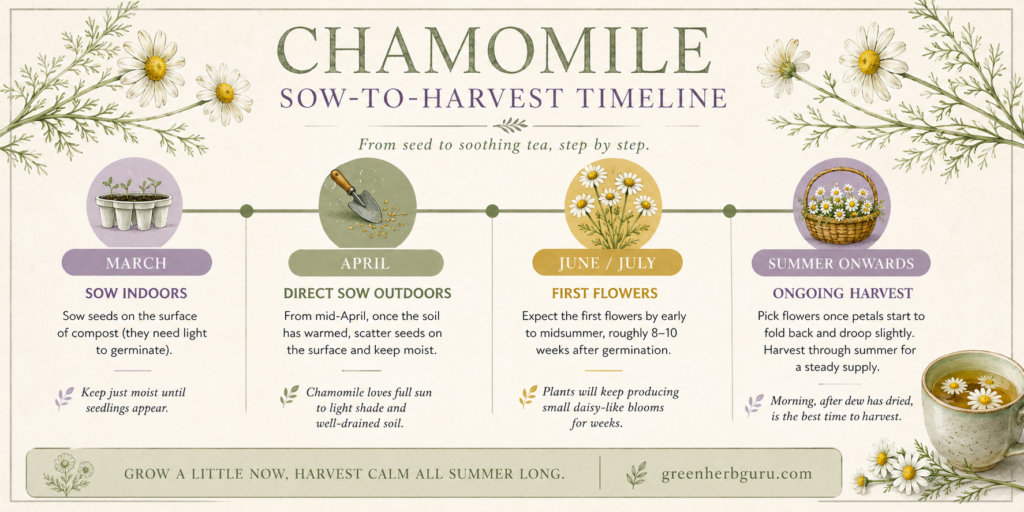
Chamomile wants full sun to light shade and well-drained soil. It is not fussy about fertility, and rich, over-fed soil tends to produce more leaf than flower, so resist the urge to feed it heavily.
From a spring sowing, expect the first flowers by early to midsummer, roughly 8 to 10 weeks after germination. Once flowering starts, a single German chamomile plant will keep producing small daisy-like blooms for weeks, which is what makes it worth growing rather than buying dried.
If growing herbs from seed is new territory, planning your herb garden and having the right basic tools on hand before you start will save some early frustration.
🍃 Harvesting, Drying and Storing Your Flowers
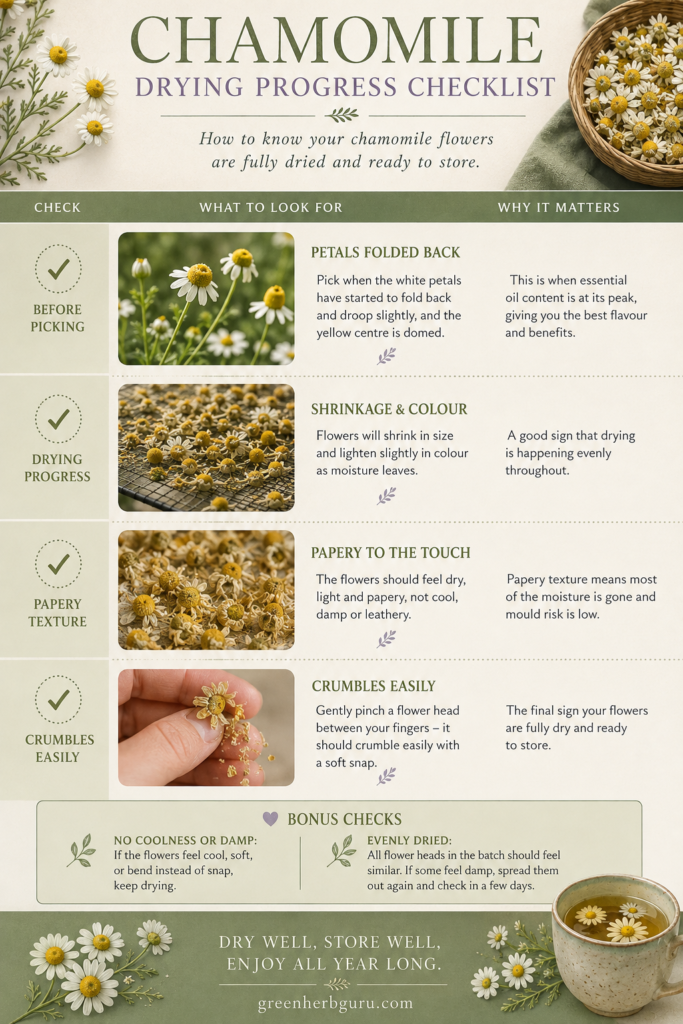
Pick the flowers once the white petals have started to fold back and droop slightly, which is when the essential oil content peaks. Morning, once any dew has dried, is the best time to harvest.
Spread the flower heads in a single layer on a tray or drying rack, somewhere warm, dark and well ventilated, out of direct sun. Left undisturbed, they will dry fully in around two to three weeks.
Once the flowers feel papery and crumble easily between your fingers, they are ready to store. Keep them in an airtight container away from light and heat. Airtight glass jars work well here and keep dried flowers fresher for longer than a paper bag or a loosely closed tin.
Properly dried and stored chamomile keeps its flavour for around a year, though it is at its best within the first six months. This is the same principle covered in more depth in the full guide to preserving fresh herbs, useful if you are drying more than one herb this season.
🍵 Brewing Your First Cup
Chamomile tea is forgiving, and there is no single correct method, but a good starting point for a beginner is one to two teaspoons of dried flowers per cup of freshly boiled water.
Cover the cup while it steeps to keep the volatile oils from escaping, and leave it for 5 to 10 minutes. A shorter steep gives a lighter, more floral cup, while a longer one brings out more of the slightly bitter, apple-like depth chamomile is known for.
Fresh flowers work too, though you will need roughly double the quantity compared with dried, since drying concentrates the flavour. If you want to build a wider repertoire beyond a single cup of chamomile, this beginner’s guide to blending herbal teas and the broader basics of brewing herbal tea are both good next stops.
🌙 Pairing Chamomile With Mint and Lemon Balm
Chamomile does not have to stand alone. Once you are growing it alongside mint or lemon balm, an evening blend is one of the simplest ways to use all three.
A gentle starting ratio is two parts chamomile to one part mint or lemon balm, adjusted to taste. Mint adds a cooling brightness, while lemon balm leans slightly more toward the same calm, evening wind-down character as chamomile itself.
This is exactly the territory covered in Mint and Lemon Balm for Calm Evenings and Happy Digestion and Digestive and Calm Evening Herb Teas, both of which pair naturally with chamomile once you have flowers of your own to add. Together, the three make a genuinely useful little evening herb patch: chamomile for the base, mint or lemon balm to round it out.
⚠️ A Quick Safety Note
Chamomile is a member of the daisy family, and people with a known allergy to ragweed, daisies, chrysanthemums or marigolds have a higher chance of reacting to it too. If you are unsure, try a small amount first and stop if you notice any itching, rash or breathing changes.
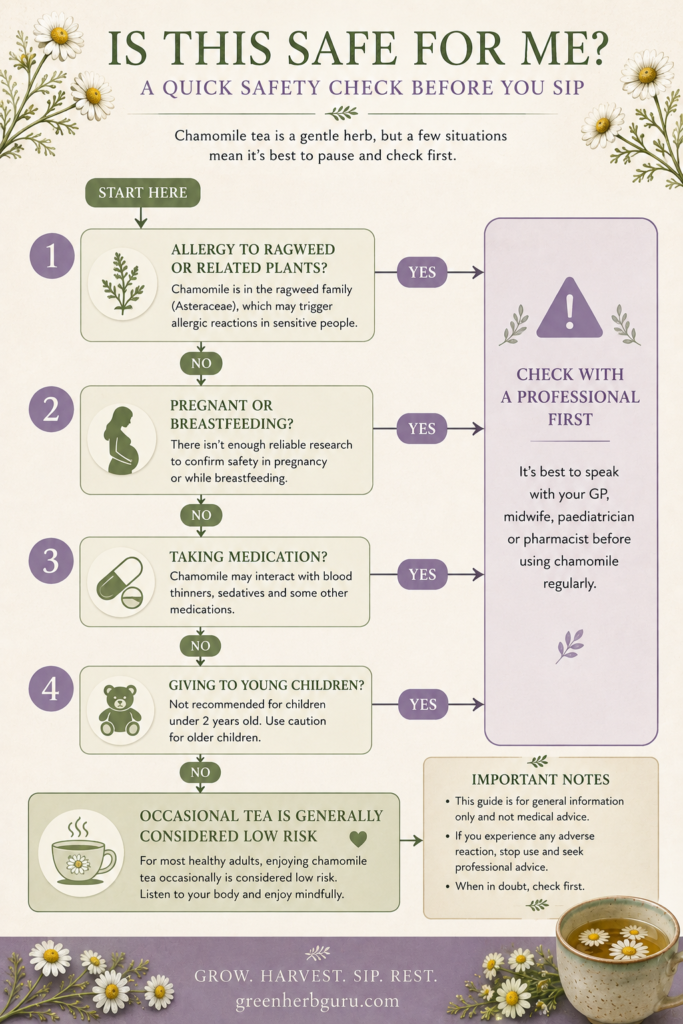
If you are pregnant or breastfeeding, taking medication (particularly blood thinners or sedatives), or considering giving chamomile to young children, speak to a doctor, midwife or pharmacist before making it a regular habit. Occasional weak tea is generally considered low risk for most healthy adults, but natural does not automatically mean risk-free, and chamomile is no exception.
For a fuller rundown on herbal tea safety across pregnancy, medication and everyday limits, this guide is worth reading before making chamomile a nightly habit.
❓ Frequently Asked Questions
Is chamomile hard to grow from seed? No. German chamomile is one of the more forgiving herbs for a beginner, provided the seed gets light to germinate and is not buried too deep.
How long until I can harvest my own chamomile? From a spring sowing, expect the first flowers roughly 8 to 10 weeks after germination, so by early to midsummer for most UK gardens.
Can I use fresh chamomile flowers instead of dried? Yes, though you will need roughly double the quantity, since drying concentrates the flavour.
Is chamomile tea safe every night? For most healthy adults, occasional chamomile tea is considered low risk, but daily long-term use, pregnancy, certain medications and ragweed-family allergies are all reasons to check with a healthcare professional first.
Continue Your Journey
- Your Complete Beginner’s Apothecary Guide
- The Mint Family: Calm, Digestion and Everyday Wellness from Your Herb Pots
- How to Start a Micro Herb Garden in a Small Space
- Warming Winter Herb Teas: Your Guide to Seasonal Comfort
- Mint and Lemon Balm for Calm Evenings and Happy Digestion
Want more beginner-friendly herb growing and gentle wellness guides like this one, straight to your inbox? Join the Green Herb Guru newsletter for seasonal growing reminders and simple recipes as they go live.