Digestive and Calm Evening Herb Teas: Mint, Lemon Balm, and the Gentle Art of Winding Down
There’s something quietly satisfying about brewing a cup of tea from herbs you’ve grown yourself. No packaging to wrestle with, no ingredient list to decipher—just a handful of fresh leaves, a kettle of just-boiled water, and five or ten minutes of actual stillness. That’s the kind of evening ritual this post is about.
Mint and lemon balm are two of the easiest herbs you can grow at home, and together they make one of the most useful herbal pairings you’ll come across. Whether your goal is settling a full or unsettled stomach after dinner, or simply creating a gentler end to your day, these two plants have been doing exactly that for centuries. The research behind them is modest but encouraging—and more importantly, they actually work in the quiet, comfort-focused way that really matters.
As an Amazon Associate I earn from qualifying purchases and sometimes recommend products from other sellers at no extra cost to you. For more details see my disclosure policy and privacy policy.
What Makes These Herbs Worth Growing (and Drinking)
Before we get into the blends and recipes, it helps to understand why mint and lemon balm are such a reliable pairing for digestive and evening use. These aren’t exotic or hard-to-source herbs—they’re the kind of plants that thrive on a windowsill or in a pot by the back door, and they’re genuinely generous once they’re established.
Forged & Grown — The Shop
Handpicked products chosen to fit the way we cook, grow, and create. Nothing generic — every item earns its place.
Visit the Shop


Both herbs belong to the mint family (Lamiaceae), which means they share some underlying chemistry as well as that distinctive aromatic quality. They’re also carminative herbs, which is the old herbalist’s term for plants that help ease gas and bloating by relaxing the smooth muscle of the digestive tract. That mechanism is part of why they’ve been used after meals for so long—it’s not folklore for the sake of it.
Mint: The Digestive Workhorse
Of the two, peppermint has the stronger evidence base for digestive comfort. Its active compound, menthol, has a well-documented effect on the muscles of the gut, helping to reduce spasms, ease cramping, and move gas along. Most of the clinical research has focused on peppermint oil capsules—particularly for irritable bowel syndrome—but peppermint tea works on a gentler scale, making it a sensible everyday option for the kind of post-dinner heaviness or occasional bloating that most of us experience from time to time.
Spearmint is a milder alternative worth knowing about. It contains less menthol than peppermint, which makes it a better fit if you find peppermint a little too sharp, or if you’re drinking tea later in the evening and prefer something slightly softer. If you’ve already explored the wider world of mint varieties over on our mint family guide, you’ll know there’s plenty of variation between cultivars—and any of the culinary mints work well in an evening tea.
Lemon Balm: The Calm-Tummy, Calm-Mind Herb
Lemon balm (Melissa officinalis) is the quieter, less dramatic herb of the two, but it earns its place in an evening blend in a way that mint alone can’t. Traditionally described as an herb for the “nervous stomach”—that tight, unsettled feeling that’s as much about stress as it is about what you ate—lemon balm has a long history of use for both mild anxiety and digestive discomfort, often in the same cup.
Emerging research suggests that lemon balm may have a mild effect on GABA receptors in the brain, which are involved in calming nervous activity. This is likely one of the reasons it’s been used as a gentle relaxant for so long, though it’s worth being clear that the evidence is still early-stage and the effects are subtle rather than sedative. Think of it less like a sleeping pill and more like a mental exhale—useful for signalling to your nervous system that the day is done. If you’re growing it at home, our lemon balm growing guide covers everything from planting to harvesting.
The “Calm Tummy, Calm Mind” Approach
The reason mint and lemon balm work so well together is that they address two things that are often linked: physical gut discomfort and the mental restlessness that can either cause it or make it worse. A tense evening—a stressful commute, a heavy meal eaten too fast, an overactive mind at 9pm—often shows up in the body as a tight or unsettled stomach. A blend that works on both levels at once just makes practical sense.
This isn’t about making dramatic claims. These teas are the herbal equivalent of taking a slow walk after dinner—they’re a nudge in the right direction, not a treatment for anything serious. Persistent or severe digestive issues, or ongoing anxiety, are worth talking to a doctor or pharmacist about. But for the ordinary, everyday version of feeling a bit full, a bit tense, or a bit wound up, a well-made cup of mint and lemon balm tea is a genuinely pleasant and evidence-cautious option.
What to Expect from Each Cup
The flavour combination is bright and herbaceous with a slight cooling note from the mint and a gentle lemony lift from the balm. It’s not sweet on its own, but it’s easy to drink without anything added. A small amount of honey works well if you prefer a little sweetness, and a thin slice of fresh ginger gives the blend extra digestive support if your stomach is particularly unhappy.
The effects, when they come, are subtle. Most people notice a reduction in bloating or gassiness within 20–30 minutes of drinking a cup after a meal. The calming quality of lemon balm tends to register more as a gradual loosening of tension than a sudden relaxation—which is exactly what you want when you’re trying to ease into the evening rather than switch off abruptly.
How to Grow Your Own Tea Corner
You don’t need a garden or a lot of space to grow both of these herbs. A couple of pots near the back door, or a window box on a kitchen windowsill, is all it takes. If you’re working with a small outdoor space, the approach outlined in our micro herb garden guide translates well for both mint and lemon balm.
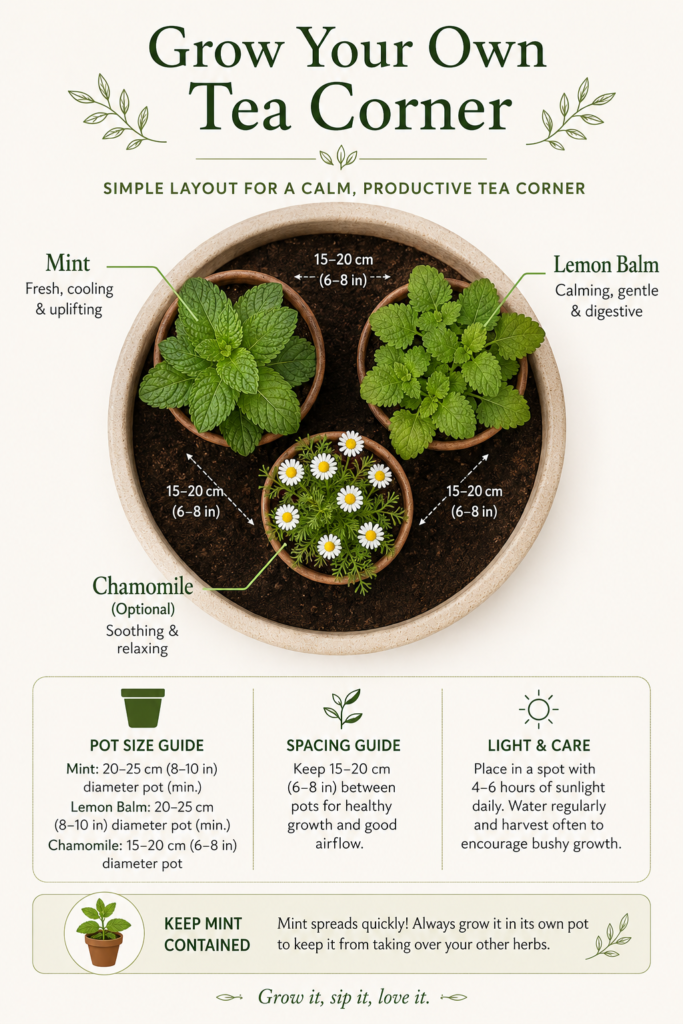
A few practical notes on growing these two together:
- Mint spreads aggressively if planted in the ground—always keep it in its own pot, or it will take over. It’s happy in most compost, needs regular watering, and grows back readily after cutting.
- Lemon balm is more restrained but also self-seeds if you let it flower, so deadhead the flowers if you want to keep it tidy. It prefers a slightly sheltered spot and grows quickly once established.
- Both plants can be propagated from stem cuttings rather than seed, which is faster and more reliable. Our herb propagation guide walks through the process in detail.
- Harvest both herbs in the morning if you can, when the essential oils are at their highest concentration before the heat of the day. A regular harvest keeps both plants bushy and productive rather than leggy.
Having both herbs within arm’s reach of the kitchen door makes the whole thing genuinely easy. Ducking out to pick a few sprigs just before the kettle boils becomes a natural part of the evening rather than a separate task.
Simple Recipes: Everyday Blends That Actually Work
These recipes are designed to be unfussy. No special equipment, no dried herbs you need to source online, and no quantities so precise that you’ll need a kitchen scale. The amounts below are starting points—adjust to your taste.

After-Dinner Digestif Tea
This is the blend to reach for when you’ve eaten a little too much or your stomach feels heavy after a rich meal. The mint leads the way on the digestive side, with lemon balm adding a softening note.
Ingredients (per cup):
- 1–2 teaspoons of dried mint, or a small fresh handful (around 6–8 leaves)
- 1 teaspoon of dried lemon balm, or 4–5 fresh leaves
- Just-boiled water (not a full rolling boil—around 90–95°C is ideal)
- Optional: a thin slice of fresh ginger, or a small amount of honey
Method: Place the herbs in a mug or small teapot. Pour over the water and cover the cup with a small plate or lid—this keeps the aromatic compounds in the tea rather than letting them escape with the steam. Steep for 5–10 minutes, then strain and drink while warm. The longer you steep, the more pronounced the flavour.
If you’re interested in going deeper on tea-making technique, our guide to brewing herbal tea covers water temperature, steeping times, and what to do with fresh versus dried herbs in a lot more detail.
Wind-Down Evening Blend
This one is built for the end of the day rather than the end of a meal. Equal parts lemon balm and mint, optionally extended with chamomile, make a cup that’s designed to be sipped slowly while you’re not looking at a screen.
Ingredients (per cup):
- 1 teaspoon dried lemon balm, or 4–5 fresh leaves
- 1 teaspoon dried mint, or 5–6 fresh leaves
- 1 teaspoon dried chamomile flowers (optional, but adds to the calming effect)
- Just-boiled water
- Optional: a small piece of fresh ginger, a slice of lemon, or a little honey
Method: Combine the herbs in a mug or teapot, pour over the hot water, and cover to steep for 8–10 minutes. Strain and drink warm. The chamomile adds a slight floral sweetness and reinforces the relaxing quality of the lemon balm—it’s a classic combination that appears in many of the better-known commercial herbal sleep blends, and you can easily replicate it with home-grown ingredients.
Fresh Summer Herb Infusion (Cold Version)
For warmer months, both herbs make a refreshing cold infusion that works as a hydrating, subtly herbal alternative to soft drinks. It’s a natural extension of the iced herbal tea approach—same simple method, just stretched out.
Method: Steep a generous handful of fresh mint and lemon balm in just-boiled water for 10 minutes, strain into a jug, allow to cool, then refrigerate. Serve over ice with a slice of lemon or cucumber. It keeps well in the fridge for up to 24 hours. This is also a good option if you’re managing your caffeine intake in the afternoon or evening and want something flavourful that won’t affect your sleep.
Making It a Real Ritual
One of the more interesting things about the research on herbal teas is that the ritual of making them may matter as much as the herbs themselves. Slow, deliberate actions—boiling the kettle, picking the leaves, waiting for the tea to steep—have a measurable effect on the nervous system’s shift from “alert” mode to “rest” mode. That’s not a reason to dismiss the herbs, but it is a reason to take the ritual itself seriously.
A few things that make the routine feel more intentional:
- Put your phone face-down before you start making the tea, and leave it that way until the cup is finished.
- Breathe while the tea steeps. A few slow, deliberate breaths while you’re waiting actually helps—it’s not as silly as it sounds.
- Pair it with something quiet. Reading a physical book, journaling, or simply sitting somewhere comfortable without a screen amplifies the effect of the tea considerably.
- Be consistent. The calming signal you’re sending your nervous system gets stronger the more regularly you repeat it. A bedtime tea you make every evening becomes a genuine sleep cue over time.
This is the spirit behind the “grow your own sleepy-time tea corner” idea that’s become popular in herb-growing communities—having the plants close, the ritual simple, and the whole thing woven into ordinary evenings rather than reserved for special occasions.
Using Dried Herbs When Fresh Isn’t Available
Growing your own is ideal, but it’s seasonal—and even mint and lemon balm can have an off-season if you’re gardening outdoors. Drying your own harvest is the most straightforward way to keep both herbs available year-round, and it’s simpler than most people expect. For a detailed walkthrough on preserving your herb harvest, our herb preservation guide covers drying, storage, and how to tell when herbs have lost their potency.
As a general rule: dried herbs are more concentrated than fresh, so use roughly half the amount. A teaspoon of dried mint per cup is about equivalent to a small handful of fresh leaves. Store dried herbs in an airtight container away from light and heat, and aim to use them within a year for the best flavour and effect.
You can also blend and store a loose-leaf tea mix in advance—equal parts dried mint and lemon balm kept in a sealed jar makes a convenient, ready-to-use blend that you can scoop from each evening without measuring.
A Note on Safety
Mint and lemon balm teas are generally considered low-risk for most healthy adults, and 1–2 cups a day is a reasonable amount for regular use. That said, there are a few things worth knowing:
- Peppermint is not recommended for people with gastro-oesophageal reflux disease (GORD/GERD), as the muscle-relaxing effect can worsen acid reflux in some people.
- Lemon balm may interact with sedative medications, including some anxiety and sleep drugs—if you’re taking anything in this category, it’s worth checking with a pharmacist before making it a regular habit.
- Mint and lemon balm are not recommended in high amounts during pregnancy. An occasional cup may be fine, but it’s always sensible to ask your midwife or GP first.
- These teas are not a treatment for IBS, anxiety disorders, or any other diagnosed condition. If your symptoms are persistent, frequent, or getting worse, please see a doctor.
These caveats aren’t meant to put you off—they’re just part of using herbs sensibly. For most people, most of the time, a cup of mint and lemon balm tea after dinner is a gentle, pleasant, and perfectly ordinary thing to do.
Getting Started Tonight
If you have mint or lemon balm growing anywhere—a pot on the windowsill, a plant in the garden, even a supermarket herb pot that’s been sitting on the counter—you have everything you need to make your first cup tonight. Pick a few leaves, pour over hot water, cover and steep, then sit somewhere quiet for ten minutes.
That’s it. No special equipment, no expensive supplements, no protocol to follow. Just two useful herbs, a cup, and a bit of time. The blend might not change your life, but it’s a genuinely good way to end the day—and if you grow the plants yourself, there’s something satisfying about the fact that you’re using something you tended from a cutting or a seed to close out your evening.
If you’re new to brewing herbal teas at home, our beginner’s guide to herbal tea blends is a good next step—and if you’re interested in the wider picture of what herb-based wellness can look like at home, the beginner’s apothecary guide covers a lot of ground in an accessible, non-overwhelming way.
Start small, keep it simple, and let the ritual do some of the work.
Continue Your Journey
- Mint Teas 101: Simple Blends for Digestion, Focus and Fresh Breath — Explore more ways to use fresh and dried mint in everyday tea blends.
- How to Grow and Use Lemon Balm: From Garden to Teacup — Everything you need to know about growing, harvesting, and using lemon balm at home.
- The Mint Family: Calm, Digestion and Everyday Wellness from Your Herb Pots — A deeper look at the broader mint family and what each member brings to the table.
- How to Make Herbal Tea Blends for Beginners — Simple techniques for blending, steeping, and getting the most from your herbs.
- Your Complete Beginner’s Apothecary Guide — A practical introduction to using everyday herbs for home wellness.
Do you have a favourite evening tea ritual? I’d love to hear what you make and when—drop a comment below.
Want seasonal herb growing tips, simple recipes, and gentle wellness ideas delivered to your inbox? Sign up for the Green Herb Guru newsletter and I’ll send you something useful every week.


