Air-Drying vs. Dehydrator vs. Oven-Drying: Which Method Wins for Fresh herbs?
You have grown a good crop of herbs, and now they need to survive the winter in some form other than “sad and wilted in the fridge drawer.” There are three genuinely different ways to dry them at home, and every one of them has passionate defenders. The truth is less dramatic than the debate suggests: each method wins for a different reason, and the right one depends on what you are drying and how much of it you have.
Here is how air-drying, a dehydrator, and the oven actually compare, so you can pick the one that fits your kitchen rather than the one that sounds the most impressive.
As an Amazon Associate I earn from qualifying purchases and sometimes recommend products from other sellers at no extra cost to you. For more details see my disclosure policy and privacy policy.
Air-drying: the no-equipment classic
Air-drying is exactly what it sounds like. Tie small bunches of herbs by the stem and hang them somewhere warm, dry and out of direct sunlight, or lay them on a mesh screen if the stems are too short to bundle. No equipment, no electricity, and genuinely the easiest method to start with if you are new to preserving fresh herbs.
Forged & Grown — The Shop
Handpicked products chosen to fit the way we cook, grow, and create. Nothing generic — every item earns its place.
Visit the Shop


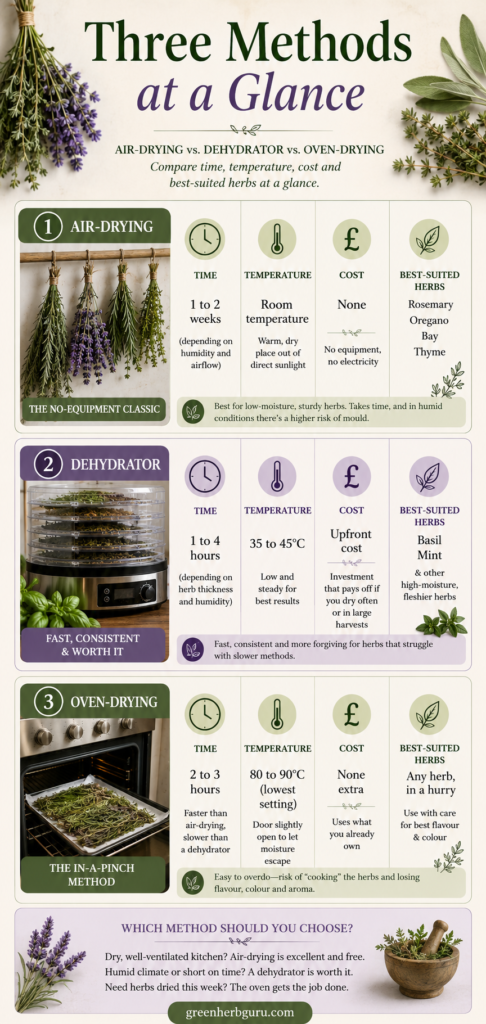
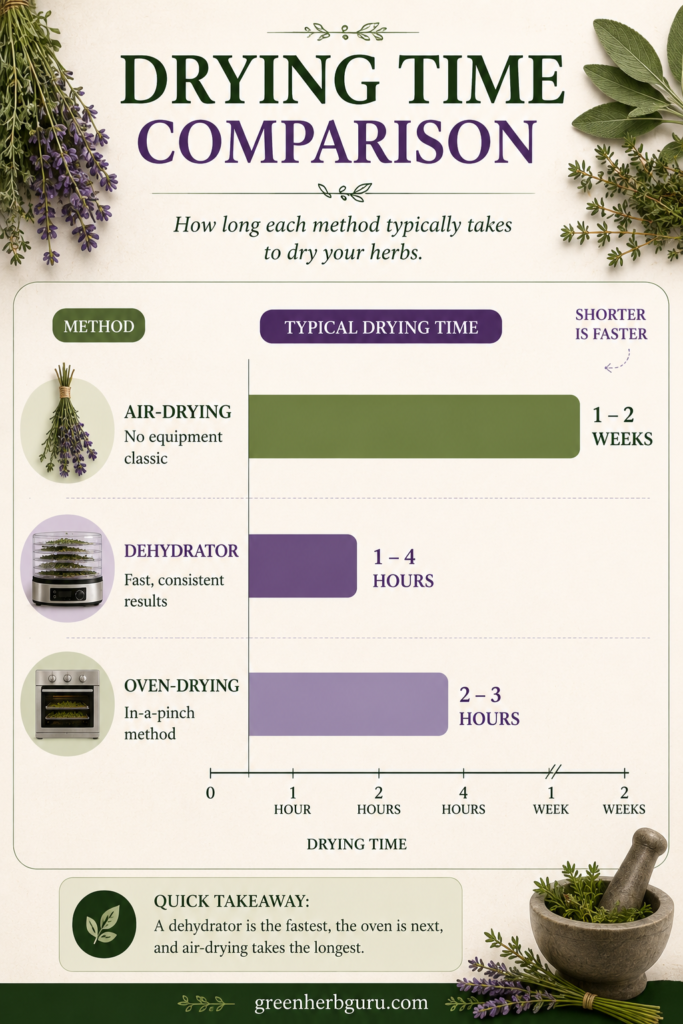
The catch is time and reliability. Depending on humidity and airflow, air-drying can take one to two weeks, and in a damp kitchen or a humid climate, that long a drying window raises a real risk of mould before the herbs finish. It works best for low-moisture, sturdy herbs such as rosemary, oregano, bay and thyme, which dry down cleanly without the fleshier leaf structure that causes trouble in high-moisture herbs.
Dehydrator: fast, consistent, and worth it if you dry a lot
A food dehydrator solves air-drying’s biggest weakness, which is waiting. Set most herbs at a low temperature, roughly 35 to 45°C, and they are usually fully dry within one to four hours depending on leaf thickness and how humid the room is. That speed also means less time for mould or discolouration to creep in, which makes a dehydrator the more forgiving option for high-moisture, fleshier herbs like basil and mint that struggle with slower methods.
The trade-off is upfront cost and a bit of kitchen counter space. If you are drying a small handful of herbs once a season, that cost is hard to justify. If you are working through a genuinely large harvest, or you dry herbs regularly enough that speed and consistency matter, it tends to pay for itself in saved crop.
Oven-drying: the in-a-pinch method, with real risks
Oven-drying uses what you already own, spreading herbs thinly on a baking tray and drying them at the lowest possible setting, ideally no higher than 80 to 90°C, with the door propped slightly open to let moisture escape. It takes roughly two to three hours for most herbs, which sits between the other two methods for speed.
The problem is control. Most domestic ovens do not hold a low, steady temperature well, and it is easy to tip over from “drying” into “lightly cooking,” which drives off the volatile oils that give herbs their flavour and scent in the first place. Oven-drying is a reasonable option when you need herbs dried quickly and do not own a dehydrator, but it is the method most likely to leave you with duller colour and weaker flavour than the other two.
How the three methods actually compare
| Time | Flavour and colour | Best suited to | Equipment cost | |
|---|---|---|---|---|
| Air-drying | 1 to 2 weeks | Excellent, if it dries before mould sets in | Rosemary, oregano, bay, thyme | None |
| Dehydrator | 1 to 4 hours | Very good, most consistent | Basil, mint, and other high-moisture herbs | Upfront cost |
| Oven-drying | 2 to 3 hours | Fair, easy to overdo | Any herb, in a hurry | None extra |
None of these is a universal winner. A dry, well-ventilated kitchen makes air-drying genuinely excellent and free. A humid climate or a busy schedule makes a dehydrator worth the investment. And an oven is simply what is available to a lot of people who need dried herbs this week rather than next month, which is a perfectly reasonable reason to use it.
Storing your dried herbs properly
However you dry them, storage decides whether that effort actually pays off. Keep herbs whole rather than crumbled until you are ready to use them, since crushing releases the essential oils that carry flavour and lets them evaporate away faster. Store in a dark, airtight container, away from heat and direct light, and whole dried herbs will comfortably hold good flavour for one to two years.
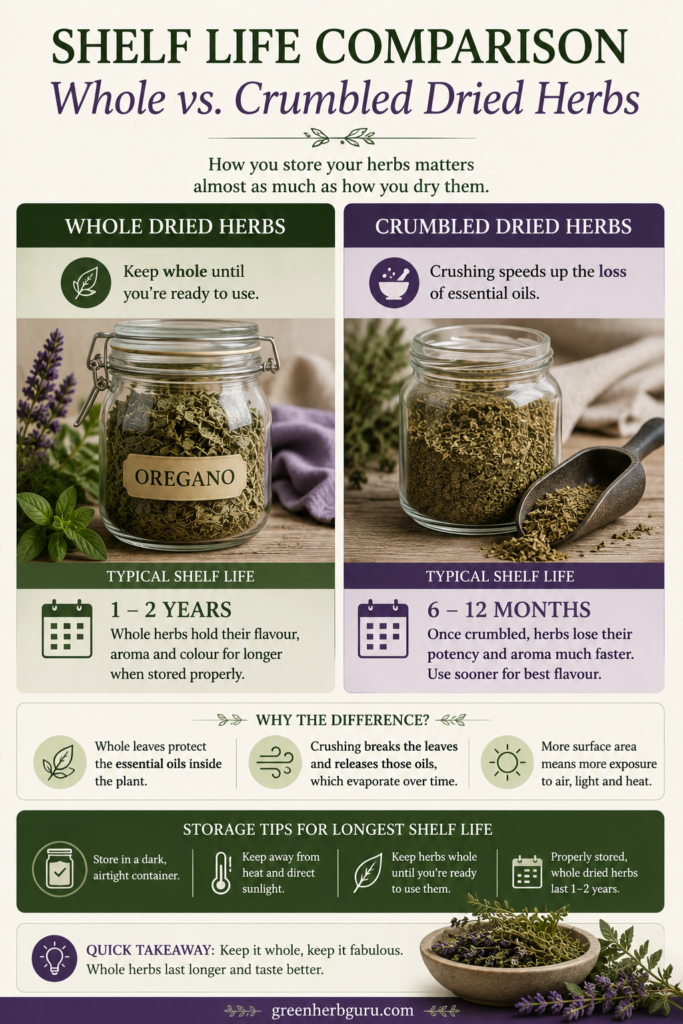
Reusing an old spice jar works, but purpose-made airtight glass herb and spice storage jars keep light and moisture out far more reliably than a lid that no longer seals properly, which matters more than people expect once herbs are sitting in a cupboard for months at a time.
A quick safety note
Herbs that are not fully dry before storage can develop mould, so if in doubt, dry a little longer rather than risk sealing in moisture. And if you plan to use your dried herbs for teas or other remedies rather than just cooking, it is worth reading our guide on using herbal teas safely, particularly around pregnancy, medication interactions and safe amounts for children. Drying method does not change those considerations, but it is always worth checking before making a habit of a new herbal tea.
Which method actually wins?
If you only take one thing from this comparison, it is that the “best” method is the one that matches your herb and your situation, not a single overall champion. For woody, low-moisture herbs like rosemary and thyme, air-drying is free, effective and worth the wait. For high-moisture herbs like basil and mint, or if your kitchen runs humid, a dehydrator earns its cost back in reliability. And if you need herbs dried today with no equipment beyond what is already in your kitchen, the oven will get you there, as long as you watch it closely and keep the temperature low.
Frequently asked questions
Can I mix drying methods for the same harvest? Yes, and it is often the most practical approach. Air-dry the woody, low-moisture herbs like rosemary and thyme while running high-moisture herbs like basil or mint through a dehydrator or oven the same week.
How do I know when herbs are fully dry? Leaves should crumble easily between your fingers with no bend or give left in them. Stems should snap cleanly rather than fold. If either still feels flexible, they need more time.
Does drying reduce the medicinal or flavour compounds in herbs? All three methods cause some loss of volatile oils, which is where both flavour and much of the herb’s aroma and activity come from. Lower, slower drying generally preserves more of these compounds than high heat, which is the main reason oven-drying tends to underperform the other two methods on flavour.
Can I dry herbs in the microwave? It is possible for small quantities in a genuine hurry, but it is easy to scorch herbs this way and the results are usually more inconsistent than any of the three methods above. Treat it as a last resort rather than a fourth option.
Continue Your Journey
- The Complete Guide to Preserving Fresh Herbs: Drying, Freezing, and Infusing
- Viral Herb-Preservation Hacks: Save Your Harvest Before Frost Hits
- Understanding the Art of Brewing Herbal Tea
- Best Herbs to Plant in November: Your Complete Guide to Late-Season Growing
Growing your own supply to dry? Our guide to planning your perfect herb garden is a good place to start before next season’s harvest.