Thyme: The Complete Guide to Growing, Cooking, and Using This Kitchen Essential
There’s a reason thyme shows up in nearly every classic herb blend, from bouquet garni to herbes de Provence to a basic Italian seasoning jar. It’s small, unassuming, and endlessly patient in the garden, yet it carries a flavor that anchors entire cuisines. If you’ve only ever bought it dried in a spice jar, you’re missing most of what makes this herb worth growing yourself.
Thyme rewards a little attention with a lot of payoff. It’s forgiving for beginners, generous with fresh growers, and versatile enough to work in a Sunday roast, a pot of beans, or a cup of tea for a scratchy throat. This guide covers everything from its Mediterranean roots to the exact conditions it wants in your garden, so you can grow it, cook with it, and understand why it’s earned a permanent spot in kitchens worldwide.
As an Amazon Associate I earn from qualifying purchases and sometimes recommend products from other sellers at no extra cost to you. For more details see my disclosure policy and privacy policy.
What Is Thyme?
Thyme’s botanical name is Thymus vulgaris, and it belongs to the mint family, Lamiaceae, which explains its aromatic oils and square stems if you look closely. The genus Thymus actually contains more than 300 species and varieties, but Thymus vulgaris, often called common or garden thyme, is the one you’ll find in most kitchens and most seed catalogs.
Forged & Grown — The Shop
Handpicked products chosen to fit the way we cook, grow, and create. Nothing generic — every item earns its place.
Visit the Shop


The herb is native to the western Mediterranean, particularly the rocky, sun-baked hillsides of Spain, Italy, and southern France. Those growing conditions matter more than they might seem. Thyme evolved to thrive in poor, dry soil with intense sun, which is exactly the opposite of what most garden vegetables want, and it’s the key to growing it successfully at home.
Thyme has been part of human life for thousands of years, well beyond the kitchen. The ancient Egyptians used it in embalming, the Greeks burned it as incense in their temples, and Roman soldiers reportedly bathed in thyme-infused water before battle, believing it gave them courage and strength. Medieval Europeans tucked sprigs of thyme into pillows to ward off nightmares and pinned it to clothing as a symbol of bravery.
The name itself likely traces back to the Greek word thymos, which carried meanings related to both courage and fragrant smoke, a fitting origin for an herb tied so closely to both bravery and burnt offerings. By the Middle Ages, thyme had become a fixture of European herb gardens and kitchen traditions alike, valued as much for its preserving qualities in salted meats as for its flavor. That dual identity, part practical kitchen tool and part symbol of resilience, has followed thyme into the modern era, where it remains one of the few herbs equally at home in a formal French kitchen and a humble backyard garden bed.
Thyme shares its family with other beloved culinary herbs, including rosemary, sage, and oregano. All four are drought-tolerant, sun-loving Mediterranean natives, which is why they so often show up together in the same recipes and the same corner of a garden bed. If you’re building out a collection of herbs that reflect specific culinary traditions, our guide to how different cuisines use fresh and dried herbs is a good place to see where thyme fits into French, Italian, and Mediterranean cooking more broadly.
Common Thyme Varieties
Not all thyme tastes or grows the same way, and knowing the differences helps you pick the right variety for your garden and your cooking. Most seed catalogs and nurseries separate varieties by culinary use versus ornamental use, though there’s plenty of overlap, since even the more decorative types are technically edible.
English or Common Thyme
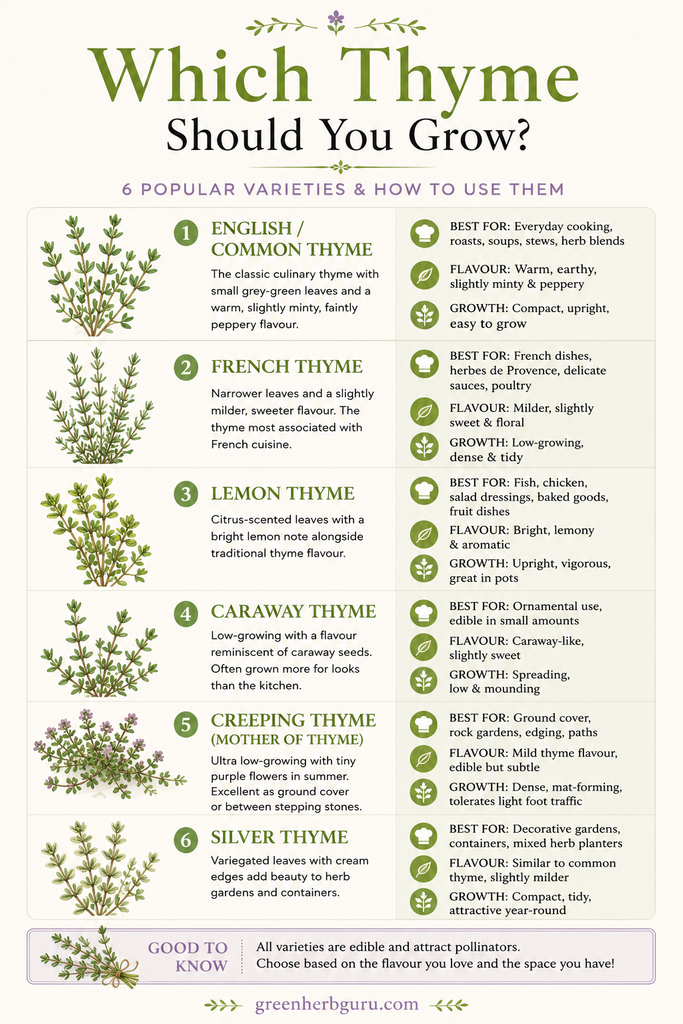
This is the standard culinary thyme most people picture, with small gray-green leaves and a warm, slightly minty, faintly peppery flavor. It’s the variety called for in most recipes unless another type is specified, and it’s the most widely available at garden centers.
French Thyme
A close cousin of common thyme, French thyme has narrower leaves and a slightly milder, sweeter flavor. Many cooks consider it the superior culinary variety, and it’s the thyme most associated with classic French cooking and herbes de Provence blends.
Lemon Thyme
As the name suggests, this variety carries a distinct citrus note alongside the traditional thyme flavor. It’s wonderful with fish, chicken, and in baked goods where you want a bright, aromatic lift without reaching for actual lemon.
Caraway Thyme
A low-growing, spreading variety with a flavor reminiscent of caraway seed. It’s often used more as an ornamental ground cover than a culinary herb, though it’s technically edible.
Creeping Thyme (Mother of Thyme)
This is the variety you see cascading over rock walls or filling in the gaps between garden stepping stones. It’s extremely low-growing, tolerates foot traffic, and produces a carpet of tiny purple flowers in summer. While it’s edible, its main role in most gardens is ornamental ground cover rather than the kitchen herb of choice.
Silver Thyme
A variegated variety with cream-edged leaves that adds visual interest to herb gardens and containers. Its flavor is similar to common thyme, making it a nice option when you want both good looks and good cooking.
Health Benefits of Thyme
Thyme isn’t just a flavor herb. It carries a genuine nutritional and traditional-use profile worth understanding, alongside a few real safety considerations.
Nutritional Components
Fresh thyme contains meaningful amounts of vitamin C, vitamin A, iron, manganese, and calcium relative to its small serving size. Because it’s used in such small quantities in cooking, it won’t be a primary source of these nutrients in your diet, but every bit adds up, especially when a dish leans heavily on fresh herbs rather than salt for flavor.
Thyme also contains a range of plant compounds beyond thymol, including flavonoids and other antioxidants that contribute to its traditional reputation as a supportive, everyday herb. As with most culinary herbs, the amounts used in a typical recipe are modest, so thyme is best thought of as a flavorful complement to a generally healthy diet rather than a stand-alone health intervention.
Thymol and Traditional Uses
The compound most associated with thyme’s health reputation is thymol, an essential oil constituent responsible for much of the herb’s aroma and its traditional use as an antiseptic. Thymol has a long history in oral care products, and you’ll still find it listed as an active ingredient in some mouthwashes today.
Traditionally, thyme has been used to support coughs, sore throats, and mild respiratory discomfort, often as a tea or steam inhalation. Research into thymol and thyme extracts has looked at antimicrobial and antioxidant properties, and some modern respiratory support formulations still include thyme as a component. Our overview of antimicrobial and respiratory herb remedies covers what the current research actually supports, separate from folklore, if you want the fuller picture.
What We Don’t Know, and Safety Notes
Most of the research on thyme’s health effects has been done on concentrated extracts or essential oil, not the fresh or dried herb used in cooking, so it’s worth being cautious about extrapolating too far from a sprig in your soup. Thyme essential oil is potent and should never be taken internally or applied undiluted to skin. It’s not appropriate for young children, and it should be used with care, if at all, during pregnancy without guidance from a healthcare provider.
Culinary amounts of fresh or dried thyme in cooking are considered safe for most people, including during pregnancy, but medicinal doses and essential oil preparations are a different matter entirely. If you take blood-thinning medication or have a bleeding disorder, mention any regular use of thyme supplements or concentrated preparations to your doctor, since some evidence suggests thymol may have mild effects on blood clotting. For a fuller breakdown of which herbs need extra caution around pregnancy and medications, our guide to using herbal teas safely is a useful starting point, and it’s worth reading alongside our beginner’s apothecary guide before using any herb medicinally rather than just culinarily.
How to Grow Thyme at Home
Thyme is one of the most forgiving herbs you can grow, provided you resist the urge to treat it like a thirsty vegetable.
Soil Requirements
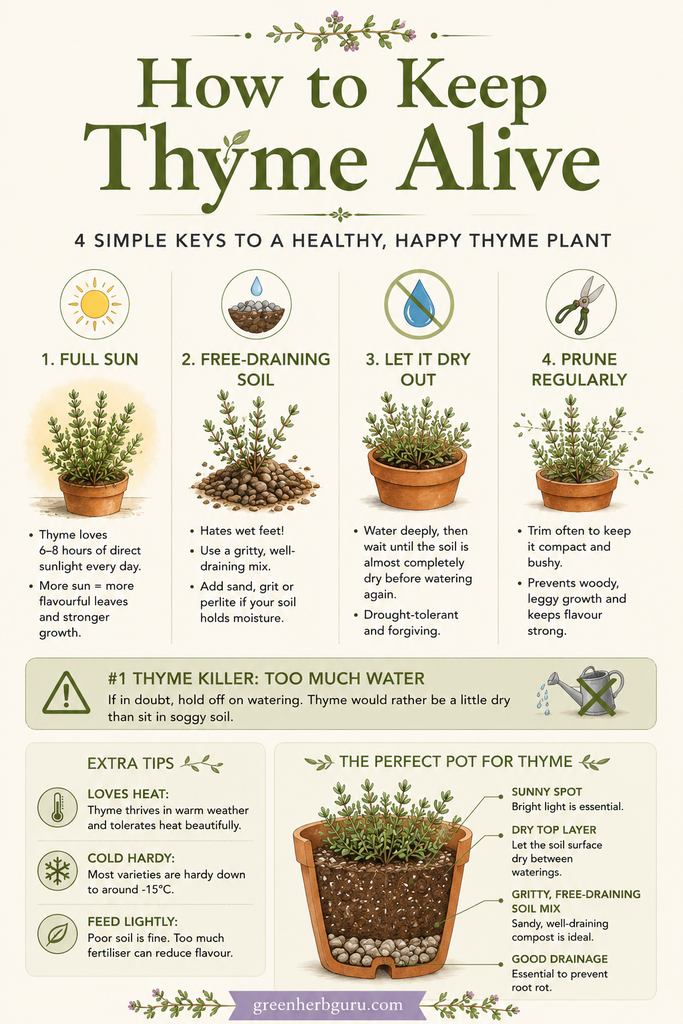
Thyme wants well-draining, slightly sandy or gravelly soil with a neutral to slightly alkaline pH, somewhere around 6.0 to 8.0. Rich, heavily amended garden soil is actually a disadvantage here. If your soil holds water or is dense with clay, work in sand or fine gravel before planting, or grow thyme in a container instead. Our guide to planning your perfect herb garden covers how to build a soil mix that suits Mediterranean herbs like thyme without overdoing the compost.
Sunlight Needs
Full sun is non-negotiable for thyme. It needs at least six hours of direct sunlight daily, and more is better. In climates with intense summer heat, thyme still generally prefers full sun over partial shade, unlike many other herbs that appreciate afternoon relief.
Water Requirements
This is where most people accidentally kill their thyme. Once established, thyme is genuinely drought-tolerant and wants to dry out completely between waterings. Overwatering, especially in poorly draining soil, is the single most common cause of thyme plants failing, usually through root rot rather than obvious wilting.
Growing Season
Thyme is a perennial in USDA zones 5 through 9, meaning it will come back year after year in most temperate climates without needing to be replanted. In colder zones, it can be grown as an annual or brought indoors for winter. Spring is the best time to plant, once the soil has warmed and the risk of hard frost has passed, and our guide to early spring herbs covers what else pairs well with a spring thyme planting.
Common Challenges
The most frequent problems with thyme are root rot from overwatering, leggy or woody growth from lack of pruning, and occasional issues with spider mites in hot, dry conditions. Regular light harvesting actually helps prevent the plant from becoming woody and sparse, so don’t be shy about cutting it back.
Fungal issues like powdery mildew can also show up in humid climates or when plants are grown too close together without adequate airflow. Spacing plants generously and avoiding overhead watering, which wets the foliage unnecessarily, goes a long way toward preventing both fungal problems and the root rot that overly damp conditions invite. If you notice yellowing lower leaves alongside a generally unhappy-looking plant, check the drainage first before assuming a pest or disease problem, since soggy roots are by far the more common culprit.
Indoor vs. Outdoor Growing
Thyme adapts well to container growing, both outdoors on a sunny patio and indoors on a bright windowsill, as long as the pot has excellent drainage and isn’t overwatered. It’s a great candidate if you’re working with limited space, and our guide to starting a micro herb garden walks through exactly this kind of small-space setup for herbs like thyme that don’t mind close quarters.
Tips for Success
Choose a terracotta pot over plastic if growing in containers, since the porous material helps excess moisture evaporate. Avoid mulching directly around the base of the plant, since it can trap moisture against the stems. If you’re planting late in the season, our roundup of the best herbs to plant in November explains how thyme can still be established before winter in many climates.
Cooking With Thyme: A Basic Usage Guide
Thyme’s flavor is earthy, slightly minty, faintly floral, and just a touch peppery, without the sharpness of oregano or the resinous punch of rosemary. That balance is exactly why it plays so well with other herbs rather than dominating a dish on its own.
Culinary Applications
Thyme is a workhorse in roasted meats, braises, soups, and stocks, where its flavor mellows and deepens with long cooking times rather than fading. It’s also a foundational herb in classic blends. Herbes de Provence, bouquet garni, and Italian seasoning all lean on thyme as a base note, and our homemade Italian seasoning mix recipe shows exactly how it works alongside oregano, basil, and rosemary in that context.
Beyond savory cooking, thyme has a quieter presence in baking and drinks as well. A few sprigs steeped in warm honey make a soothing addition to tea, and a light dusting of thyme in a shortbread or lemon cake adds an herbal note that surprises people in a good way. It’s an easy herb to experiment with once you’re comfortable using it in its more traditional savory roles.
Best Preparation Methods
Fresh thyme leaves are easiest to remove by running your fingers backward down the stem, stripping the small leaves off in one motion. Whole sprigs can also be added directly to soups, stocks, and braises and simply pulled out before serving, which is often easier than stripping delicate leaves for a long-cooking dish.
Parts of the Plant That Are Usable
Both the leaves and the tender young stems are edible and full of flavor. Older, woody stems are generally too tough to eat and are best removed before serving, even if they were added whole during cooking for flavor.
Common Combinations
Thyme pairs naturally with rosemary, sage, and oregano in Mediterranean and French-style cooking, as well as with garlic, lemon, and bay leaf. It also shows up in less expected places, including our herbes de Provence crusted lamb chops, where it works alongside rosemary and lavender for a distinctly French flavor profile.
Tips for Maximizing Flavor
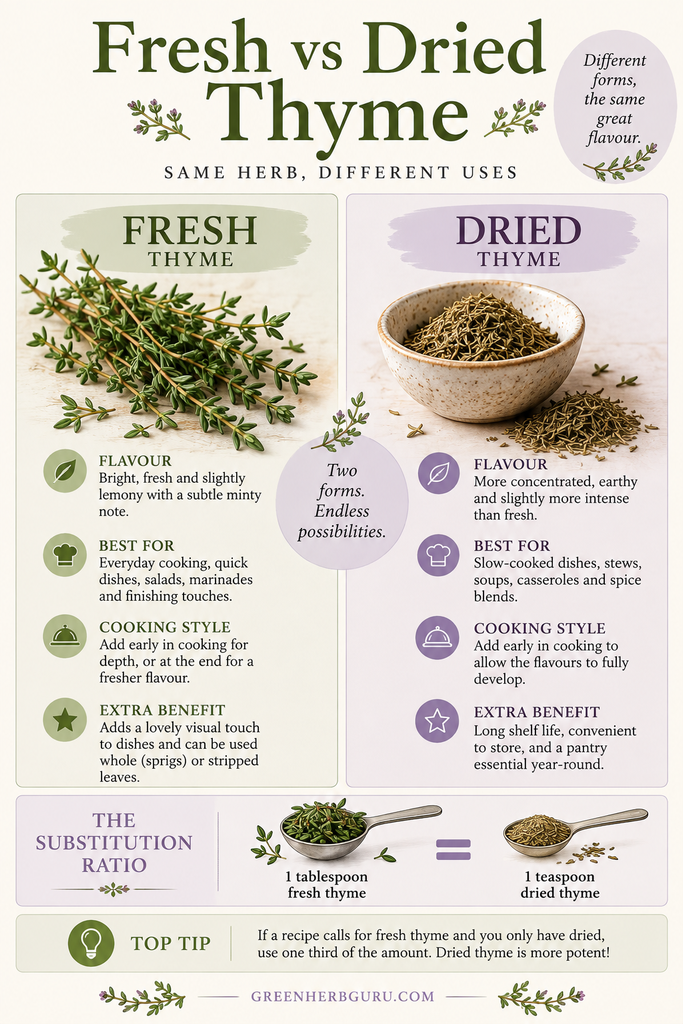
Add fresh thyme early in the cooking process for dishes that simmer or roast for a long time, since its flavor compounds hold up well to heat and actually develop more depth over time. For dishes with shorter cooking times, or when finishing a dish, a light scatter of fresh thyme leaves at the end adds brightness. If you’re substituting dried for fresh, our guide to spice uses and substitutions has the standard conversion ratios and when they don’t quite apply.
Recipe Ideas Featuring Thyme
A simple roast chicken benefits enormously from a handful of fresh thyme sprigs tucked into the cavity alongside lemon and garlic, letting the herb’s flavor permeate the meat as it cooks. For a heartier option, a classic French bouquet garni made from thyme, bay leaf, and parsley tied together is the traditional way to flavor stocks, stews, and braised dishes without leaving stray herb bits behind.
Thyme also shines in a simple pan sauce, where a few sprigs simmered with white wine, butter, and shallots create a base worth spooning over roasted vegetables or grilled fish. For a more composed dish, our grilled herbes de Provence crusted lamb chops put thyme front and center alongside its Mediterranean herb companions, and it’s a good showcase for what fresh thyme brings to a dish that dried herb blends can’t quite replicate.
If you’re leaning into a broader spice cabinet refresh, our guide to making popular herb and spice blends at home covers several other combinations where thyme plays a supporting but essential role.
Storing and Preserving Thyme
Thyme is genuinely one of the easier herbs to store well, fresh or preserved, which is part of why it’s such a kitchen staple.
Fresh Storage Techniques
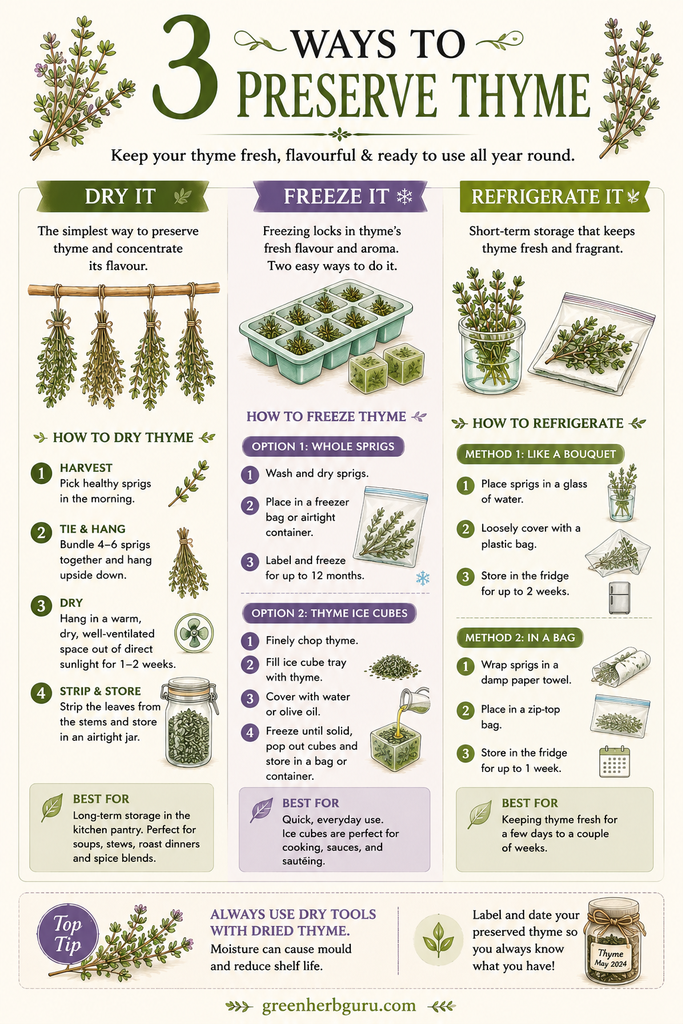
Fresh thyme keeps well in the refrigerator for one to two weeks when wrapped loosely in a slightly damp paper towel and placed in a resealable bag or container. Some people prefer treating it like cut flowers, trimming the stems and standing the bundle in a small jar of water in the fridge, which can extend freshness even further.
Long-Term Preservation Methods
Thyme is one of the best herbs for drying, since it retains its flavor remarkably well once dehydrated, unlike more delicate herbs like basil that lose much of their character. Our full comparison of air-drying versus dehydrator versus oven-drying methods walks through which approach works best depending on your climate and equipment, and thyme is a forgiving candidate for any of the three.
Freezing Options
Thyme also freezes well, either as whole sprigs in a freezer bag or as stripped leaves frozen in ice cube trays with olive oil or water. This method works particularly well if you want pre-portioned amounts ready to drop straight into a soup or braise.
Drying Methods
The simplest approach is hanging small bundles of thyme upside down in a warm, dry, well-ventilated spot out of direct sunlight, which typically takes one to two weeks. Once fully dry and brittle, strip the leaves from the stems and store them in an airtight container away from light and heat. For a broader look at preserving your whole herb harvest beyond just thyme, our complete guide to preserving fresh herbs covers drying, freezing, and infusing in more depth.
Signs of Spoilage
Fresh thyme that has gone bad will show blackened or slimy leaves and a musty rather than aromatic smell. Dried thyme doesn’t spoil in the traditional sense but does lose potency over time. If a pinch crushed between your fingers releases little to no scent, it’s time to replace it.
Best Practices for Maintaining Flavor
Store dried thyme in a cool, dark cupboard rather than above the stove, where heat and light will accelerate flavor loss. Whole dried leaves hold their flavor longer than pre-ground thyme, so crushing it just before use, if you have whole dried leaves on hand, gives you a noticeably more aromatic result. Labeling containers with the date you dried or purchased the herb is a small habit that pays off, since it’s easy to lose track of how long a jar has been sitting in the back of the cupboard.
Frequently Asked Questions
Is thyme safe to eat every day? Culinary amounts of thyme used in everyday cooking are considered safe for most people. Concentrated supplements or essential oil preparations are a different matter and warrant more caution, particularly for pregnant women, young children, and anyone on blood-thinning medication.
Why is my thyme plant turning woody? Woody growth is natural in older thyme plants but can be slowed with regular light pruning and harvesting. Many gardeners replace thyme plants every three to four years once they become too woody to produce much usable new growth.
Can I grow thyme indoors year-round? Yes, as long as it gets at least six hours of bright light daily, ideally from a south-facing window, and isn’t overwatered. A sunny windowsill or a small grow light setup both work well.
What’s the difference between thyme and oregano? Both are Mediterranean herbs in the mint family, but oregano has a bolder, slightly bitter, more pungent flavor, while thyme is milder, earthier, and more versatile across a wider range of dishes. Our oregano guide covers its specific culinary role in more detail.
How much dried thyme equals fresh? The general rule is one teaspoon of dried thyme for every tablespoon of fresh, roughly a three-to-one ratio, since drying concentrates the flavor.
Can thyme survive winter outdoors? In USDA zones 5 through 9, thyme is a hardy perennial that survives winter outdoors with minimal protection. In colder zones, a layer of mulch can help, though many gardeners in harsher climates choose to grow it in containers that can be moved indoors.
Does thyme attract pollinators? Yes, when allowed to flower, thyme produces small blooms that are highly attractive to bees, making it a nice addition to a pollinator-friendly garden alongside its culinary uses.
What does lemon thyme taste like compared to regular thyme? Lemon thyme carries the same earthy base flavor as common thyme, with a noticeable citrus brightness layered on top, making it a good substitute when a recipe wants both herbal and citrus notes.
Is it better to use fresh or dried thyme in soups and stews? Both work well, but dried thyme is often preferred for long-simmering dishes since it holds up over extended cooking times, while fresh thyme is better added toward the end for dishes with shorter cook times.
Can I propagate thyme from cuttings? Yes, thyme roots readily from stem cuttings placed in water or moist potting mix, making it an easy and inexpensive way to expand your herb garden or share plants with other gardeners.
Conclusion
Thyme earns its place in nearly every spice cabinet and herb garden for good reason. It asks for very little, tolerates neglect better than most plants you’ll grow, and rewards that low-maintenance relationship with a flavor that steadily improves everything from a weeknight roast chicken to a slow-simmered stock. Whether you’re growing a single pot on a windowsill or building out a full Mediterranean herb bed alongside rosemary and sage, thyme is one of the most dependable additions you can make.
Continue Your Journey
If thyme has you thinking about rounding out your Mediterranean herb collection, our sage growing guide and complete oregano guide are natural next reads. For a bigger-picture look at what to grow and when throughout the year, Your Herb Garden Calendar lays out a full month-by-month plan. And if you’re just getting comfortable using herbs for wellness rather than just cooking, our beginner’s apothecary guide is the right place to start slow and safe.
Want more herb profiles, seasonal growing guides, and kitchen-tested recipes delivered straight to your inbox? Subscribe to our newsletter and never miss a new guide.