Your Herb Garden Calendar: A Month-by-Month Growing and Care Guide
If you have ever stood in your kitchen in February wondering whether it is too early to start basil, or stared at a leggy, sad-looking rosemary in July without knowing what went wrong, you already understand the problem this guide solves. Herb gardening advice online tends to arrive in scattered pieces: a planting guide here, a troubleshooting post there, a random tip about frost dates you find weeks after the frost already hit. What is missing is the calendar view, the one place that tells you what your herb garden actually needs this month.
This guide is that calendar. It walks through all twelve months, season by season, covering what to plant, what to harvest, what to prune, and what to watch for as conditions shift. It is written for the home grower working with a backyard bed, a patio full of containers, or a sunny windowsill, and it assumes you are somewhere in the continental United States, since growing windows shift by region and hardiness zone.
Treat this as your home base. Each seasonal section links out to deeper guides on specific herbs and techniques, and three companion posts covering September, October, and November in greater month-by-month detail will publish alongside this one to carry the calendar concept further into the fall garden.
As an Amazon Associate I earn from qualifying purchases and sometimes recommend products from other sellers at no extra cost to you. For more details see my disclosure policy and privacy policy.
Forged & Grown — The Shop
Handpicked products chosen to fit the way we cook, grow, and create. Nothing generic — every item earns its place.
Visit the Shop


How to Use This Calendar
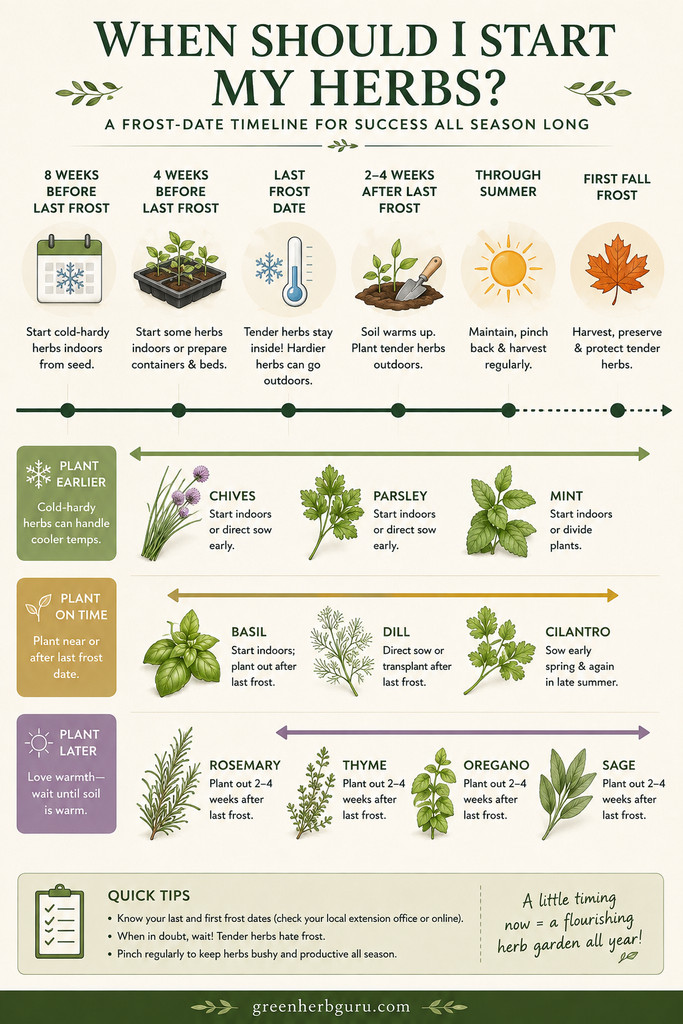
Herb growing decisions come down to two moving targets: your local last and first frost dates, and each herb’s own temperature preferences. Cold-hardy herbs like chives, parsley, and mint tolerate light frost and can go in the ground weeks before tender herbs like basil. Mediterranean natives like rosemary, thyme, and oregano want heat and sun once established, but many varieties survive winter outdoors only in warmer zones and need to come inside everywhere else.
Because the United States spans such a wide range of climates, every month in this guide includes general timing along with a note on how zone affects it. If you are not sure of your USDA hardiness zone, a quick search on your zip code will tell you, and it is worth knowing before you plant anything.
One more thing worth saying plainly: a calendar is a guide, not a guarantee. Weather varies year to year, and a warm February or a late April cold snap can shift these windows by two or three weeks in either direction. Use this guide to know what is generally true for your month, then confirm against your own local forecast before you commit seeds or seedlings to soil.
Find Your Month’s Herb Garden Tasks
Select your USDA hardiness zone band and the current month to see what your herb garden needs right now.
From the Herb Garden Calendar guide on Green Herb Guru
Why Herb Timing Works Differently Than Vegetable Timing
Most seed packets and planting calendars are written with vegetables in mind, and applying that same logic wholesale to herbs causes more confusion than it solves. Vegetables are typically grown for a single harvest event, a tomato that ripens once and gets picked, a carrot that gets pulled from the ground. Herbs are usually grown for repeated harvest over months, which changes what "the right time to plant" even means.
A basil plant started in May can be harvested continuously from June through the first fall frost if it is pinched back regularly, so the planting date matters less than the ongoing maintenance that keeps it productive. A perennial like sage or thyme, once established, comes back year after year without replanting at all, which means the real calendar question shifts from "when do I plant this" to "when do I prune it, divide it, or protect it for winter."
This is also why herb families cluster so unevenly across the calendar. Mediterranean perennials, rosemary, sage, thyme, and oregano, all share a native climate and therefore a similar calendar, wanting to go in the ground once soil has warmed in spring and needing protection or dormancy through cold winters. Tender annuals like basil and cilantro come from warmer or cooler origins respectively, which is exactly why one thrives in July heat while the other bolts in it. Understanding which category an herb falls into does more to explain its calendar than memorizing individual planting dates ever will.
Winter: December, January, and February
Winter feels like a dormant season for herb gardening, and outdoors, in most of the country, it largely is. But winter is also when a lot of the groundwork for the rest of the year gets laid, and in warmer zones, it is an active growing period in its own right.
December: Protect, Plan, and Grow Indoors
December is a protection and planning month almost everywhere in the US. If you have perennial herbs like rosemary, sage, or thyme still outdoors, mulch around the base to insulate roots, and if you are in zone 7 or colder, consider bringing potted rosemary inside before hard frosts settle in, since it is one of the least cold-tolerant common culinary herbs.
Indoors, this is prime time for a windowsill herb garden. Chives, parsley, and mint tend to be the most forgiving choices for low winter light, while basil and other high-light herbs often struggle without supplemental grow lights during the shortest days of the year. December is also the natural planning month: order seed catalogs, sketch out next year's garden layout, and decide which new herbs you want to add. If you are building a full growing setup for the first time, the guide to essential herb gardening tools covers what actually earns a spot in a starter toolkit.
January: The Quiet Planning Window
January in most zones is still too early for outdoor sowing, but it is an excellent month to start reviewing your first apothecary shopping list and stocking dried herbs if you do not have fresh ones on hand. If you are curious about building a small home collection of herbs for everyday wellness uses like tea and simple preparations, the beginner's apothecary guide is a good starting point, with the usual caveat that any wellness use of herbs should be approached cautiously and discussed with a doctor if you are pregnant, nursing, on medication, or managing a health condition.
Gardeners in zones 9 through 11 can start hardier herbs like parsley and cilantro outdoors in January, since these regions rarely see a true hard freeze. Everywhere else, indoor seed starting for slow growers like rosemary and lavender can begin in a warm spot with good light, since these herbs take longer to germinate and reach transplant size than fast growers like basil.
February: The First Real Starting Line
February is when the calendar starts to move for most of the country. Cold-hardy herbs, particularly chives, parsley, and cilantro, can typically be started indoors from seed six to eight weeks before your last frost date, which puts many zone 5 through 7 gardeners right in this window. The full breakdown of which herbs handle this transitional period well, along with frost protection tips, lives in the early spring herbs guide.
This is also the month to do a hard look at your indoor herbs. Check for leggy growth from insufficient light, which is common by late winter, and start pinching back leggy stems to encourage bushier growth once spring light levels return. If last year's herb garden had problem spots, whether that was a container that never drained well or a bed that stayed shaded too long, February is the month to plan the fix before planting season arrives.
Spring: March, April, and May
Spring is the busiest stretch of the herb gardening year for most of the country, and getting timing right here sets the tone for everything that follows.
March: Cold-Hardy Herbs Go Outside
March is transplant season for the cold-tolerant herbs started back in January and February, particularly in zones 6 and warmer where the ground has usually thawed and workable soil is within reach. Chives, parsley, mint, and cilantro can typically move outdoors or into unheated containers this month, though a floating row cover is cheap insurance against a surprise late frost.
This is also the ideal month to actually design your growing space rather than planting reactively. The complete herb garden planning guide walks through sun mapping, soil mix, and grouping herbs by water needs, which matters more than people expect since a thirsty basil plant crammed next to a drought-loving rosemary usually means one of them suffers.
April: The Dual Window
April earns its reputation as a dual-purpose month. It is simultaneously the last real window to get long-season perennials like sage, thyme, and oregano established before summer heat arrives, and the first cautious window to consider tender annuals like basil in the warmer half of the country. In zones 8 and up, basil can often go outside by late April once nighttime temperatures reliably stay above 50 degrees. In zones 6 and colder, it is still too soon, and pushing basil out early usually means replacing cold-damaged seedlings a few weeks later.
Sage in particular is worth prioritizing this month, since it establishes a strong root system when planted in cool but not cold soil, well ahead of summer heat.
May: Basil Season Begins in Earnest
May is when basil planting becomes safe across nearly the entire continental US, since frost risk has passed almost everywhere by month's end. This is also peak transplant month for the remaining Mediterranean herbs, rosemary and oregano included, since soil has warmed enough that root systems establish quickly without the shock of cold, wet ground.
Container gardeners working with limited space, whether that is a balcony, a windowsill, or a doorstep step, will find May a natural time to set up or expand, and the micro herb garden guide covers container sizing, soil mix, and spacing for small-space growing specifically. By the end of May, most of the herb garden should be in the ground or in its containers, with the growing season's real work about to begin.
Summer: June, July, and August
Summer shifts the workload from planting to maintenance, harvest, and, for many herbs, active preservation of a harvest that outpaces what any one household can use fresh.
June: Establishing and Maintaining
June is a maintenance-heavy month. Newly transplanted herbs from April and May need consistent watering while their root systems finish establishing, and Mediterranean herbs in particular benefit from letting the soil dry out somewhat between waterings rather than staying constantly damp, which can lead to root rot in well-draining soil that is overwatered anyway.
This is also when the first real basil harvests typically begin for gardeners who planted in May. Regular pinching, taking leaves from the top of the plant rather than stripping lower leaves, encourages bushier growth and delays the plant's tendency to flower and go to seed. The complete basil guide covers harvesting technique in more depth, including how to keep a plant productive through the full summer.
July: Peak Heat, Peak Harvest
July brings peak heat across most of the country, which is a genuine stress test for herbs that are not heat-adapted. Basil and cilantro, both of which bolt and go bitter in extended high heat, often need afternoon shade or more frequent watering to stay productive through the hottest stretch. Cilantro in particular is a cool-season herb that struggles once summer temperatures climb, and gardeners who want a steady supply sometimes succession-plant it every few weeks specifically to outrun the bolt.
This is also peak harvest and preservation season for herbs that thrive in heat, rosemary, oregano, thyme, and basil chief among them. If your basil or other herbs are producing faster than you can use them fresh, this is exactly the situation drying and freezing exist to solve, and building the habit of preserving a surplus in July means having usable dried and frozen herbs well into winter.
August: The Late-Summer Push
August often means a second wind of production for herbs that slowed slightly during the hottest part of July, along with the first hints of planning ahead for fall. Chives can be divided this month if clumps have become overcrowded, which both refreshes the plant and gives you material to start a second patch or share.
August is also a smart month to start thinking about which herbs you will bring indoors before the first fall frost. Rosemary, in particular, transitions poorly if it is moved suddenly from outdoor conditions to a dry, low-light indoor environment, so gradually reducing its outdoor sun exposure over a couple of weeks before the move indoors helps ease that transition. For gardeners in short-season, colder zones, late August is also the last reasonable window to start a fast-growing herb like cilantro for one more harvest before frost.
Fall: September, October, and November
Fall is the season most home gardeners underestimate, treating it as a wind-down when it is often the last real opportunity of the year to plant certain herbs and get real value out of a garden before winter sets in. Each of these three months gets its own dedicated companion post in this cluster with fuller month-by-month detail, so this section covers the broad strokes.
September: Second-Season Planting
September, particularly in zones 7 and warmer, offers a genuine second planting window for cold-hardy herbs like parsley, chives, and cilantro, which can be started now for a harvest that runs through fall and, in mild climates, into winter. It is also prime harvest and preservation season for the summer's Mediterranean herbs before growth slows with shorter days.
October: The Frost Watch Begins
October is when frost dates start dictating the calendar again, this time in the opposite direction from spring. Tender herbs like basil typically need to be harvested entirely, dried, or frozen before the first frost, since even a light frost will damage or kill basil outright. Perennial herbs that are staying outdoors benefit from a fall mulch layer applied this month.
November: Late-Season Growing and Wrap-Up
November genuinely surprises a lot of gardeners who assume the growing season has ended. In zones 7 and warmer, cold-hardy herbs like parsley and mint can still be actively planted and grown, and even colder zones can extend the season indoors. The best herbs to plant in November guide covers exactly which herbs still have a late-season window and how to protect them, and it is worth a full read once frost has most gardeners assuming the year is done.
Building a Personal Herb Garden Calendar System
A generic calendar like this one gets you most of the way there, but the most useful herb garden calendar is the one customized to your specific zone, your specific herbs, and your own track record of what has and has not worked. A simple approach that works well is a physical or digital garden journal with one entry per month, noting what you planted, what you harvested, and what problems came up, since patterns become obvious after a year or two that are easy to miss in the moment.
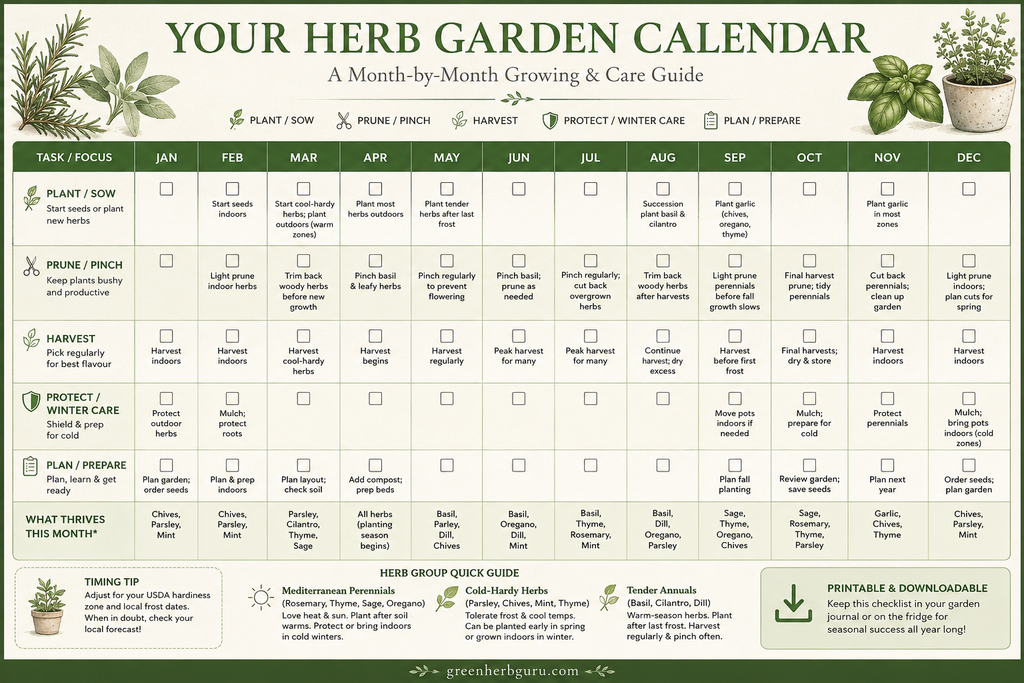
Some gardeners prefer a wall calendar with planting and harvest windows marked directly against their local frost dates, which keeps the information visible without requiring a lookup every time a decision comes up. Others keep it digital, using a phone calendar with recurring monthly reminders tied to specific tasks like "check indoor herbs for legginess" or "start hardening off basil seedlings." Whatever system you choose, the goal is the same: turning a one-time read of a guide like this into a repeatable habit that gets easier every year as your own data builds up.
Regional Adjustments: How Your Zone Shifts This Calendar
Every month-by-month window in this guide is written as a general national average, and your actual results will shift depending on where you garden. It helps to think in three broad bands rather than trying to track all thirteen individual hardiness zones separately.
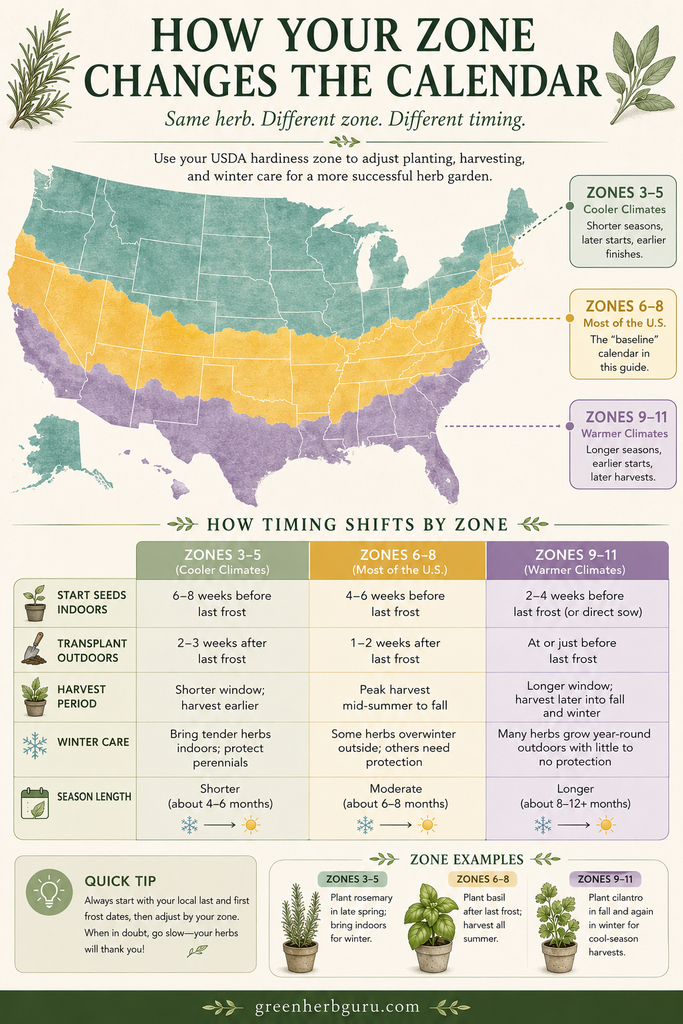
Gardeners in zones 3 through 5, covering much of the northern Midwest, New England, and the mountain West, should generally treat every planting window in this guide as running two to three weeks later than written, and should plan on bringing tender perennials like rosemary indoors well before the dates suggested here, since hard frosts arrive earlier and harder in these regions. Indoor growing under supplemental light becomes less optional and more central to a year-round herb supply the further north you garden.
Zones 6 through 8, which cover a wide swath of the country including the mid-Atlantic, much of the South, and the Pacific Northwest, are the closest fit to the timing described throughout this guide, and most of the specific windows above assume a gardener somewhere in this range. Even within this band, coastal and inland microclimates can shift things by a week or two, so treat the guide as a starting point rather than an exact match.
Zones 9 through 11, covering the Gulf Coast, most of Florida, and much of California and the Southwest, effectively skip winter dormancy for many herbs, and gardeners here can often keep cold-hardy herbs like parsley, chives, and cilantro growing outdoors nearly year-round. The bigger challenge in these zones tends to be summer heat rather than winter cold, and herbs that struggle in extended high heat, basil and cilantro especially, may need afternoon shade or a fall replanting rather than fighting through a brutal July and August.
Common Herb Calendar Mistakes to Avoid
A handful of timing mistakes account for most of the frustration new herb gardeners run into, and nearly all of them trace back to treating one herb's calendar as if it applies to every herb.
Planting tender and hardy herbs on the same schedule is probably the most common error, since basil and parsley have almost opposite cold tolerance despite both being common starter herbs. Ignoring your specific hardiness zone in favor of generic advice is a close second, since a planting date that works in Georgia can be weeks too early in Minnesota. Overwatering Mediterranean herbs out of habit, rather than letting their soil dry between waterings the way it would in their native range, is a third common issue that shows up as yellowing leaves or root rot well before anyone thinks to question their watering routine.
The fix for all three is the same: treat each herb's calendar as its own thing, cross-reference it against your zone, and adjust care routines to match what that specific plant actually wants rather than a generic "water herbs regularly" instinct.
Frequently Asked Questions
What is the best month to start an herb garden? There is no single best month, since it depends on which herbs you want to grow and your local frost dates. Cold-hardy herbs like chives and parsley can often start indoors as early as six to eight weeks before your last frost, while tender herbs like basil should wait until after your last frost has safely passed.
Can I grow herbs year-round? Yes, with adjustments. Cold-hardy herbs can often stay outdoors through winter in zones 7 and warmer, and nearly any herb can be grown indoors year-round with adequate light, though basil and other high-light herbs typically need supplemental grow lights during winter's shorter days.
How do I know my hardiness zone? A quick search of your zip code against the USDA Plant Hardiness Zone Map will give you an accurate answer, and it is worth knowing before you commit to any planting schedule, since timing advice shifts significantly by zone.
Which herbs are the most forgiving for beginners? Chives, mint, and parsley tend to be the most forgiving across a wide range of conditions and timing mistakes. Mint in particular is nearly impossible to kill, though it spreads aggressively and does best contained rather than planted directly in a garden bed.
When should I bring potted herbs indoors for winter? Generally before your first fall frost, and earlier rather than later for cold-sensitive herbs like rosemary. A gradual transition, reducing outdoor sun exposure over a week or two before the final move, helps reduce transplant shock.
Why did my basil die overnight in fall? Basil has essentially no frost tolerance, and even a light frost will blacken and kill the leaves within hours. If frost is forecast, harvest everything usable the day before rather than risking the loss.
Can I start seeds indoors in winter for a spring garden? Yes, and for slow-growing herbs like rosemary and lavender, winter starting is often necessary to have transplant-ready seedlings by spring. Fast growers like basil and cilantro do not need nearly as much lead time.
How often should I fertilize herbs through the growing season? Most culinary herbs are relatively light feeders and do not need heavy fertilizing, since overly rich soil can actually dilute flavor and aroma in herbs like basil and oregano. A light monthly feeding during active growth is usually plenty for container herbs, while in-ground herbs in reasonably fertile soil often need none at all.
Is it safe to use herbs medicinally without talking to a doctor? Culinary use in normal cooking amounts is generally considered safe for most people, but medicinal or concentrated use of any herb, including teas and tinctures, should be discussed with a doctor or pharmacist first, particularly during pregnancy, while nursing, or alongside prescription medications, since herb-drug interactions are more common than most people expect.
What is the difference between a hardiness zone and a frost date? Your hardiness zone reflects your area's average annual minimum temperature and is useful for perennial herbs deciding whether they can survive winter outdoors. Your frost date is a specific seasonal marker, the average date of your last spring frost and first fall frost, and it is the number that actually governs when annual herbs go in the ground and come out.
Should I plant herbs from seed or from nursery starts? Both work, and the right choice depends on the herb and your patience. Fast growers like basil and cilantro do well from seed and germinate quickly, while slow, fussy germinators like rosemary and lavender are often easier and faster to establish as nursery starts, saving weeks of waiting compared with starting from seed.
Do herbs need a different soil mix than vegetables? Many do, particularly Mediterranean herbs like rosemary, thyme, sage, and oregano, which prefer leaner, faster-draining soil than the rich, compost-heavy mix vegetables typically want. Planting these herbs in the same rich soil used for tomatoes or peppers often leads to lush but weak, less flavorful growth, so a lighter mix with added sand or perlite tends to produce sturdier, more aromatic plants.
Growing Through Every Season
A herb garden that thrives year-round is not the result of one perfect planting day. It comes from checking in monthly, matching each herb's needs to the season it is actually in, and building a personal calendar out of what works in your specific yard, your specific zone, and your specific growing conditions. This guide gives you the framework, and the companion month-by-month posts on September, October, and November will fill in even more detail as they publish over the coming weeks.
Whatever stage your herb garden is at right now, whether that is bare containers waiting for spring or a mature bed heading into its first winter, there is a task worth doing this month. Start there, and let the calendar do the rest.
Continue Your Journey
- Planning Your Perfect Herb Garden: The Complete Guide
- Early Spring Herbs: Your Guide to Getting Started
- Best Herbs to Plant in November: Your Complete Guide to Late-Season Growing
- How to Start a Micro Herb Garden in a Small Space
- Your Complete Beginner's Apothecary Guide
Want this calendar delivered to your inbox one season at a time? Join the Green Herb Guru newsletter for seasonal reminders, growing tips, and first access to new herb guides as they publish.


