Freezing Fresh Herbs: Ice Cube Trays, Herb Butter Logs and Batch Prep
That last flush of basil before frost, the parsley bunch you bought for one recipe and never finished, the rosemary sprigs threatening to take over the pot on the windowsill. Fresh herbs are at their best for a few days, then they wilt, yellow and end up in the bin. Freezing them properly stretches that window from days to months, and it takes about ten minutes of hands-on effort.
The trick is knowing which method suits which herb. A soft, leafy herb like basil behaves nothing like a woody one such as rosemary once it hits the freezer, and using the wrong technique on the wrong herb is the most common reason people give up on freezing altogether. Here are the three methods worth knowing, plus how to tell which one your harvest actually needs.
As an Amazon Associate I earn from qualifying purchases and sometimes recommend products from other sellers at no extra cost to you. For more details see my disclosure policy and privacy policy.
🧊 Ice Cube Tray Method: Oil or Water?
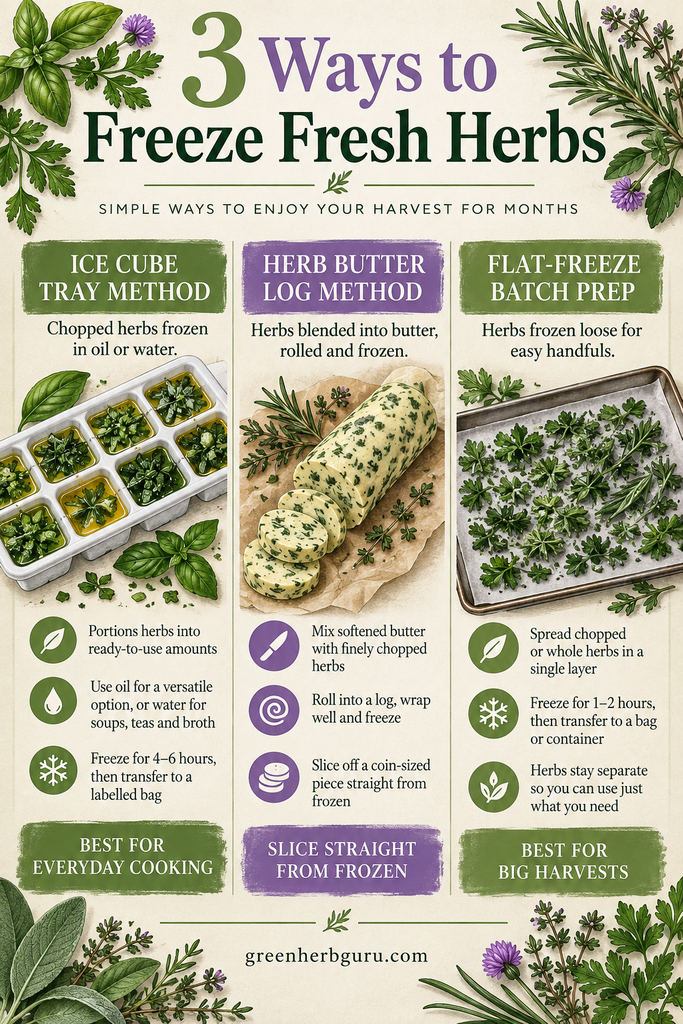
This is the classic starting point, and it works because it portions herbs into exactly the amount you’ll use in one go. Chop your herbs finely, pack each cavity of an ice cube tray about two-thirds full, then top up with either oil or water and freeze until solid.
Forged & Grown — The Shop
Handpicked products chosen to fit the way we cook, grow, and create. Nothing generic — every item earns its place.
Visit the Shop


The choice between oil and water changes what the cube is good for. Oil (a mild olive oil or melted unsalted butter both work) coats the herb and carries flavour straight into a hot pan, so it’s the better all-purpose default when you’re not sure what the cube will end up in.
Water cubes are lighter and suit herbs headed for a liquid dish anyway, such as mint dropped into tea or dill added to a broth. They also freeze clearer, which makes them easier to label by sight if you’re storing several herbs side by side.
One safety note worth flagging: herb-and-oil mixtures should go straight into the freezer and stay there until use, not sit out at room temperature. Oil-covered fresh produce kept warm and un-refrigerated can create the low-oxygen conditions that support botulism, so treat these cubes strictly as a freezer product, not a fridge one.
Once the cubes are solid (usually four to six hours), pop them out and transfer to a labelled freezer bag. Leaving them loose in the tray indefinitely invites freezer burn and makes the tray impossible to reuse for anything else.
🧈 Herb Butter Log Method
Herb butter is the higher-effort, higher-reward option, and it’s worth it for herbs you use in finished dishes rather than as a cooking base. Soften a block of unsalted butter, then beat in finely chopped herbs (rosemary, chives and parsley are classic choices, and this is also where a spoonful of pesto can be worked in for extra depth).
Spoon the mixture onto a sheet of baking parchment or greaseproof paper, then roll it into a tight log, twisting the ends like a sweet wrapper. This shape is what makes the method so useful: you can slice off a coin-sized round straight from frozen without thawing the whole log.
Wrap the log a second time in foil or a freezer bag to stop it picking up other freezer odours, then label it with the herbs used and the date. A herb butter log keeps its flavour for around four to six months in a standard home freezer.
This method particularly suits woody herbs like rosemary and thyme, since their tougher leaves hold their texture and aroma well even after the fat has been frozen and sliced.
❄️ Flat-Freeze Batch Prep
This is the method for when you’ve harvested more than you can realistically use as cubes or butter, and you want the herbs to stay loose rather than clumped into a solid block. Chop or leave herbs whole, spread them in a single layer on a baking tray lined with parchment, and freeze for one to two hours until firm.
Once frozen solid, tip the herbs straight into a freezer bag or container. Because each piece was frozen individually before bagging, they stay separate rather than fusing into one lump, so you can shake out a small handful whenever you need it.
Flat-freezing works particularly well for herbs you’ll use in cooked dishes where a slightly softer texture on thawing doesn’t matter, such as soups, stews and sauces. It’s also the fastest of the three methods if you’re processing a large harvest in one sitting.
🌿 Matching Method to Herb Type
Not every herb freezes the same way, and matching the method to the herb saves you from soggy, flavourless disappointment later.
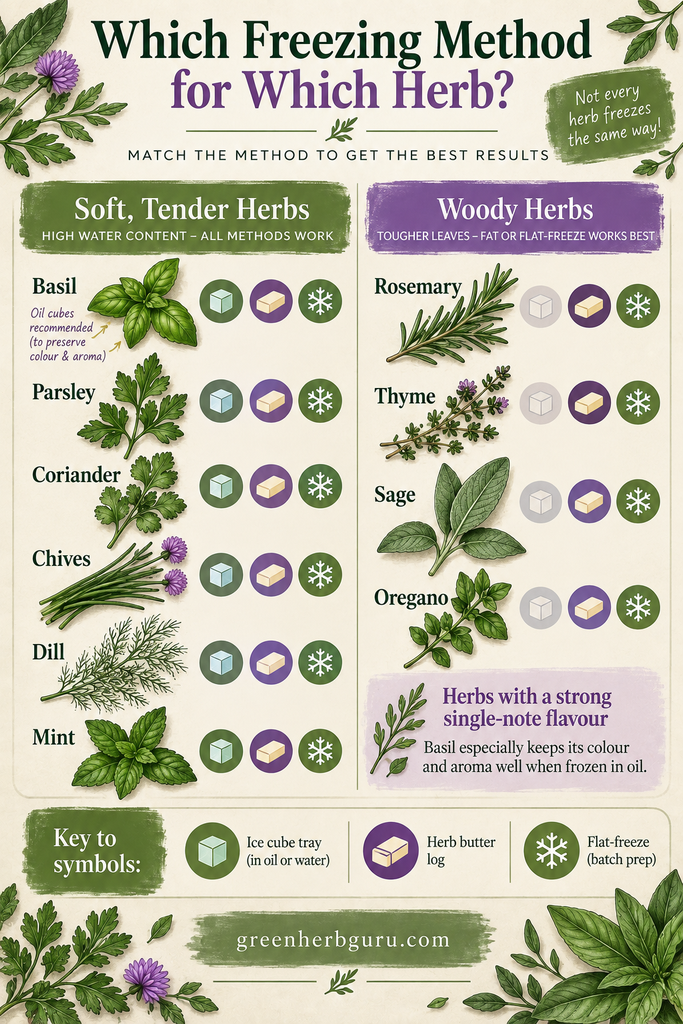
- Soft, tender herbs (basil, parsley, coriander, chives, dill, mint): all three methods work, but ice cube trays and flat-freezing are the easiest. These herbs have a high water content and go slightly limp once thawed, which barely matters in a cooked dish but is worth knowing if you were hoping for a fresh garnish.
- Woody herbs (rosemary, thyme, sage, oregano): herb butter logs are the standout choice, since the fat protects the leaves’ essential oils. Flat-freezing whole sprigs also works well for these, and you can strip the leaves straight off the frozen stem.
- Herbs with a strong single-note flavour (basil especially): oil-based ice cubes tend to preserve colour and aroma better than water, since basil in particular can discolour and turn slightly bitter when frozen in water alone.
If you’re not sure which category a herb falls into, the preserving fresh herbs guide has a broader rundown of drying, freezing and infusing options for the herbs not covered here.
Herb blends freeze just as well as single herbs, and can save time if you regularly reach for the same combination. A classic bouquet garni mix of parsley, thyme and bay, or a Mediterranean blend of rosemary, oregano and thyme, both freeze well as ice cubes or flat-frozen batches, ready to drop straight into a stew or roasting tin.
📦 Storage Life and Labelling
Frozen herbs don’t spoil in the sense that they become unsafe to eat, but they do lose potency. As a general rule, oil and butter-based preparations hold good flavour for four to six months, while flat-frozen loose herbs and water-based cubes are best used within three to four months before the aroma starts to fade noticeably.
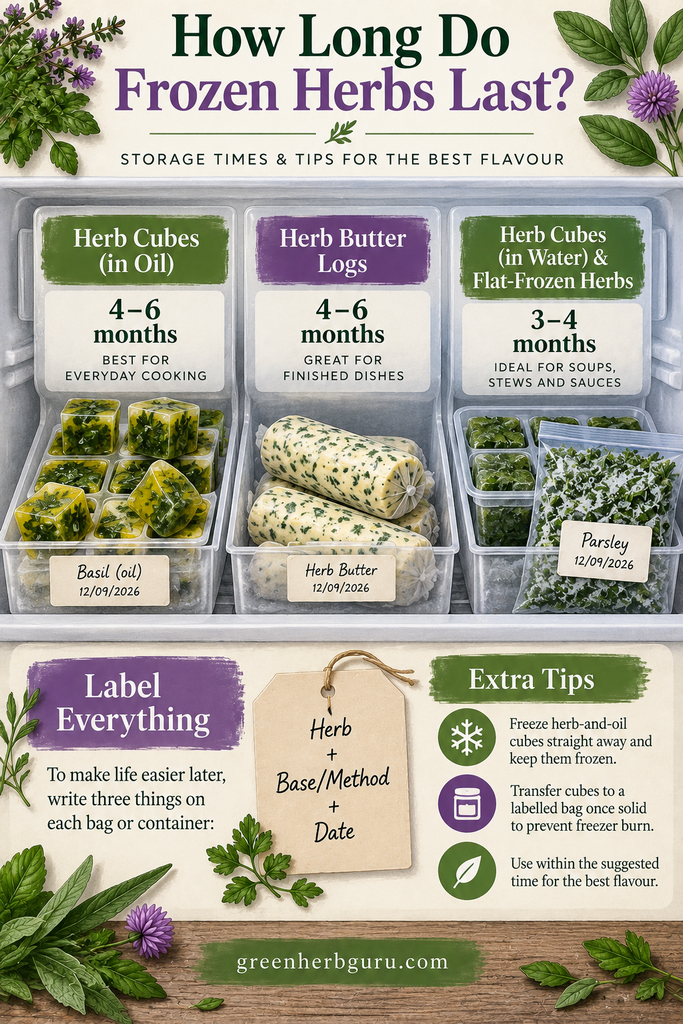
Labelling matters more than it seems like it should. Write the herb name, the base used (oil, water or butter) and the date on every bag or container, since frozen herbs are notoriously difficult to identify by sight once they’ve lost their colour.
Keep a small running list on the freezer door or in your phone of what’s in there and when it went in. It’s a five-second habit that saves you from digging through unmarked bags every time you need a cube of something.
🍲 Quick-Use Tips
- Drop a frozen oil cube straight into a simmering soup, stew or sauce, no need to thaw first.
- Add a water-based mint or dill cube to sparkling water or tea for an instant herbal drink.
- Pan-sear a slice of herb butter over low heat until just melted, then spoon it over grilled chicken, fish or steamed vegetables.
- Stir a flat-frozen handful of basil or parsley into a pasta sauce during the last few minutes of cooking to keep the flavour bright rather than cooked out.
- For a fast finishing touch, whisk a melted oil cube into a simple herb vinaigrette instead of chopping fresh at the last minute.
Freezing is not a substitute for good air-drying, dehydrating or oven-drying technique when you want a shelf-stable seasoning, but for cooking-ready flavour it’s hard to beat. Once you’ve matched the method to the herb, a glut stops being a problem you have to solve in a week and becomes a stash you draw on for months.
❓ Frequently Asked Questions
Do I need to blanch herbs before freezing? No, blanching is really a vegetable-preservation step and isn’t necessary for herbs. A quick rinse and thorough pat-dry before chopping is all the prep herbs need, since blanching would only wash away the essential oils that give them flavour in the first place.
Can I just freeze herbs loose in a bag without oil or water? You can, and it’s the quickest option if you’re short on time, but expect a shorter useful window (around two to three months) before the flavour starts to fade. The flat-freeze method above is really this same idea with one extra step that stops everything clumping into a single frozen brick.
Is it safe to eat herbs that have been frozen for over six months? Yes, food safety isn’t the concern here, since anything kept solidly frozen stays safe indefinitely. Flavour and aroma are what fade over time, so herbs frozen for eight months or a year won’t harm you, they’ll just taste noticeably milder than a fresher batch.
Can I freeze herbs that have already started to wilt? Slightly tired herbs are fine to freeze, since the freezing process itself will soften their texture anyway. Herbs that have gone slimy, mouldy or badly discoloured should be composted rather than frozen, as freezing won’t reverse spoilage that has already set in.
What’s the best way to organise a freezer full of different herb cubes? A shoebox-sized container or a clear freezer bag per herb type keeps things from turning into a jumbled mess. Group by base (oil, water, butter) as well as by herb, and place newer batches at the back so you naturally use up older ones first.
🌱 Continue Your Journey
- The Complete Guide to Preserving Fresh Herbs: Drying, Freezing, and Infusing
- Viral Herb-Preservation Hacks: Save Your Harvest Before Frost Hits
- The Ultimate Guide to Parsley: Everything You Need to Know
- Chives: A Comprehensive Guide
- Italian Herbs: Basil, Oregano, Rosemary and the Foundations of Italian Cooking
Want more ways to make the most of your herb harvest? Subscribe to our newsletter for fresh guides delivered straight to your inbox.