
Herb Garden Jobs for October: Moving Herbs Indoors Before Frost
October is decision month for anyone growing herbs outdoors. The days are shortening, the first proper frost is somewhere on the horizon, and a handful of your pots are quietly asking a question you can’t put off much longer: come inside, hunker down, or take your chances outside? Get this right and you carry your rosemary, bay and lemon verbena through to spring. Get it wrong, or simply forget, and a single sharp night can undo a whole growing season.
As an Amazon Associate I earn from qualifying purchases and sometimes recommend products from other sellers at no extra cost to you. For more details see my disclosure policy and privacy policy.
Which Herbs Actually Need to Come In This Month
Not every herb is in danger. Most of the tough, woody Mediterranean herbs, thyme, sage and established rosemary among them, cope fine with a UK winter outdoors, especially in a sheltered spot against a wall or the house. Wet roots are usually more dangerous to them over winter than cold air, so good drainage matters more than moving them.
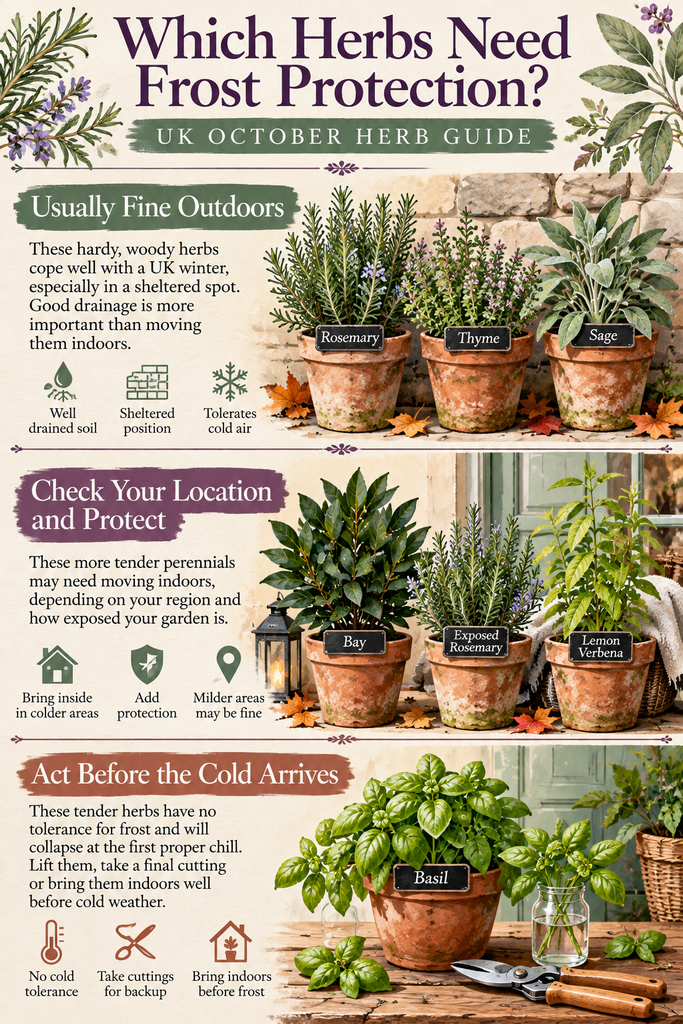
The herbs that genuinely need a decision this month are the tender perennials: rosemary that has been grown in a particularly exposed spot, bay, and lemon verbena. Bay tolerates a mild winter outdoors in favoured parts of the country but struggles badly further north or at any exposed, windy site. Lemon verbena is the most tender of the three. It is deciduous, so it will drop its leaves regardless of what you do with it, and in most of the UK it needs active protection to survive at all.
Forged & Grown — The Shop
Handpicked products chosen to fit the way we cook, grow, and create. Nothing generic — every item earns its place.
Visit the Shop


If you are growing rosemary and want the fuller comparison of indoor versus outdoor care through the seasons, our dedicated rosemary guide covers that in more depth than this post has room for.
Worth a separate mention are the truly tender annuals and half-hardy perennials many of us also grow alongside rosemary and bay, basil in particular, along with marjoram and lemongrass if you have them. Basil especially has no tolerance for cold at all and will collapse at the first proper chill, well before the frost that finishes off hardier plants. If you still have basil going in October, it is worth lifting or taking a final cutting well before the rest of this list even becomes urgent, since it has the least buffer of anything in the herb bed.
Three Ways to Save a Tender Herb
There is no single correct answer here. Which option makes sense depends on the herb, your growing space, and how much effort you want to put in.
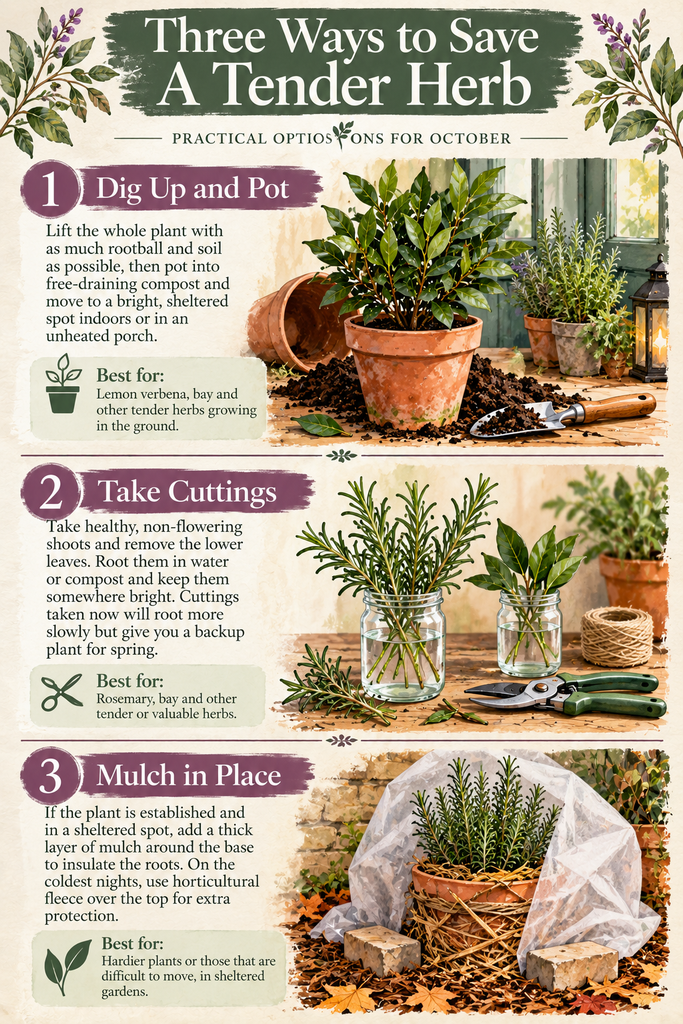
Dig up and pot. The most reliable option for a plant that has been growing directly in the ground. Lift the whole rootball with as much surrounding soil as you can manage, pot it into free-draining compost, and give it a sheltered, bright spot indoors or in an unheated porch. This works well for smaller lemon verbena and bay plants, though a large, well-established bay in a big pot may already be as settled as it needs to be outdoors with some extra protection.
Take cuttings. A good backup plan, or a sensible choice if a plant is too large or too settled to move easily. Late summer into early autumn is the ideal cutting window for rosemary, with a fair success rate, though cuttings taken now will simply root more slowly in the shorter days and be ready to plant out in spring rather than this winter. It is not a fast fix, but it is a cheap insurance policy against losing a plant altogether. Regrowing herbs from cuttings walks through the basic method if you have not tried it before.
Leave in place and mulch. The lowest-effort option, best suited to hardier plants or to a genuinely sheltered garden. A thick mulch around the base insulates the roots even if top growth is damaged by cold, and a layer of horticultural fleece over the top on the coldest nights adds further protection without needing to move anything at all.
Timing It Against Your First Frost Date
UK frost timing varies enormously by region. Coastal and southern gardens might not see a first frost until well into November, while inland, northern or upland gardens can see one considerably earlier. Rather than working from a fixed calendar date, it is worth checking a frost date estimate for your specific postcode and building in a buffer of a week or so either side, since forecasts are never perfectly precise.
The practical takeaway is to move anything tender before the first frost is forecast, not after. Frost damage to leaves and stems happens fast and is not something you can undo once it has occurred, so there is little to gain from waiting to see what happens.
It helps to check a forecast little and often through October rather than relying on a single date fixed in your mind back in September. Autumn weather in the UK is genuinely unpredictable from one year to the next, and a mild October can tip into a sharp cold snap within a few days. Keeping half an eye on the forecast for your specific area, rather than a generic “move herbs in October” rule, is what actually protects the plant.
The Pest Check You Shouldn’t Skip
Before anything comes indoors, give it a proper look over. Check leaf undersides, stems, leaf joints and the base of the pot for anything that shouldn’t be there. Fine webbing usually points to spider mites, cottony white clusters to mealybugs, and small brown bumps stuck to stems can be scale insects.
A firm rinse with a hose or watering can, while the plant is still outside, dislodges a surprising number of light infestations before they ever reach your windowsill. If you do find something establishing, a soap-based treatment made for the specific pest and plant can help, though always check the label first and keep any spray away from children and pets while it dries, as you would with any garden product.
It is also worth giving new indoor arrivals a bit of distance from your existing houseplants for a few weeks. Hidden eggs and larvae take time to show themselves, and it is much easier to deal with an outbreak on one plant than to have it spread through an entire windowsill.
Acclimatising Herbs to Life Indoors
Moving straight from bright, breezy outdoor conditions into a warm, still, comparatively dim house is a shock most herbs would rather avoid. Indoor light, even next to a south-facing window, is a fraction of what the same plant received outside, and central heating dries the air considerably more than an autumn garden.
Where possible, ease the transition over a week or two: a cool porch, unheated conservatory, or shed with a window is a useful halfway house before a plant goes into its final indoor spot. Sudden changes in light and temperature are the most common cause of leaf drop and general sulking in newly moved herbs, so a gradual move buys the plant time to adjust rather than react.
Getting the Indoor Care Right
Once settled, a south or west-facing windowsill gives the best chance of enough light through the darker months. Keep leaves clear of cold glass overnight, since the temperature right against a windowpane can drop noticeably lower than the rest of the room.
Water less than you would in summer, letting the top inch or so of compost dry out between waterings, since overwatering in low light and cool conditions is one of the fastest ways to lose an indoor herb. Hold off on feeding until spring growth picks up again, as most herbs are barely growing through the darkest months and have little use for it.
If your home runs on the dry side, especially with central heating on through the evening, a occasional light misting or a pebble tray with water underneath the pot can help offset some of that indoor dryness, particularly for lemon verbena.
It is also worth giving each pot a quarter turn every week or so. Herbs on a windowsill grow noticeably towards the light source, and without an occasional turn you will end up with a lopsided plant leaning hard towards the glass rather than a bushy, even shape. This is a small habit, but it makes a real difference by the time spring arrives and growth picks up again.
Finally, resist the urge to repot anything the moment it comes indoors. A stressed plant settling into a new environment does not need the additional disruption of fresh compost and a different pot size at the same time. Wait until spring, once it is growing actively again, before considering a pot upgrade.
None of this needs to be complicated. Herbs have been moving in and out of British homes for as long as people have grown them, and a bit of timing and a gentle transition covers most of what tender perennials need to get through to spring.
Continue Your Journey
- Herb Garden Jobs for September: End-of-Summer Harvest and Fall Prep
- Best Herbs to Plant in November: Your Complete Guide to Late-Season Growing
- Your Herb Garden Calendar: A Month-by-Month Growing and Care Guide
- How to Start a Micro Herb Garden in a Small Space
- Viral Herb-Preservation Hacks: Save Your Harvest Before Frost Hits
Want a reminder for next month’s jobs before the frost catches you out? Sign up to our newsletter for seasonal herb care sent straight to your inbox.


