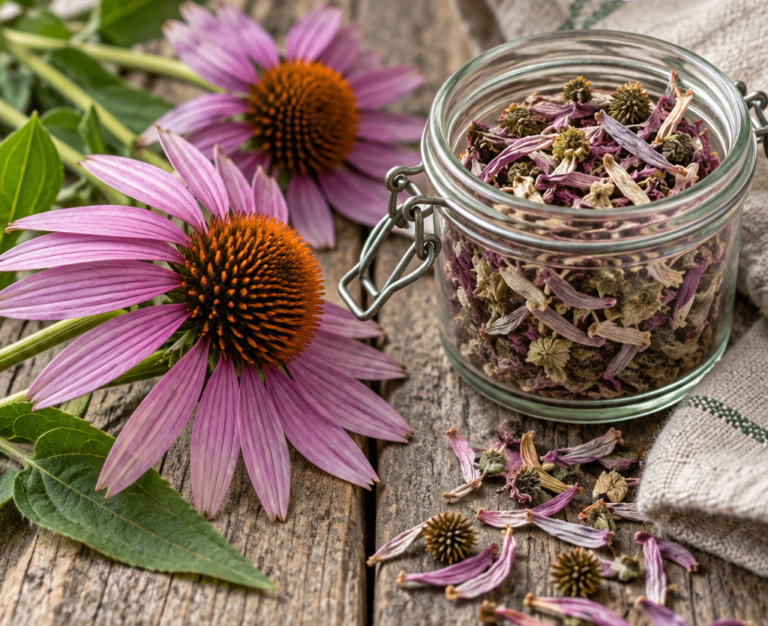
How Long Do Dried Herbs Last? A Shelf-Life and Storage Guide
Somewhere at the back of the cupboard there is a jar of oregano you bought for one recipe, and you cannot remember when. You open the lid, give it a sniff, and get a faint whiff of dust. So the real question is not whether it is safe, but whether it is still worth using.
The short answer: dried herbs rarely turn dangerous when they are properly dried and kept dry, but they do fade. Most whole dried leaves hold their best flavour for roughly one to two years, and ground or crushed herbs tend to fade sooner. This guide gives you a shelf-life chart, a simple sniff test, and a storage setup that works for kitchen herbs and for the herbs you keep for teas and home remedies.
As an Amazon Associate I earn from qualifying purchases and sometimes recommend products from other sellers at no extra cost to you. For more details see my disclosure policy and privacy policy.
⏳ The Quick Answer
“Best before” on a jar of dried herbs is about flavour and aroma, not safety. The volatile oils that give herbs their smell and taste slowly evaporate, and the herb gets duller. That is a quality problem rather than a food-poisoning one.
Forged & Grown — The Shop
Handpicked products chosen to fit the way we cook, grow, and create. Nothing generic — every item earns its place.
Visit the Shop


The real safety risk is moisture. Herbs that were never fully dry, or that have taken on damp in storage, can grow mould. Mould means the jar goes in the bin, whatever the date says.
As a rule of thumb, dried herbs last longest when they are whole, kept in the dark, and kept dry. I would never describe any dried herb as safe indefinitely, because storage conditions change everything.
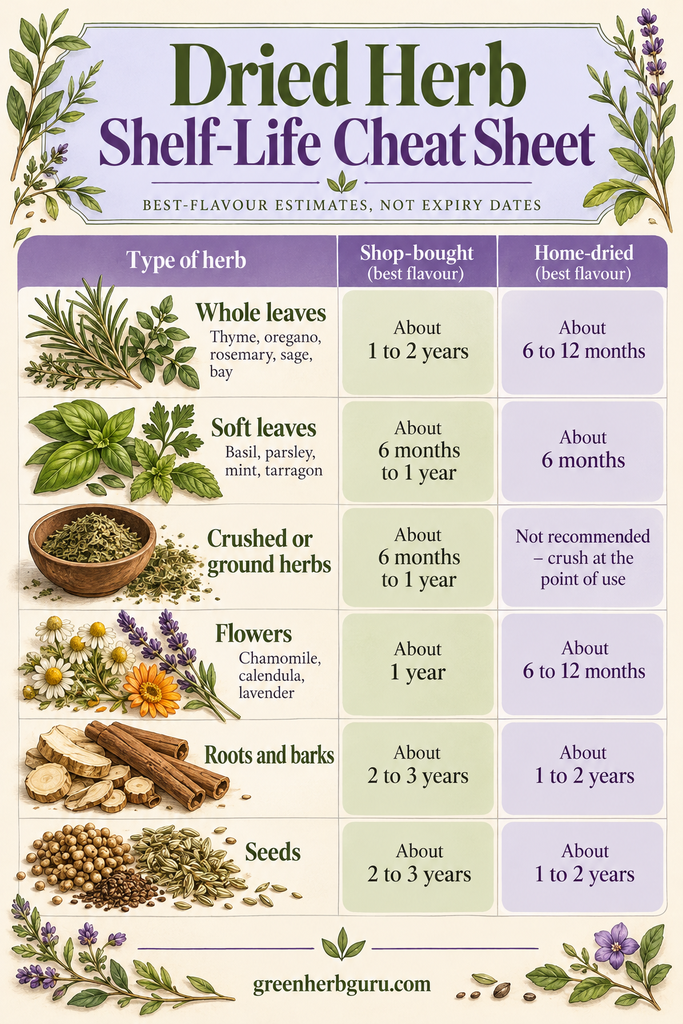
📊 Shelf-Life Chart by Herb and Form
These figures are rules of thumb. Sources vary, and your kitchen is not a laboratory. Use the ranges as a prompt to check your jars, not as a hard expiry date.
| Type of herb | Shop-bought | Home-dried |
|---|---|---|
| Whole leaves (thyme, oregano, rosemary, sage, bay) | About 1 to 2 years for good flavour | About 6 to 12 months for best flavour |
| Soft leaves (basil, parsley, mint, tarragon) | About 6 months to 1 year | About 6 months |
| Crushed or ground herbs | About 6 months to 1 year | Not recommended: crush at the point of use |
| Flowers (chamomile, calendula, lavender) | About 1 year | About 6 to 12 months |
| Roots and barks | About 2 to 3 years | About 1 to 2 years |
| Seeds | About 2 to 3 years | About 1 to 2 years |
A few notes on reading the chart. Woody Mediterranean herbs such as rosemary and thyme tend to hold their oils longer than soft herbs like basil. Whole herbs outlast crushed ones because less surface is exposed to air. Our own guide to preserving fresh herbs gives six to twelve months as the window for peak flavour in home-dried leaves, and that sits within these ranges.
Spices are only a passing mention here. Whole spices tend to outlast ground ones for the same reason.
👃 How to Tell If Dried Herbs Have Faded or Gone Off
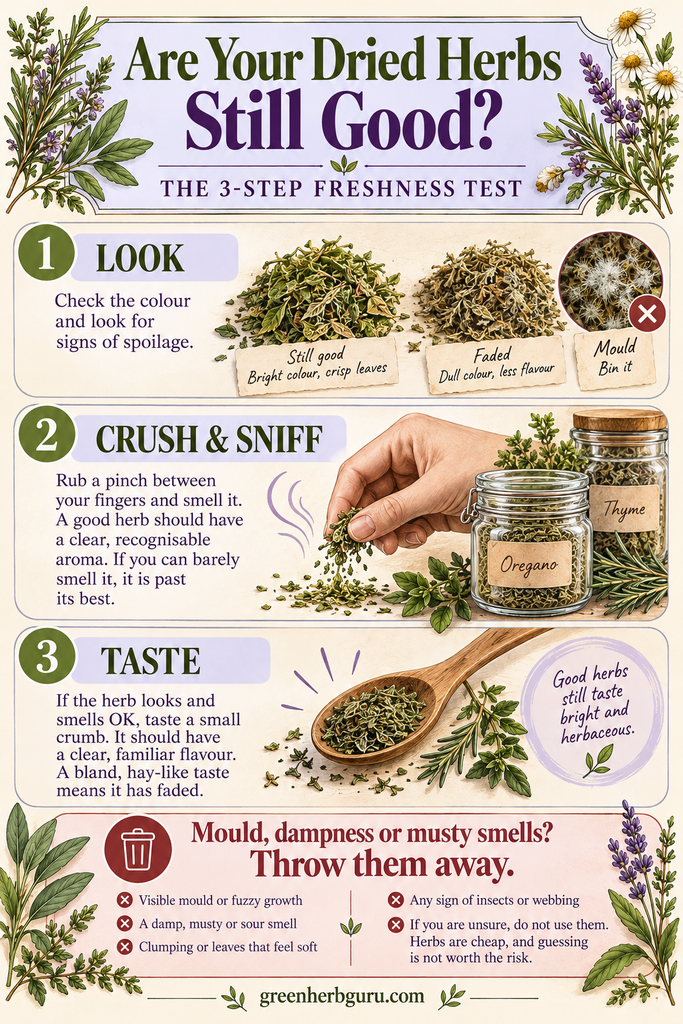
Your nose is the best tool you have. Here is the three-step check I use before I cook with any jar.
- Look. Bright green leaves have usually faded to olive or khaki. A little fading is normal. A strongly washed-out colour means most of the flavour has gone.
- Crush and sniff. Rub a pinch between your fingers and smell it. A good herb gives a clear, recognisable scent. If you have to hunt for the smell, it is past its best.
- Taste a crumb. A bland, hay-like taste confirms the herb has faded.
When to bin them
Fading is a reason to replace herbs. These signs are a reason to throw them away:
- Visible mould, or a white, fuzzy or powdery growth.
- A damp, musty or sour smell.
- Clumping, or leaves that feel soft rather than crisp.
- Any sign of insects or webbing.
If you are unsure, do not use them. Herbs are cheap, and guessing is not worth the risk.
🫙 Storage That Actually Works
Four enemies shorten the life of dried herbs: air, light, heat and moisture. A good setup deals with all four.
Airtight glass. Use jars with tight-fitting lids. Airtight glass herb and spice jars are easy to clean and do not hold smells the way plastic can. Dark glass or a closed cupboard blocks light.
Cool and dark. Keep jars away from the hob, kettle, toaster and any sunny windowsill. The spice rack above the cooker looks lovely but is one of the worst places in the house.
Dated labels. Write the herb, the part used and the date on every jar. It takes seconds and ends the “how old is this?” guessing game.
Desiccant if your home is humid. In a damp kitchen or a steamy house, a small food-safe desiccant packet in the jar helps keep moisture down. Never add one that is not labelled food safe.
Store whole leaves and crush only what you need, since crushing early releases the oils that carry flavour. For ways to preserve your fresh harvest in the first place, see our guide to air-drying, dehydrating and oven-drying herbs.
🗓️ A Simple Twice-a-Year Herb Check
Storage works best with a routine. Pick two dates, such as the clock change in spring and in autumn, and give your herb shelf ten minutes.
Pull every jar out and check the label date. Do the crush-and-sniff test on anything over a year old. Bin anything mouldy, and move faded jars to the “use up in stews” pile.
Wipe the shelf and the jar rims before everything goes back. Small crumbs of old herb attract damp and pests, and a quick wipe stops both.
Buy smaller, replace sooner
It is tempting to buy the big bag because it costs less per gram. If you only cook with a herb now and then, a smaller jar you will finish in a year is better value than a large one that fades on the shelf.
The same goes for home-dried herbs. Dry what you will realistically use before next season’s harvest, and let the rest go into the compost or the cooking pot.
✋ Home-Dried Herbs: Make Sure They Are Truly Dry
Home-drying is where most storage problems start. A herb that feels dry on the outside can still hold moisture in the stem, and once it is sealed in a jar, that moisture goes looking for somewhere to land.
Before you jar anything, check it with these simple tests:
- Leaves should crumble easily and feel almost crisp.
- Stems should snap rather than bend.
- If in doubt, leave the herbs another day or two in a warm, airy spot.
A good habit is to jar one batch, then look at it again after a day or two. If you see any condensation or mist on the inside of the glass, the herbs were not dry enough. Take them out and dry them further.
Dehydrators dry more evenly than air-drying in a damp UK autumn, and that consistency helps shelf life. Our air-drying versus dehydrator versus oven comparison covers the methods in detail, so I will not repeat them here.
🌿 The Apothecary Side: Herbs for Teas and Home Remedies
If you keep herbs for teas or home preparations, the same storage rules apply, and the stakes feel higher because you are using them differently. Traditionally, herbalists treat dried leaves and flowers as the shortest-lived, and roots, barks and seeds as the longest-lived.
Buy small amounts from a reputable supplier, store them whole, and label the batch date. Our beginner’s apothecary guide explains how to build a simple home herb shelf from scratch.
A faded herb will make a weaker, flatter tea. It is not likely to harm you, but there is little point in using it. Tea blends made from old chamomile and mint will taste dull, so refresh them each season. Our chamomile beginner’s guide shows how a fresh batch should smell.
This post covers dried herbs only. Herbs preserved in oil, honey or syrup follow completely different rules, so please do not apply the figures above to them. See our guides to herbal infused oils and herbal honey and syrups for their storage and safety advice.
Safety first
Herbs used in teas and home remedies are not always harmless, and age does not change that. Please keep the following in mind:
- Pregnancy and breastfeeding: Many herbs are not recommended during pregnancy or while breastfeeding. Check with your midwife, doctor or pharmacist before using any herb medicinally.
- Medications: Some herbs interact with prescription medicines, including blood thinners, blood pressure medication and antidepressants. Talk to your doctor or pharmacist first.
- Children: Do not give herbal preparations to children without advice from a healthcare professional, and keep all jars out of reach.
- Allergies and existing conditions: Stop using a herb if you notice a reaction, and seek advice if you have a medical condition.
The uses of herbs described on this blog reflect traditional use rather than proven medical benefit. Nothing here replaces advice from a qualified healthcare professional. Our herbal tea safety guide goes into more detail on pregnancy, medication and everyday limits.
♻️ What to Do With Tired Herbs
Faded is not the same as wasted. If your herbs are dull but clean and mould-free, you still have options:
- Blends: Add a generous pinch of tired thyme or oregano to stews, soups and slow-cooked dishes, where long cooking brings out what flavour remains.
- Simmer pots: Simmer old rosemary, bay and thyme with citrus peel for a gentle kitchen scent.
- Bouquet garni: Tie a few stems in muslin and drop them into stocks. Our guide to growing and storing bay leaf is a useful companion.
- Compost: Clean, mould-free herbs go straight on the compost heap. Bin anything mouldy.
Use two or three times the usual amount of a faded herb to make up for the lost flavour, then taste and adjust.
❓ Quick Questions
Do dried herbs expire? They fade rather than expire in the usual sense. Treat the date on the jar as a guide to quality, and let your nose make the final call.
Can I freeze dried herbs to make them last longer? It is not necessary for most kitchens, and it can introduce condensation each time you open the jar. A cool, dark cupboard is simpler and works well.
Is it fine to store dried herbs in plastic bags? For short periods, yes. For longer storage, glass jars protect flavour better.
🌱 Continue Your Journey
- Freezing Fresh Herbs: Ice Cube Trays, Herb Butter Logs and Batch Prep
- How to Make Herbal Tea Blends for Beginners
- DIY Herbal Salts and Sugars: Simple Wellness Additions You’ll Actually Use
- Herb Garden Jobs for October: Moving Herbs Indoors Before Frost
- Thyme: The Complete Guide to Growing, Cooking, and Using This Kitchen Essential
Love herbs as much as we do? Join the Green Herb Guru newsletter for seasonal growing tips, preserving guides and kitchen herb inspiration.