Iced Herbal Teas: Refreshing Garden Herb Drinks for Every Season
There’s something quietly satisfying about turning a handful of fresh herbs from your garden into something cool, beautiful, and genuinely good for you. Iced herbal teas are one of those simple pleasures that feel far more impressive than the effort involved — and once you start making them at home, the supermarket versions stop making any sense at all.
Whether you’re looking for a low-sugar alternative to fizzy drinks, a caffeine-free evening wind-down, or just a more interesting way to stay hydrated, herbal iced teas deliver on all fronts. They’re endlessly customisable, genuinely easy to make, and the flavour combinations from your herb garden are far more interesting than anything in a teabag box.
As an Amazon Associate I earn from qualifying purchases and sometimes recommend products from other sellers at no extra cost to you. For more details see my disclosure policy and privacy policy.
Why Iced Herbal Teas Are Worth Making
Most people think of herbal tea as a hot, wintry thing — something to sip when you’re under a blanket with a cold. But chilled herbal infusions are a completely different experience. Cold brewing or cooling a hot-brewed blend unlocks a smoother, often sweeter flavour from the same herbs that tastes entirely fresh.
Forged & Grown — The Shop
Handpicked products chosen to fit the way we cook, grow, and create. Nothing generic — every item earns its place.
Visit the Shop


They’re also one of the best ways to use a herb harvest. If your mint or lemon balm is going mad in the garden — which it inevitably will — making a big pitcher of iced tea is a fast, practical solution. You can batch-make a litre or two, keep it in the fridge, and drink your way through it over a couple of days.
A few other reasons iced herbal teas deserve a regular spot in your kitchen:
- No sugar needed (or very little). Many herb-based blends are naturally flavourful enough to drink straight, or just need a drizzle of honey to balance the flavour.
- Naturally caffeine-free. Most herbal blends are completely caffeine-free, making them a genuinely good choice for afternoons, evenings, and anyone who’s sensitive to stimulants.
- Great for hydration. It’s much easier to drink enough water when it tastes like something. Herb-infused iced teas make staying hydrated feel like a treat rather than a chore.
- Uses what you’re already growing. If you have a micro herb garden or even just a few pots on a windowsill, you almost certainly have everything you need.
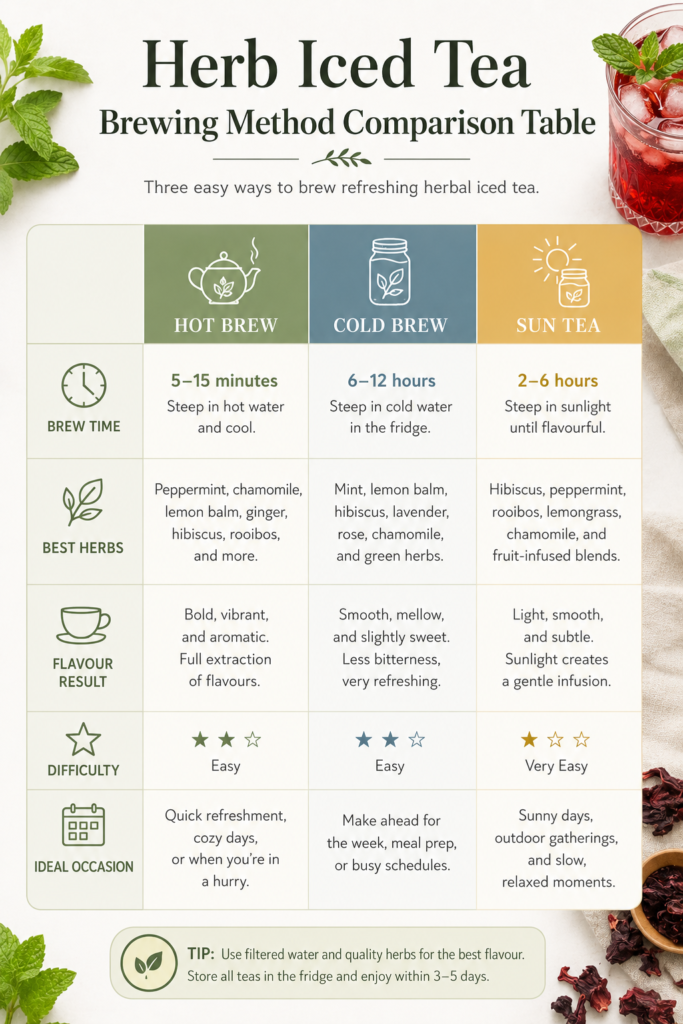
Three Simple Brewing Methods
One of the things that makes iced herbal teas so accessible is that there’s genuinely no special equipment required. A heatproof jug, a saucepan, and a sieve are all you need for most methods. Here are the three main approaches, each with its own flavour payoff.
Hot-Brew and Chill
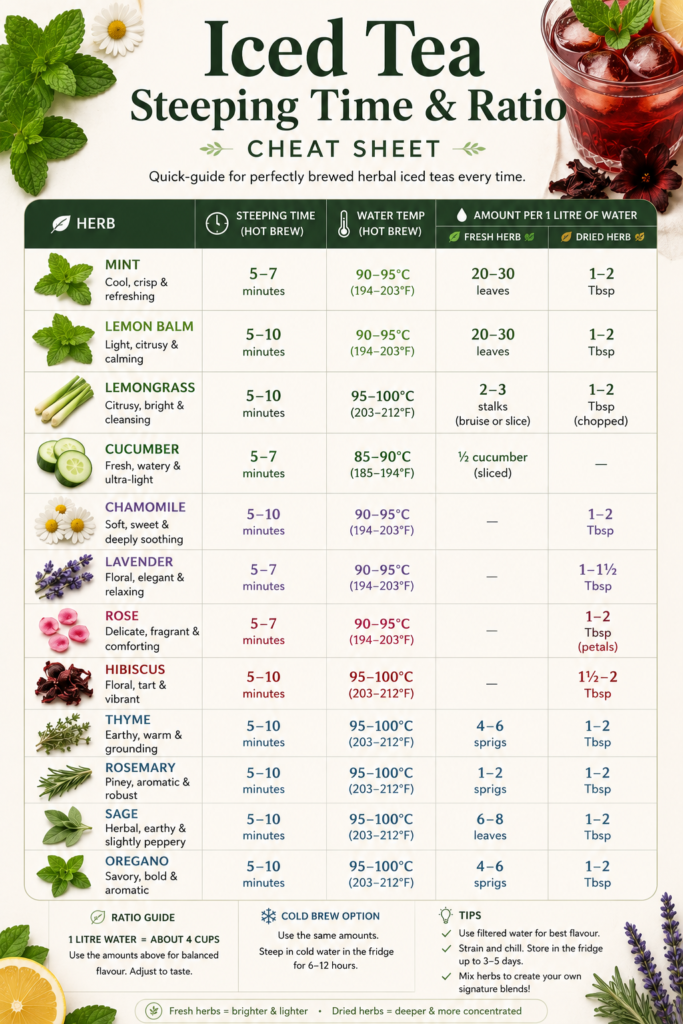
This is the most straightforward method and works well with dried herbs, tougher botanicals like hibiscus and rosehip, and mixed herb blends. Bring water to the boil, pour it over your herbs (fresh or dried), cover the jug and steep for 10 to 20 minutes. Strain, allow to cool to room temperature, then refrigerate until cold before serving over ice.
The cover matters — it stops the volatile oils that carry so much of an herb’s flavour and aroma from escaping with the steam. Don’t skip that step.
Hot-brewing gives you a more concentrated, robust flavour, which is ideal if you’re planning to serve the tea over lots of ice or dilute it with sparkling water. If you’re using fresh herbs, bruising or lightly muddling them before steeping will help release their essential oils and give you a more expressive infusion.
Cold Brew in the Fridge
Cold brewing is slower but produces a noticeably smoother result — less bitter, often with a sweeter, more delicate flavour profile. Add your herbs to a jug of cold water and leave in the fridge for anywhere between 6 and 18 hours. Strain and serve.
This method works especially well with fresh mint, lemon balm, basil, and chamomile, where you want the subtler, less astringent side of the herb to come through. It’s also the most hands-off approach — you can set it up before bed and have a beautiful cold brew ready for the next morning.
If you’re making a blend that includes green tea as well as herbs, cold brewing is particularly good because it avoids the bitterness that hot water can extract from green tea leaves.
Sun Tea
Sun tea is the most relaxed method of all — and it produces a naturally warm-brewed result without any effort. Fill a large glass jar with cold water and fresh herbs, seal it, and leave in direct sunlight for three to five hours. Once brewed, strain and refrigerate promptly before serving over ice.
This works best on genuinely sunny days (not just bright overcast ones), and it’s worth keeping a close eye on timing. Unlike hot-brewed tea that you cool intentionally, sun tea sits in a warm-but-not-hot range for several hours, which means it should go straight into the fridge once brewed and ideally be consumed within a day. The flavour is gentle and naturally sweet — particularly good for mint and lemon balm combinations.
The Best Garden Herbs for Iced Teas
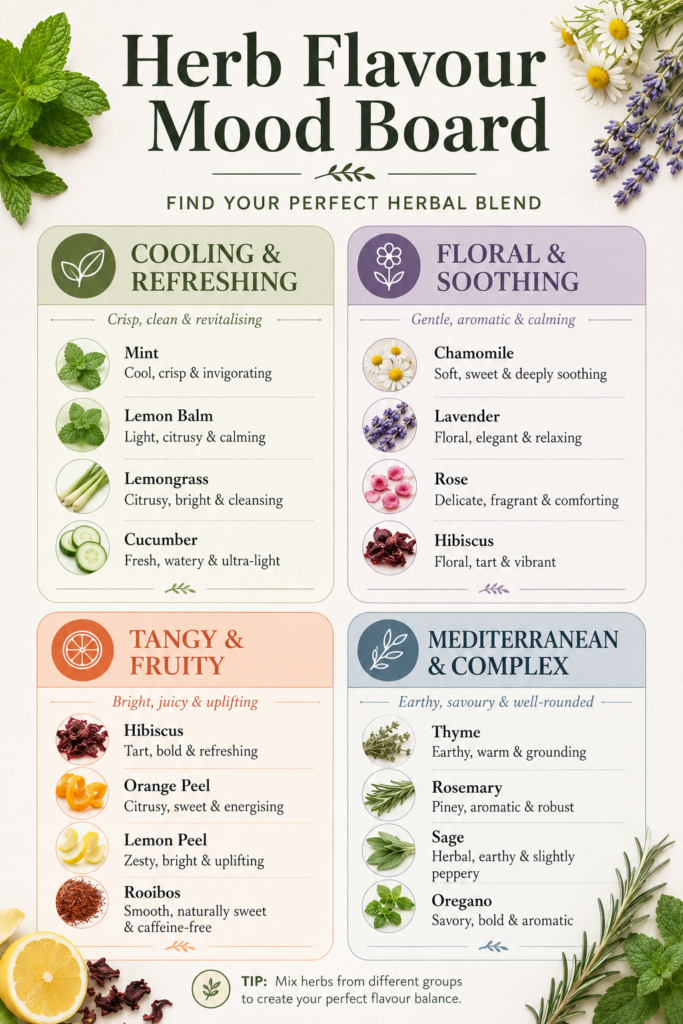
Choosing your herbs is where the real fun begins. Different herbs bring entirely different moods to an iced tea, so it helps to think about what you’re after before you start brewing.
Cooling and Refreshing
Mint is the classic starting point, and for good reason. It has a naturally cooling effect — even cold, the menthol in mint creates a sense of freshness that makes it perfect for hot weather. Spearmint, peppermint, and apple mint all work well in iced teas, each bringing a slightly different flavour: spearmint is sweeter, peppermint more intense, apple mint more gentle and fruity.
Lemon balm is mint’s quieter relative and makes a beautifully smooth iced tea on its own or blended with mint. It has a soft lemon flavour without any sharpness, and it pairs well with almost anything. If you grow lemon balm at home, you’ll know it’s generous to a fault — making iced tea is one of the best ways to use a big harvest.
Lemon verbena is worth seeking out if you don’t already grow it. It has an intensely lemony scent that carries brilliantly into cold water and makes one of the most refreshing single-herb iced teas you can make.
Floral and Soothing
Chamomile makes a wonderful chilled tea — the familiar soothing flavour softens beautifully when cold, and it’s one of the few floral herbs that doesn’t become bitter when brewed properly. Use dried chamomile flowers for the most consistent flavour, steep for around ten minutes in just-off-the-boil water, then cool and chill.
Lavender works well in iced tea but needs a lighter hand than chamomile. Use too much and it can tip into soapy territory — but a small amount combined with lemon or mint creates something genuinely lovely. Dried culinary lavender (not the ornamental kind) gives the cleanest flavour.
Tangy and Fruity
Hibiscus is one of the most dramatic additions you can make to an iced tea. The dried flowers brew into a vivid crimson liquid with a distinctly tart, almost cranberry-like flavour that’s bold enough to stand on its own. It’s also one of the most visually striking things you can pour into a glass. Research suggests hibiscus may support healthy circulation, which is an added bonus — though as with all herbal wellness content, it’s worth reading reputable sources like those from the National Center for Complementary and Integrative Health for the full picture.
Rosehip brings a gentler fruitiness to iced tea blends and adds a natural vitamin C boost. It works brilliantly paired with hibiscus for a tart summer refresher, or with apple and cinnamon for an autumn-leaning cold brew.
Mediterranean and Complex
Basil might not be the first herb that comes to mind for iced tea, but it’s surprisingly versatile in cold drinks. Lemon basil or Thai basil in particular have a bright, aromatic quality that works beautifully with citrus and green tea. It’s more interesting than it sounds — if you’re already growing basil for pesto or herb-infused oils, it’s worth setting a handful of leaves aside for a batch of iced tea.
Rosemary, used sparingly, adds a piney, slightly resinous depth to more complex blends. It pairs well with citrus and works especially well in small quantities alongside mint or ginger. A little goes a long way — rosemary is assertive, and in large quantities it can overpower more delicate herbs.
Four Herb Iced Tea Recipes to Try
These are starting points rather than rigid recipes — adjust quantities to taste, swap in what you’re growing, and feel free to add citrus slices, cucumber, or a few berries to the jug for both flavour and visual appeal.
Mint and Lemon Balm Garden Cooler
The simplest and most satisfying summer iced tea. Combine a large handful each of fresh mint and lemon balm (roughly 30–40g total) with 8 cups of cold water in a glass jar. Seal and leave in the sun for three to five hours, or cold-brew in the fridge overnight. Strain, add a squeeze of lemon and a drizzle of honey if you like, then serve over plenty of ice. This is the iced tea equivalent of a garden in a glass.
Lemon Basil and Green Tea Cooler
Brew two or three green tea bags in just-boiled water for two minutes (not longer, or it turns bitter). While hot, add a handful of fresh lemon basil and two or three slices of lemon, then cover and leave for fifteen minutes. Strain, cool, and refrigerate for three to four hours before serving over ice. The green tea adds a gentle, grassy lift without caffeine overload, and the basil brings something unexpected and lovely.
Hibiscus Lime Refresher
This one is as pretty as it is refreshing. Steep four tablespoons of dried hibiscus flowers in 750ml of just-boiled water for fifteen minutes, covered. Strain, stir in honey to taste while still warm, then add the juice of a lime and top up with cold water to make around a litre. Chill thoroughly before serving over ice with extra lime slices. The colour alone makes this worth making.
Chamomile and Lavender Evening Chill
For a more soothing evening option, steep two heaped tablespoons of dried chamomile with a teaspoon of culinary lavender in hot water for ten minutes. Strain carefully (lavender can become overpowering if left too long), sweeten lightly with honey, and chill for several hours. Serve over ice with a slice of lemon — it’s a lovely, fragrant alternative to a hot herbal tea when the evenings are still warm.
Natural Sweeteners and Flavour Boosters
Refined white sugar is the obvious choice for sweetening cold teas, but it doesn’t dissolve well in cold liquid and tends to just sink to the bottom. A few better options:
- Honey dissolves more easily when added while the tea is still slightly warm, and brings its own gentle flavour — good with chamomile, lavender, and mint.
- Simple syrup (just equal parts sugar and water, simmered until dissolved and cooled) is the bartender’s trick for sweetening cold drinks cleanly and evenly.
- Agave nectar has a neutral flavour and dissolves well in cold liquid, making it a good option if you want sweetness without adding flavour.
- Whole fruit — a handful of fresh berries, sliced peach, or citrus added to the jug as it brews — adds natural sweetness and colour without any need for added sugar at all.
If you’re experimenting with herb combinations and pairing them with other fruits, the ginger, lemongrass and mint lemonade on the site shows how well herbs and citrus can work together in cold drinks.
Gentle Wellness Notes
Different herbs bring different traditional associations, and it’s one of the genuinely interesting things about brewing your own teas. Mint and lemon balm are both traditionally used for digestive comfort and calm — something covered in more depth in the post on mint and lemon balm for digestion. Chamomile is widely associated with relaxation. Hibiscus has been studied for its potential cardiovascular benefits.
That said, a few practical cautions are worth keeping in mind:
- Pregnancy and breastfeeding: Some herbs — including hibiscus and high doses of certain mint species — aren’t recommended during pregnancy. If you’re pregnant or breastfeeding, check with your midwife or GP before drinking herbal teas beyond the most gentle options (chamomile in moderation and standard peppermint tea are generally considered fine by most guidelines, but individual circumstances vary).
- Medication interactions: Certain herbs can interact with medications — St John’s Wort is the most well-known example, but others exist. If you take regular medication, it’s worth a quick check with your pharmacist before adding new herbal drinks to your routine.
- Children and pets: Many culinary herbs are fine for adults but should be used more cautiously with young children or kept away from pets entirely. Pennyroyal (a member of the mint family) in particular is toxic to animals, so make sure you’re using common culinary varieties.
- Sun tea timing: If making sun tea, strain and refrigerate it promptly once brewed rather than leaving it to sit at room temperature, where bacteria can develop in the warm, nutrient-rich liquid.
For more on using herbs safely at home, the beginner’s apothecary guide covers the basics well.
Storage and Make-Ahead Tips
Iced herbal teas are brilliant for batch-making, but they don’t last indefinitely. Here’s how to get the best from a batch:
- Store in a sealed glass jar or pitcher in the fridge and aim to drink within two to three days. The flavour is at its best in the first 24 hours.
- Don’t store with the herbs left in. Once brewed, strain everything out before refrigerating — leaving herbs in for extended periods turns the flavour bitter and muddy.
- If you want to keep a flavoured tea concentrate to dilute as needed, brew with half the water quantity and store the concentrate. Dilute with cold water or sparkling water when serving.
- Make ice cubes from leftover tea. If you’ve got more than you can drink, freeze the remainder in ice cube trays. These make beautiful, flavoured ice for future drinks and look stunning in a glass.
- For sun tea specifically, always refrigerate within a couple of hours of brewing, even if the tea hasn’t fully chilled yet.
Making Iced Herb Teas Look Beautiful
Half the pleasure of iced herbal teas is how good they look — and a few simple touches make a real difference. A hibiscus brew in a clear glass jug with ice and lime slices is genuinely striking. A cold brew jug of mint and lemon balm with a few cucumber ribbons and fresh herb sprigs is summer in a pitcher.
A handful of seasonal berries — raspberries, blackberries, sliced strawberries — added to the jug while brewing adds natural colour and flavour. Citrus slices (lemon, orange, lime) are the simplest way to elevate any iced tea visually. And if you’re making these for guests, a sprig of the featured herb laid across the glass rim is the kind of small detail that makes homemade feel considered rather than casual.
If you want more inspiration for herb-forward drinks worth showing off, the herb-infused drinks and mocktails guide is a good next step — it covers everything from herbal shrubs to sparkling herb sodas and cold-brew combinations.
A Final Note on Getting Started
The biggest barrier to making iced herbal teas at home is usually just starting. It feels like it might be complicated or require precise quantities, but the reality is that herbal iced teas are forgiving, flexible, and difficult to get badly wrong.
Start with whatever you’re already growing. Mint and lemon balm are both brilliant entry points — they’re fast-growing, widely available, and produce flavours that most people enjoy immediately. Cold-brew a handful of leaves in a jug of water overnight, taste it in the morning, and go from there.
Once you’ve made a few batches, you’ll develop an instinct for what you like — stronger or weaker, sweeter or more tart, a single herb or a blend. It’s one of those things that quickly becomes second nature, and the herb garden starts looking less like a cooking ingredient source and more like a drink pantry.
Continue Your Journey
- Mint Teas 101: Simple Blends for Digestion, Focus and Fresh Breath — a closer look at mint-forward hot and cold teas
- How to Make Herbal Tea Blends for Beginners — if you’re new to blending, this is the place to start
- How to Grow and Use Lemon Balm: From Garden to Teacup — grow your own key ingredient
- Herb-Infused Drinks & Mocktails: Your Guide to Healthy Hydration — more creative herb drink ideas beyond tea
- Viral Herb-Preservation Hacks: Save Your Harvest Before Frost Hits — what to do when you’ve grown more herbs than you can use fresh
Which herb combination are you most excited to try first? Drop your pick in the comments below — and if you’ve got a favourite iced herb tea recipe of your own, I’d love to hear it.
Want more herb gardening ideas, simple recipes, and seasonal growing tips delivered straight to your inbox? Sign up for the Green Herb Guru newsletter and never miss a post.


