Antimicrobial and Respiratory Herb Remedies: What the Research Actually Says
There’s something deeply human about reaching for a herb when you feel a cold coming on. Long before pharmacies, people turned to thyme, oregano, and elderberry — not out of superstition, but because these plants genuinely seemed to help. And increasingly, the science is catching up to that intuition.
But not all herbal remedies are created equal, and “natural” has never automatically meant safe or effective. This post takes an honest look at the herbs most commonly used for antimicrobial and respiratory support: what the research shows, where it falls short, and what you genuinely need to know before you start brewing or dosing.
As an Amazon Associate I earn from qualifying purchases and sometimes recommend products from other sellers at no extra cost to you. For more details see my disclosure policy and privacy policy.
What Does “Antimicrobial” Actually Mean for Herbs?
Antimicrobial is a broad term that covers anything capable of killing or inhibiting the growth of microorganisms — including bacteria, viruses, and fungi. Many herbs contain compounds that show antimicrobial activity in laboratory settings, which sounds impressive until you realise that killing bacteria in a petri dish is a very different thing from doing so inside a living human body.
Forged & Grown — The Shop
Handpicked products chosen to fit the way we cook, grow, and create. Nothing generic — every item earns its place.
Visit the Shop


The gap between in vitro (lab) results and in vivo (human) results is one of the biggest challenges in herbal medicine research. Lots of herbs demonstrate activity under controlled lab conditions but haven’t been tested rigorously in clinical trials. That doesn’t mean they don’t work — it often means the research simply hasn’t been funded or conducted. It does mean we should hold claims at arm’s length and pay attention to the quality of evidence available.
With that context in mind, let’s look at the herbs with the strongest track records.
Thyme: The Kitchen Herb That Earns Its Place in the Medicine Cabinet
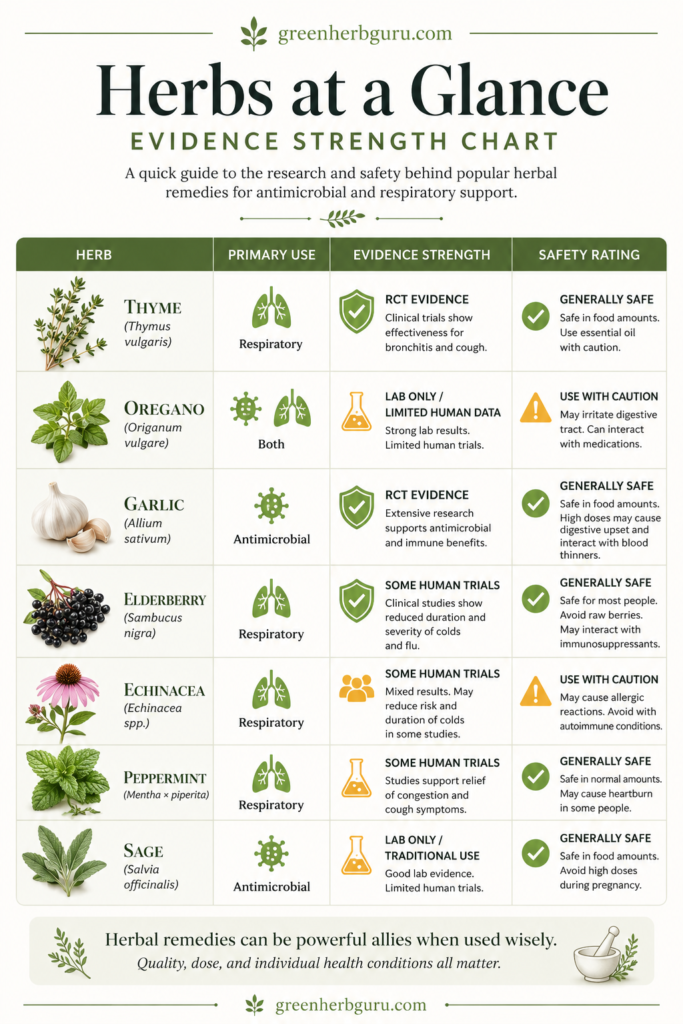
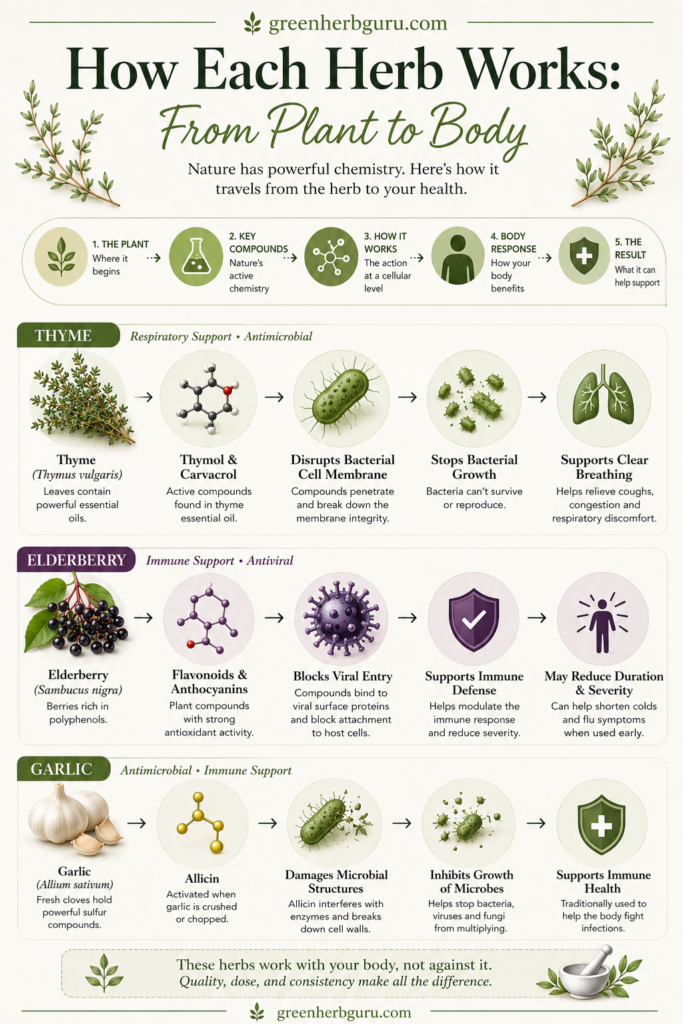
Thyme (Thymus vulgaris) is one of the better-researched herbs in this space, and the research is genuinely encouraging. Its main active compounds — thymol and carvacrol — have demonstrated significant antibacterial and antifungal activity in multiple studies. Thymol in particular has been shown to disrupt bacterial cell membranes, which is one of the mechanisms by which conventional antibiotics work.
For respiratory use, thyme shines in the form of tea or steam inhalation. It has a long history of use for bronchitis, coughs, and upper respiratory infections, and there’s clinical evidence to support it. A 2006 double-blind, placebo-controlled trial published in Arzneimittelforschung found that a thyme-ivy syrup was as effective as the conventional expectorant drug ambroxol for acute bronchitis — a meaningful result. Thyme is also used in pharmaceutical preparations across Europe for exactly this purpose.
How to Use Thyme for Respiratory Support
The simplest approach is a thyme infusion: pour freshly boiled water over a generous handful of fresh thyme or a teaspoon of dried thyme, cover, and steep for 10 minutes. Covering the mug matters — it keeps the volatile oils from escaping into the air rather than into your cup. You can drink this two to three times a day when you’re fighting a chesty cough or sore throat.
For steam inhalation, add a few sprigs of fresh thyme or a few drops of thyme essential oil to a bowl of hot water, drape a towel over your head, and breathe the steam for five to ten minutes. This is an old-fashioned remedy that genuinely has merit — the steam loosens mucus while the thymol reaches the airways directly.
A note on essential oils: Thyme essential oil is highly concentrated and should never be taken internally. Even topically, it needs to be diluted in a carrier oil — undiluted thyme oil can cause skin burns.
Oregano: Powerful in the Lab, More Complicated in Practice
Oregano (Origanum vulgare) has attracted a lot of attention for its antimicrobial properties, primarily because of its high carvacrol content. Carvacrol has shown impressive activity against a wide range of bacteria and fungi in laboratory studies, and oregano oil has developed something of a cult following online as a result.
The honest picture is more nuanced. While the lab evidence is strong, human clinical trials are limited. Most of the compelling research has been conducted in test tubes or on animals, not in randomised human trials. That doesn’t invalidate oregano as a supportive herb — many traditional remedies are used safely and effectively without clinical trials to back every application — but it’s worth being appropriately cautious about the stronger claims you’ll see circulating online.
What oregano is genuinely good for is culinary use: adding fresh or dried oregano to food delivers meaningful amounts of antioxidants and those same antimicrobial compounds in a form that’s safe, enjoyable, and evidence-supported as part of a varied diet. The herb and spice blends on your kitchen shelf are doing more than just adding flavour.
Oregano Oil: What to Know Before You Try It
Oregano oil products vary enormously in concentration and quality. If you’re considering a supplement, look for products standardised to contain at least 70% carvacrol. Start with very low doses — high-concentration oregano oil can irritate the mouth, throat, and digestive tract. It can also interact with blood-thinning medications and should be avoided during pregnancy.
It’s also worth noting that oregano oil, like any antimicrobial substance used internally, may affect your gut microbiome. Using it long-term without professional guidance isn’t wise.
Garlic: The Most Researched Antimicrobial Herb
Garlic (Allium sativum) is arguably the best-evidenced herb in the antimicrobial category, with thousands of studies examining its properties. The key active compound is allicin, which forms when garlic is crushed or chopped — it’s unstable, which is why raw, freshly prepared garlic is far more potent than cooked or aged preparations.
Research has shown allicin to be effective against a range of bacteria, including some antibiotic-resistant strains like MRSA, though it’s important to be clear that this research has mostly been conducted in lab settings rather than in human patients with active infections. Where garlic has stronger human trial evidence is in preventive use — a Cochrane review on garlic and the common cold found that the single trial meeting inclusion criteria showed significantly fewer colds in the garlic group, though the reviewers concluded that more well-designed trials are needed before firm recommendations can be made.
For everyday use, getting more garlic into your diet is a straightforward and genuinely healthy move. Adding it to the essential herbs and spices you reach for regularly makes sense both for flavour and for these broader benefits. A cold-pressed garlic honey — raw garlic infused in honey — is a traditional remedy that combines two antimicrobial ingredients and is considerably more palatable than raw garlic on its own. Our guide to herbal honey and syrups covers exactly how to make safe, effective preparations at home.
Elderberry: The Star of Cold and Flu Season
Elderberry (Sambucus nigra) has become one of the most popular herbal remedies for immune support, and unlike many trending herbs, it has a reasonably solid evidence base to draw on. Several randomised controlled trials have found that elderberry extracts can shorten the duration of influenza and reduce symptom severity.
A 2016 randomised, double-blind, placebo-controlled trial published in Nutrients found that travellers who took elderberry capsules experienced significantly shorter and less severe colds than those taking a placebo. A 2004 study published in the Journal of International Medical Research found elderberry syrup reduced flu duration by an average of four days compared to placebo. These are meaningful results.
The proposed mechanism is interesting: elderberry compounds appear to prevent viruses from attaching to and entering host cells, and may also have anti-inflammatory effects that reduce symptom severity.
Safety Considerations with Elderberry
Raw elderberries, elderberry leaves, bark, and roots contain cyanogenic glycosides — compounds that can cause nausea, vomiting, and in large quantities, more serious harm. Commercially prepared elderberry syrups and capsules use heat-processed, standardised preparations that eliminate this risk. If you’re making your own elderberry preparations at home, cooking the berries thoroughly is essential.
Elderberry may also stimulate the immune system, which means people with autoimmune conditions or who take immunosuppressant medications should consult their doctor before using it regularly.
Echinacea: Complicated Evidence, Still Worth Knowing About
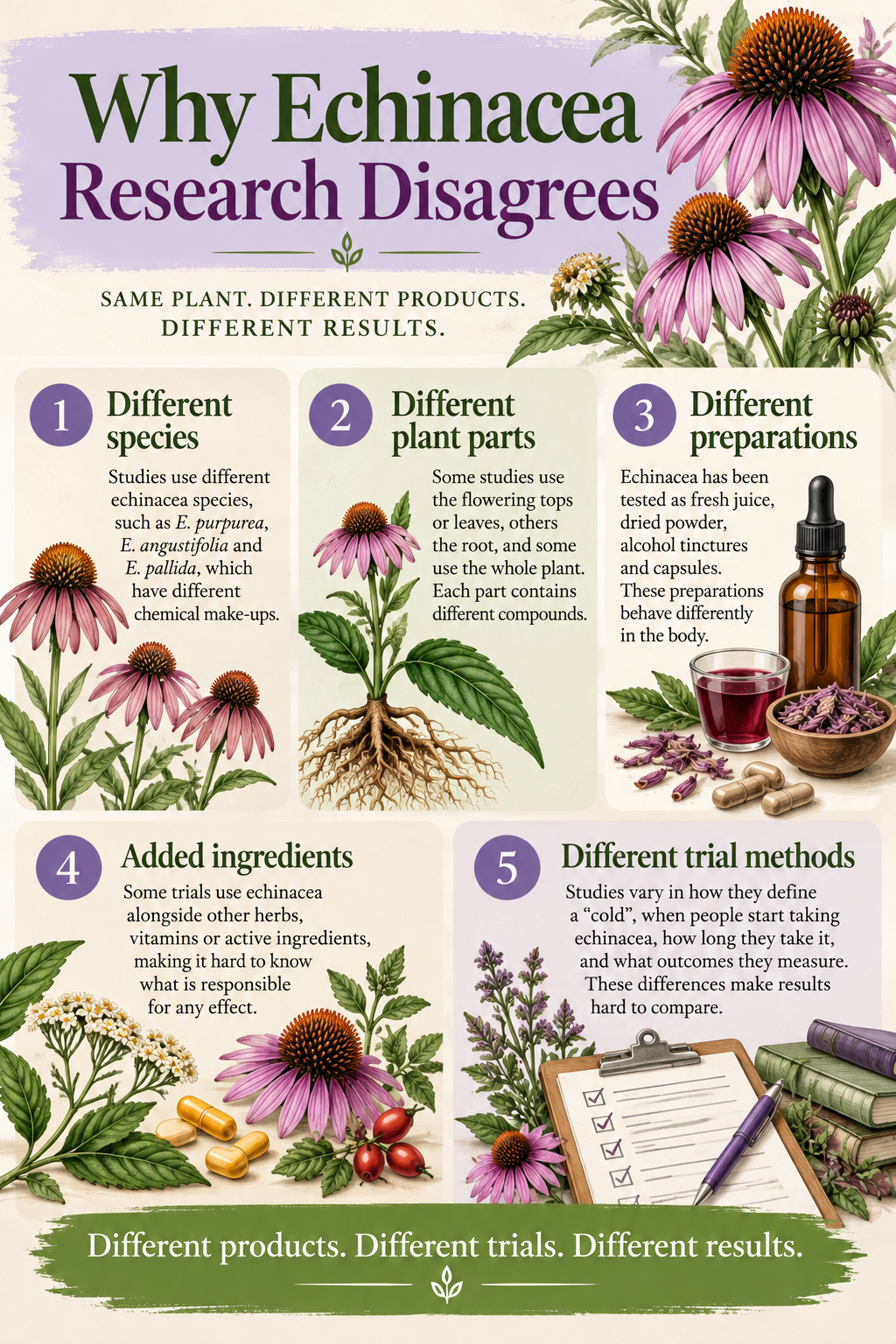
Echinacea is probably the most widely used herbal remedy for colds and upper respiratory infections globally, and the research on it is genuinely mixed. Multiple meta-analyses have reached different conclusions — some suggest modest benefits in reducing the duration and severity of colds, others find little effect. Part of the problem is that different studies have used different species (E. purpurea, E. angustifolia, E. pallida), different plant parts, and different preparations, making direct comparisons difficult.
A 2014 Cochrane review of 24 double-blind trials involving 4,631 participants concluded that while some echinacea products may reduce the incidence and duration of the common cold, the evidence is inconsistent and the benefit was considered of questionable clinical relevance. The NCCIH takes a similarly cautious position, noting that evidence is mixed and more high-quality research is needed.
If you want to try echinacea, there’s no strong reason not to — for most healthy adults, it appears safe for short-term use. Products made from E. purpurea aerial parts tend to have the most positive trial results. Avoid using it continuously for more than eight to twelve weeks, and be aware that people with autoimmune conditions, allergies to plants in the daisy family, or who take immunosuppressant medications should get advice from a healthcare provider first.
Thyme and Honey: The Simple Combination With Real Backing
One of the most practical and evidence-supported home remedies for respiratory infections is also one of the simplest: thyme tea with raw honey. Honey has well-documented antimicrobial properties — particularly Manuka honey, which has received clinical attention for its activity against wound pathogens — and it also has demulcent (soothing) properties that coat and calm an irritated throat.
Raw honey and thyme together make an effective, gentle cough remedy. The NHS recommends honey as a first-line approach for coughs in adults and children over one year of age, before considering over-the-counter medications. Our beginners’ apothecary guide is a good place to start if you want to build a simple home kit of remedies like this.
Important: Honey should never be given to children under 12 months due to the risk of infant botulism.
Mint and Steam: Respiratory Relief You Can Grow on Your Windowsill
Peppermint (Mentha × piperita) and spearmint both contain menthol, which has a well-understood action on the cold-sensitive receptors in the nose and throat. It doesn’t actually decongest — but it creates a powerful sensation of clear breathing that provides real symptomatic relief. For anyone who has ever breathed over a mug of peppermint tea with a cold, the effect is immediate and very welcome.
Beyond the menthol effect, peppermint has demonstrated some antiviral and antibacterial activity in laboratory research, though human trials specifically for respiratory infections are limited. What we can say confidently is that peppermint tea is safe, pleasant, and genuinely helpful for symptomatic relief. The mint family post covers the different varieties and their properties if you want to know more about which mint works best for different purposes.
Mint is also one of the easiest herbs to grow at home — it thrives in containers and produces abundantly with very little effort. If you’ve ever wanted a herb garden that repays your investment immediately and reliably, mint is the place to start. A micro herb garden in a kitchen window can keep you in fresh mint year-round.
Rosemary and Sage: Less Studied, Still Interesting
Both rosemary and sage contain compounds with demonstrated antimicrobial activity — rosmarinic acid, ursolic acid, and various terpenes — and both have long histories of use in respiratory folk medicine. Sage (Salvia officinalis) in particular has been used for sore throats for centuries, and some small clinical trials have shown sage extracts to be effective for throat pain.
A 2009 randomised, double-blind trial published in the European Journal of Medical Research compared a sage and echinacea spray to a chlorhexidine and lidocaine spray for acute sore throat relief and found comparable efficacy — a promising result, though the study was small. Our post on rosemary for everyday wellness covers the broader evidence base for rosemary if you want a deeper look.
Neither herb should be used in therapeutic doses during pregnancy. Sage in particular contains thujone, which can be harmful in large amounts — culinary use is fine, but concentrated sage supplements or large amounts of sage tea are best avoided if you’re pregnant.
What These Herbs Can’t Do
It’s worth being clear about the limits of herbal antimicrobials, because overstating what they can do isn’t helpful — and can sometimes be harmful.
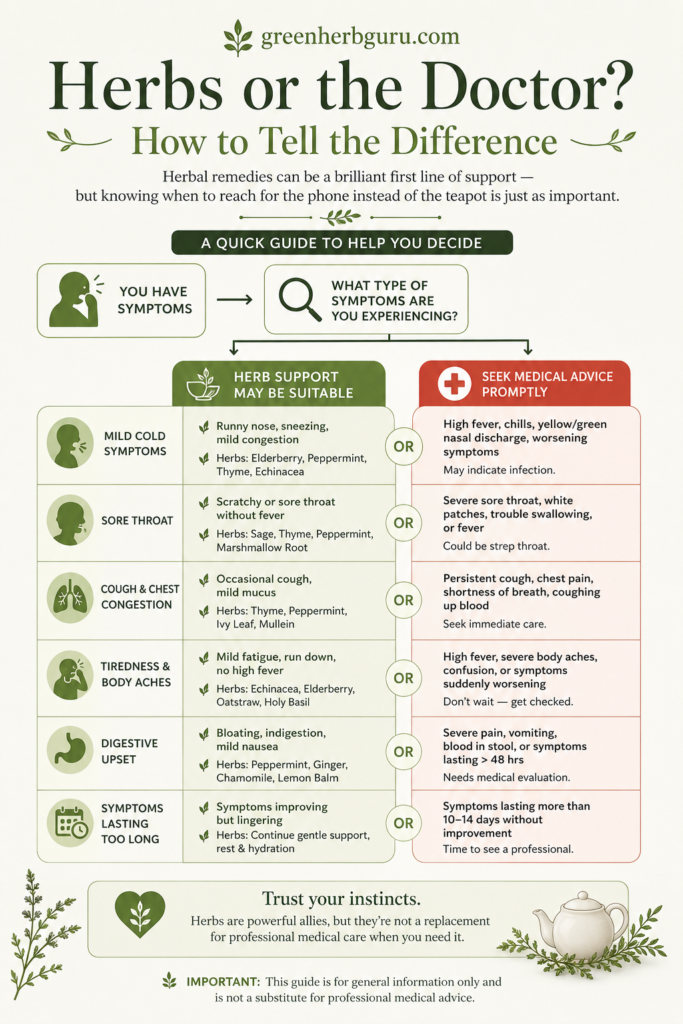
Herbs are not a substitute for antibiotics when antibiotics are genuinely needed. A bacterial infection that requires medical treatment won’t be resolved by thyme tea, however good the evidence for thyme’s antibacterial properties. If you have symptoms that suggest a serious infection — high fever, difficulty breathing, symptoms that worsen or don’t improve after a few days — get medical attention. Herbal remedies work best as supportive care and preventive measures, not as replacements for diagnosis and treatment.
The herbs covered in this post are also not regulated as medicines in the UK or the US. This means quality control varies significantly between products, and a supplement claiming to contain elderberry or echinacea may contain very different amounts of active compounds than you’d expect. Where possible, look for products that have been tested by a third party, or make your own preparations from quality dried or fresh herbs.
Interactions and Who Should Be Cautious
Most culinary herbs are safe in food quantities for most people, but therapeutic doses — teas, tinctures, capsules — can interact with medications and aren’t appropriate for everyone.
- Blood-thinning medications (warfarin, aspirin, etc.): Garlic, ginger, and high-dose oregano can all potentiate blood thinning. If you take anticoagulants, speak to your GP before using these as supplements.
- Immunosuppressants: Elderberry and echinacea both appear to modulate immune activity. Anyone taking immunosuppressant drugs — including transplant patients and those with autoimmune conditions on medication — should avoid these without medical advice.
- Pregnancy: Many herbs are safe in culinary amounts during pregnancy but should be avoided in supplement doses. Oregano oil, sage supplements, and high-dose thyme preparations are best avoided. Always check with your midwife or GP.
- Children under two: Herbal remedies that are safe and appropriate for adults may not be suitable for very young children. If your child is unwell, medical advice should come first.
Building Your Herbal Respiratory Toolkit
If you want to keep a small range of herbs on hand for the cold and flu season, these are the ones with the best combination of evidence, safety, and practicality:
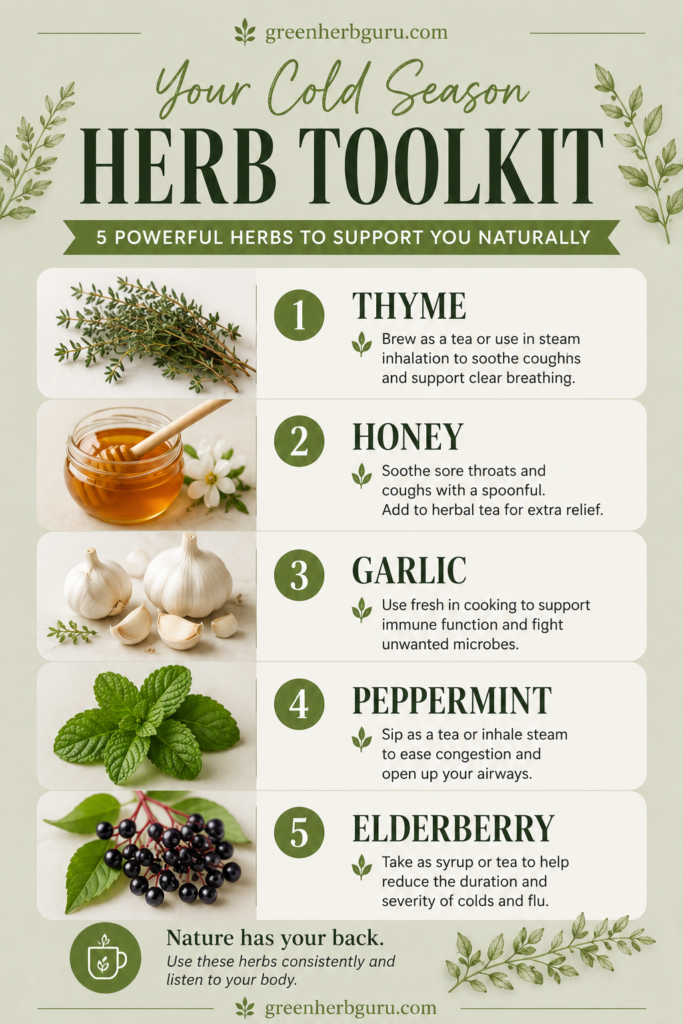
- Fresh or dried thyme — for cough teas and steam inhalation
- Raw honey — to sweeten thyme tea and as a throat soother in its own right
- Fresh garlic — culinary use and cold-pressed garlic honey
- Peppermint — for symptomatic relief and soothing teas
- Elderberry syrup — purchased from a reputable brand or made at home from cooked berries
These can all be integrated into your kitchen and garden naturally. If you’re already making your own herbal tea blends or exploring herbal infused oils, adding a respiratory-focused blend to your repertoire is a natural next step.
The herbs that have been used for thousands of years to support respiratory health aren’t doing so by accident. The evidence is real, even if it’s sometimes limited in scale. Use them thoughtfully, know their limits, and they’re a genuinely useful part of a practical home wellness kit.
Have you found a particular herb remedy helpful for colds or respiratory infections? Share your experience in the comments — I’d love to hear what’s worked (or hasn’t) in your household.
Continue Your Journey
- Your Complete Beginner’s Apothecary Guide — Build a practical home herb remedy kit from scratch
- Herbal Teas for the Immune System — The best teas for immune support through cold and flu season
- Herbal Honey and Syrups: How to Make, Store, and Use Them — Beginner-friendly guide to making your own honey and syrup preparations
- Mint and Lemon Balm for Calm Evenings and Happy Digestion — More on the everyday wellness benefits of the mint family
- The Mint Family: Calm, Digestion and Everyday Wellness — A deeper look at mint varieties and their properties
Want more seasonal herb guides and practical wellness tips delivered straight to your inbox? Sign up for the Green Herb Guru newsletter — no fluff, just useful content for home growers and herb lovers.