Peppermint for Digestive Wellness: Tea, Oil, and More
There’s a reason peppermint shows up in more digestive remedies than almost any other herb. Pharmacies stock enteric-coated capsules for it, grandmothers swear by the tea, and gastroenterologists actually back some of the claims with real research. If your stomach has ever settled after a cup of peppermint tea or a rub of diluted peppermint oil, you’ve experienced something science can partly explain.
This guide covers what peppermint can and can’t do for digestion, how to brew it properly, safe topical use, growing your own versus buying dried, and where the real caution points are — especially if you deal with reflux or you’re pregnant.
As an Amazon Associate I earn from qualifying purchases and sometimes recommend products from other sellers at no extra cost to you. For more details see my disclosure policy and privacy policy.
What Makes Peppermint Good for Digestion
The active ingredient doing most of the work is menthol, a compound that relaxes smooth muscle in the gut. That antispasmodic effect is why peppermint shows up so often in conversations about gas, bloating, and cramping, since relaxed intestinal muscle tends to move things along more comfortably.
Forged & Grown — The Shop
Handpicked products chosen to fit the way we cook, grow, and create. Nothing generic — every item earns its place.
Visit the Shop


The strongest evidence sits with enteric-coated peppermint oil capsules rather than tea. The National Center for Complementary and Integrative Health notes that clinical guidelines from the American College of Gastroenterology recommend peppermint oil for relief of overall IBS symptoms, though the recommendation is conditional and based on lower-quality evidence. A widely cited review in PubMed found enteric-coated peppermint oil capsules to be a safe and effective option for IBS-related pain across several decades of trial data.
Peppermint tea and loose extracts haven’t been studied nearly as thoroughly. Most of what’s known gets extrapolated from oil-capsule trials and animal research, so tea deserves to be thought of as a comfort measure with reasonable supporting logic rather than a clinically proven treatment. It’s still a pleasant, low-risk way to support digestion after a heavy meal, and pairs naturally with other calming herbs — something explored further in our guide to the mint family and everyday wellness.
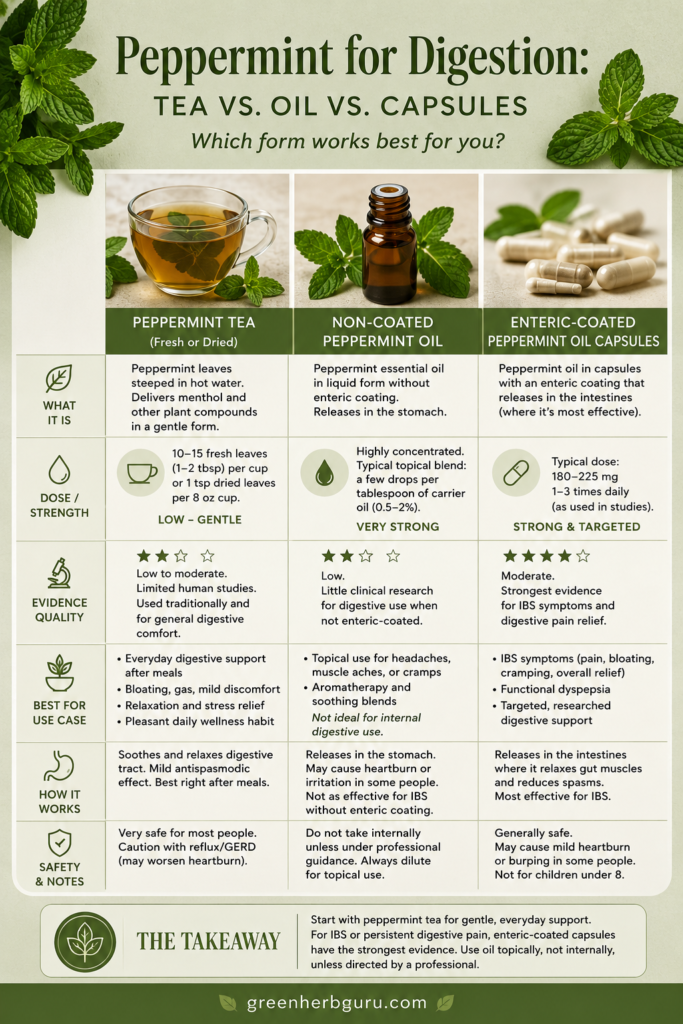
Functional dyspepsia — the general, hard-to-pin-down indigestion that doesn’t have an obvious cause — has also been studied alongside peppermint, often in combination with caraway oil. Results there are encouraging but smaller in scale than the IBS research, so it’s fair to think of peppermint as a helpful supporting player for everyday indigestion rather than a stand-alone fix.
A few other things worth knowing about peppermint’s digestive effects:
- It can stimulate bile flow, which may help with fat digestion but can aggravate people with gallbladder issues.
- Its antispasmodic action is why it’s often paired with fennel or caraway in traditional digestive blends.
- Effects tend to be strongest right after a meal, which is when most people naturally reach for a cup anyway.
- Research in children with IBS-type symptoms has also shown some benefit, though dosing for kids should always be guided by a pediatrician rather than adult guidelines.
How to Make Peppermint Tea Properly
Good peppermint tea comes down to handling the leaves gently and giving them enough time to release their oils. Bruising leaves too hard turns the tea bitter and muddy, so a light roll or press between your fingers is all you need before steeping.
For fresh peppermint, here’s the method that gets the best flavor without overdoing it:
- Use 10–15 fresh leaves (roughly 1–2 tablespoons) per cup, lightly bruised to release their oils.
- Bring water to a boil, then let it cool for a minute or two off the heat — water that’s still very hot but not violently rolling protects the flavor.
- Pour over the leaves, cover, and steep 5–7 minutes for a standard cup, or up to 10–15 minutes for something stronger.
- Strain, then sweeten with honey or add a slice of lemon if you like.
If you’re working with dried peppermint instead, use about 1 teaspoon per 8-ounce cup and steep for around 3 minutes as a starting point — dried leaves are more concentrated, so they need less time and less volume. For anyone building out a wider rotation of herbal blends, our beginner’s guide to herbal tea blends covers ratios and steep times for other common herbs, and our piece on brewing herbal tea properly gets into water temperature and steep time in more depth if you want to fine-tune further.
Water temperature is worth a quick note for readers on either side of the Atlantic. In the US, bringing water to a full boil and then letting it rest off the heat for a minute or two works well; in the UK, water taken off the kettle just before it reaches a full rolling boil does much the same job. Either approach avoids scorching the leaves, which is what causes that flat, slightly bitter taste some people associate with mint tea gone wrong.
Iced versions work just as well if you’d rather sip something cold after a summer meal — steep a stronger batch, let it cool, and pour over ice. Our guide to iced herbal teas for every season has a few more combinations worth trying if peppermint on its own isn’t quite enough.
Peppermint Oil for Topical Use
Peppermint essential oil is far more concentrated than the tea, which means it needs to be handled with more care. Applied directly to skin, it can cause irritation, so dilution in a carrier oil like jojoba or coconut is non-negotiable before it touches your body.
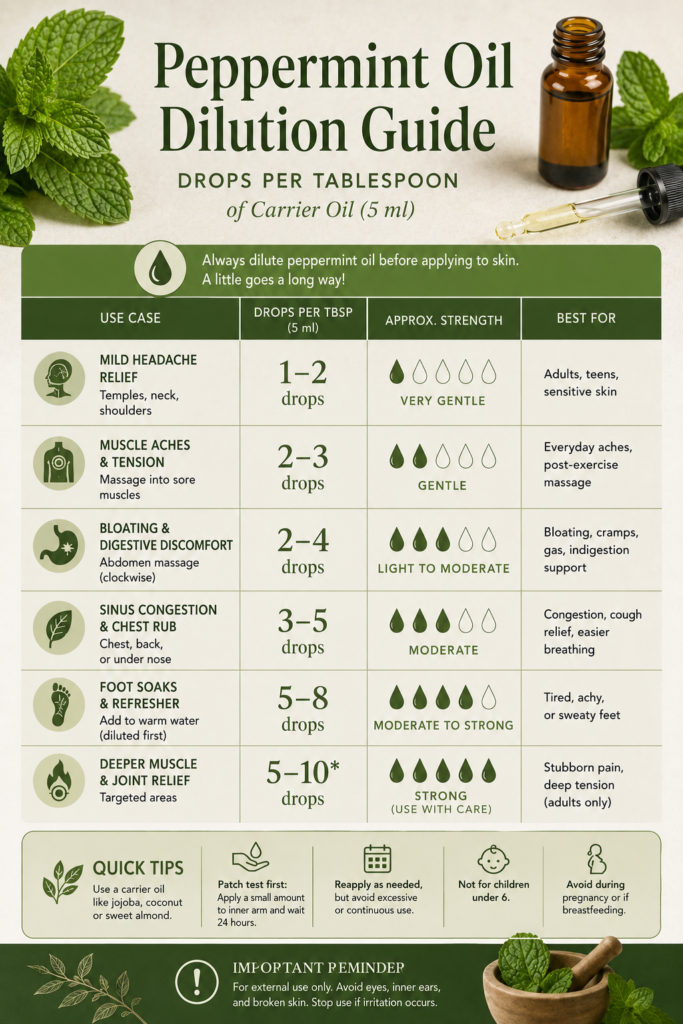
A typical home approach is a few drops of peppermint oil per tablespoon of carrier oil, used for mild headaches, muscle aches, or itchy skin. If you’re new to working with concentrated oils generally, our safety-first guide to making herbal infused oils at home is a good place to start, since the dilution principles carry over even though infused oils and essential oils aren’t quite the same thing.
A short list of things to keep in mind before you reach for the bottle:
- Always patch test on a small area of skin first, and stop immediately if you notice redness or irritation.
- Never apply peppermint oil to the face of infants or young children — inhaled menthol can cause serious breathing problems in that age group.
- Don’t ingest pure essential oil. If you want peppermint’s internal digestive benefits, enteric-coated capsules are the format with actual safety data behind them, not drops in water.
- Watch for allergic reactions, which can include rashes beyond the application site.
Growing Your Own Peppermint vs. Buying Dried
Peppermint is famously easy to grow, which is both its charm and its downside. Left unchecked in open soil, it spreads aggressively through underground runners and can take over a garden bed within a season, so most growers keep it contained in a pot even when the rest of their herb garden is planted directly in the ground.
If you’re starting from a nursery plant or a cutting, our guide on how to regrow herbs from cuttings walks through rooting mint (and a few other herbs) from what you’ve already got in the kitchen. Once you’ve got a healthy plant, harvesting is simple: snip sprigs through the growing season for fresh use, or hang small bunches upside down in a cool, dark spot until the leaves crumble at a touch.
Buying dried peppermint has its own advantages worth weighing:
- Commercial dried peppermint tends to be more consistent in flavor strength than home-dried leaves, which vary batch to batch.
- Enteric-coated peppermint capsules used in IBS research go through quality control that a home garden simply can’t replicate.
- For everyday tea drinking, growing your own is the cheaper and fresher option; for anyone managing a chronic digestive condition, a quality-controlled capsule is the more evidence-backed choice.
Thinking of it as fresh-and-frugal versus tested-and-reliable is a fair way to decide which route fits your situation.
If you’re brand new to keeping a mint plant alive, a little planning goes a long way. Our beginner’s guide to everyday medicinal herbs covers container setups for mint and several other pot-friendly plants, which is the easiest way to enjoy fresh peppermint without watching it invade the rest of your garden bed.
Safety with GERD, Reflux, and Pregnancy
Peppermint’s biggest safety caveat sits with acid reflux. The same muscle-relaxing effect that helps with cramping in the lower gut can also relax the muscle that keeps stomach acid where it belongs, so peppermint has a track record of making heartburn worse rather than better in people prone to it.
Peppermint: GERD & Pregnancy Safety
Check this before reaching for tea, oil, or capsules
If you have GERD, acid reflux, or a hiatal hernia
- Avoid non-enteric-coated peppermint oil — it can worsen heartburn and nausea
- Enteric-coated capsules cause fewer reflux symptoms than tea or plain oil
- Keep tea occasional and weak rather than a daily strong brew
- Stop use if symptoms increase and speak with a healthcare provider
If you’re pregnant or breastfeeding
- Peppermint in ordinary food and light tea amounts is generally considered fine
- Avoid medicinal-strength doses — strong teas, capsules, or concentrated oil — due to limited safety data
- Skip internal use of essential oil entirely; topical use only under professional guidance
- If breastfeeding and using oil topically near the chest, wipe off completely before feeding
Always check with a healthcare provider before regular use if you have gallbladder disease, take prescription medication, or have a chronic digestive condition.
greenherbguru.com
The NCCIH specifically flags this: peppermint oil shouldn’t be used by people with GERD or a hiatal hernia, particularly at higher doses. Enteric-coated capsules, which release peppermint oil in the intestines rather than the stomach, tend to cause fewer reflux-related side effects than non-coated oil or strong tea, which is worth knowing if you’ve had a bad reaction to one format but not tried another.
For pregnancy and breastfeeding, the picture is more about limited data than confirmed danger. Peppermint in ordinary food and tea amounts is generally considered fine, but there’s little research on medicinal doses — strong teas, capsules, or concentrated oil — so caution is the sensible default rather than avoidance out of fear. A broader review of herbal safety in pregnancy published in the National Library of Medicine highlights peppermint as one of several common herbs where research remains thinner than most expecting parents would like. Our own guide to herbal tea safety in pregnancy goes into more detail on which teas need extra caution and which are considered lower-risk.
The short version for anyone in either category: talk to a healthcare provider before using peppermint capsules, strong teas, or oils on a regular basis if you have GERD, gallbladder disease, or are pregnant or breastfeeding. A single occasional cup of weak tea is a very different thing from daily medicinal-strength use.
A Simple Digestive Tea Blend Recipe
This blend leans on peppermint’s antispasmodic strength and pairs it with two gentler partners for a well-rounded after-meal tea. It’s built around a single 12-ounce mug, so it scales easily if you’re brewing a full pot.
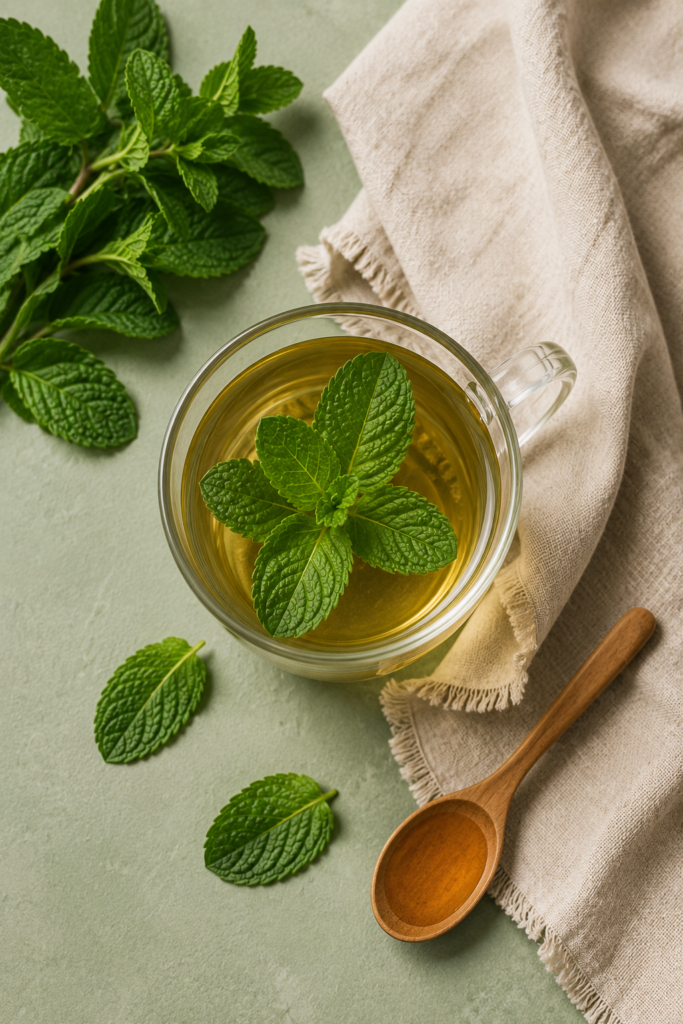
Ingredients (per 12-oz mug):
- 1 tablespoon dried peppermint leaves (or 2–3 tablespoons fresh, lightly crushed)
- 1 tablespoon dried chamomile or lemon balm
- ½ teaspoon lightly crushed fennel or caraway seeds
- Honey or lemon to taste, optional
Method:
- Place the peppermint, chamomile or lemon balm, and crushed seeds together in a teapot or infuser.
- Pour water that’s just off the boil over the herbs, cover, and steep for 7–10 minutes to give the volatile oils time to infuse.
- Strain, sweeten if you like, and drink one mug after meals as needed.
Chamomile and lemon balm both carry a long history of use for digestive upset and relaxation, which makes them a natural match here — our post on digestive and calm evening herb teas explores that pairing in more depth if you want a version geared toward winding down at night rather than settling a meal. Fennel or caraway seeds add a mild carminative boost, since both have shown up alongside peppermint oil in studies on indigestion relief.
As with any regular herbal habit, this blend is meant for everyday digestive comfort rather than as a treatment for a diagnosed condition. Anyone with chronic symptoms, existing medication, or a pregnancy in progress should run it by a healthcare provider first, same as with peppermint in any other concentrated form.
Frequently Asked Questions
Is peppermint tea the same as peppermint oil for digestion? Not quite. Tea contains a much smaller, more diluted dose of the plant’s active compounds than essential oil or enteric-coated capsules, so it’s gentler but also less thoroughly studied for conditions like IBS.
How much peppermint tea is safe to drink in a day? Most people tolerate two to three cups daily without issue, though anyone with reflux, gallbladder disease, or a pregnancy should keep intake lower and check with a healthcare provider first.
Can peppermint tea help with bloating after eating? It’s a reasonable after-meal choice for general bloating and gas, thanks to menthol’s muscle-relaxing effect on the gut, though the research backing this is stronger for oil capsules than for tea itself.
Why does peppermint sometimes make heartburn worse instead of better? The same relaxing effect that eases cramping lower in the gut can also loosen the muscle that normally keeps stomach acid down, which is why it has a reputation for aggravating reflux in some people.
Can I substitute spearmint if I don’t have peppermint on hand? Spearmint works as a milder substitute in tea, with less menthol and a sweeter flavor, though it hasn’t been studied for digestive symptoms nearly as much as peppermint has.
Bringing It Together
Peppermint earns its reputation as a digestive herb honestly, even if the strongest evidence sits with capsules rather than the cup of tea most people reach for first. Used sensibly, tea offers a gentle, pleasant way to support digestion, oil can help with topical aches when properly diluted, and a home-grown pot gives you a steady, low-cost supply once you know how to keep it contained.
The main thing to carry forward is knowing your own limits — reflux and pregnancy both call for a lighter touch, and enteric-coated capsules are the better-studied choice if you’re managing something more than occasional bloating. Everything else is really just a matter of finding the strength of tea and the routine that feels right for you.


