
Lemongrass: The Complete Guide to Growing, Cooking, and Using This Citrusy Southeast Asian Herb
Most of us meet lemongrass the same way. We buy a bundle for one curry, use a single stalk, and watch the rest go limp at the back of the fridge. It is one of the most underused herbs in the home kitchen, and one of the easiest to grow in a pot once you know what it wants.
This guide covers everything a home gardener and cook needs: what lemongrass is, which types are worth growing, how to harvest and overwinter it, how to cook with it, and what the research says about its health reputation. It also covers the safety points that rarely make it onto a packet label, including pregnancy and pets.
As an Amazon Associate I earn from qualifying purchases and sometimes recommend products from other sellers at no extra cost to you. For more details see my disclosure policy and privacy policy.
What Is Lemongrass?
Lemongrass is a tall, clump-forming tropical grass grown for its pale, fragrant stalks and its long, arching leaves. Lemongrass is best known as a flavoring in Thai, Vietnamese, and Indonesian cooking, where the tender base of the stalk gives soups, curries, and marinades a bright, lemony fragrance without any sourness.
Forged & Grown — The Shop
Handpicked products chosen to fit the way we cook, grow, and create. Nothing generic — every item earns its place.
Visit the Shop


Scientific name, family, and origins
The most common culinary species is Cymbopogon citratus, and it belongs to the grass family, Poaceae. The Royal Horticultural Society (RHS) describes it as a tropical grass originally from India and Sri Lanka, which explains its dislike of frost. The genus name comes from Greek words meaning “boat” and “beard,” a reference to the shape and bristly texture of the flower spikelets.
In the garden, lemongrass forms a dense fountain of blue-green leaves. The RHS plant profile lists a mature height of one to 1.5 meters (about three to five feet) and a spread of up to a meter, although a potted plant in a cooler climate rarely gets that big. Flowers are rare when it is grown in pots or under glass.
A short history on the plate
Lemongrass has been part of Southeast Asian and South Asian cooking for a very long time, and it traveled widely with trade and migration. You will find it in Thai tom yum and tom kha, Vietnamese grilled meats, Indonesian sereh-flavored rice and curries, and Sri Lankan dishes. It also turns up in Brazil, where it is known as capim-limão, and across the Caribbean and West Africa, where the leaves are brewed as “fever grass” tea.
Traditional medicine systems have used it too. Drugs.com notes that in Chinese medicine it has been used for headache, stomach ache, and rheumatic pain. Those uses are traditional, and they are not the same thing as proven treatments, a distinction we come back to in the health section.
Related plants worth knowing
Lemongrass has relatives that look similar but serve very different jobs. Citronella grasses, such as Cymbopogon nardus and Cymbopogon winterianus, are grown for the oil used in candles and insect repellents, and they are not kitchen herbs. If a nursery tag says citronella, you probably want a different plant.
Two other “lemon” herbs are often confused with lemongrass. Lemon balm belongs to the mint family and has soft, crinkled leaves, which you can read about in our guide to growing and using lemon balm.
Lemon verbena is a woody shrub with narrow, rough leaves. Neither one has the thick, bulb-like stalk that makes lemongrass useful in savory cooking.
Common Varieties of Lemongrass
Most home growers will only ever meet two types. Knowing the difference helps when you are reading a plant tag or a recipe from another country.
West Indian lemongrass (Cymbopogon citratus)
This is the standard culinary type, and the one sold as stalks in grocery stores and Asian markets. It has thick, fleshy stalk bases, green leaves, and a clean, citrus-forward aroma. If a recipe just says “lemongrass,” this is the plant it means.
The RHS notes that C. citratus is the most widely available lemongrass in the UK, and the same is true in the United States. It is the best choice for cooking, tea, and syrups.
East Indian lemongrass (Cymbopogon flexuosus)
East Indian lemongrass, also called Cochin lemongrass, is a little more compact and forms dense clumps of purple-tinted stems. The flavor is still lemony, but the stalks are usually thinner, so there is less to chop. It is grown widely for its essential oil, and some gardeners like it for its color.
For a kitchen garden, either type works. If you mainly want thick stalks to slice for curries, choose C. citratus.
If you want a slightly smaller, more ornamental clump that still gives you leaves for tea, C. flexuosus is a good alternative.
Which type should you buy?
Garden centers often label plants simply as “lemon grass,” which makes the species hard to confirm. A plant with thick, pale stalk bases and plain green leaves is almost certainly C. citratus.
If you are buying seed, check the packet, because the two species are sometimes sold under overlapping common names.
Health Benefits of Lemongrass: What We Know and What We Don’t
Lemongrass has a long reputation as a calming, digestive-friendly tea, and the internet is full of big claims. The research is more modest, so this section sticks to what is reasonably established and flags where the evidence runs out.
Nutrition in realistic amounts
Raw lemongrass is listed in the USDA FoodData Central database (entry “Lemon grass (citronella), raw”) at about 99 calories per 100 grams, with meaningful amounts of iron and potassium per 100 grams. Those figures sound impressive until you look at how it is used. A single stalk weighs a few grams, and most of it is discarded or removed before eating, so lemongrass is a flavoring rather than a meaningful source of nutrients.
The aroma compound behind the flavor
The lemony smell comes mainly from citral, an aldehyde that is released when the stalk is cut, bruised, or crushed. WebMD lists citral as a compound with anti-inflammatory properties, and Memorial Sloan Kettering Cancer Center (MSK) notes that lab studies show lemongrass is active against a range of microorganisms.
Lab results do not always carry over to people. A compound that slows bacteria in a petri dish does not automatically help when you drink a cup of tea. Treat these findings as interesting background, not as a reason to use lemongrass instead of medical care.
Calm, sleep, and digestion
Traditional use ties lemongrass to sleep, anxiety, and stomach upset. MSK’s review of the evidence says clinical studies of lemongrass tea did not show a reduction in anxiety or a clear benefit for sleep. Animal and lab work has suggested possible effects, but that is early-stage evidence.
That does not make a warm cup of lemongrass tea pointless. Many people simply enjoy it as a caffeine-free, pleasant-tasting drink, and that is a perfectly good reason to make it. If you want a gentler digestive blend, our mint and herbal tea guides have options with a longer track record.
Safety: who should be careful
Culinary amounts in food are widely considered low risk, but a few groups should take extra care.
Pregnancy and breastfeeding. MSK reports that citral and myrcene, two compounds found in lemongrass, caused birth defects in rats, and it suggests avoiding lemongrass during pregnancy. WebMD says evidence that lemongrass triggers menstrual flow is lacking but that there is some concern about miscarriage, and that more research is needed. Because the human data are thin, the cautious approach is to skip medicinal amounts and strong teas, and to ask your midwife or doctor about food amounts. Our guide to herbal tea safety, including pregnancy and medications covers this in more detail.
Large amounts and long-term use. MSK notes that heavy or long-term intake of lemongrass tea may affect kidney function. A cup now and then is a different matter from drinking strong tea all day, every day.
Essential oil. Lemongrass essential oil is concentrated and should not be swallowed. MSK reports that high doses can damage the liver and the lining of the stomach, and WebMD notes the oil can irritate skin when applied directly. Keep it away from children, and never use it undiluted on skin.
Medications and health conditions. Herbs can interact with prescription drugs, and the research on lemongrass is limited. If you take regular medication or have a kidney, liver, or blood sugar condition, check with a pharmacist or doctor before drinking it regularly.
Pets. The ASPCA lists lemongrass as toxic to dogs, cats, and horses, mainly because of its essential oils, and says it can cause stomach upset in dogs and cats. If you grow it in a pot, place it where curious pets cannot chew the leaves, and call a vet if you think one has eaten a lot.
How to Grow Your Own Lemongrass
Lemongrass looks exotic, but it is straightforward once you give it warmth, sun, and room for its roots. The main challenge for most gardeners is winter, not summer.
Climate and hardiness
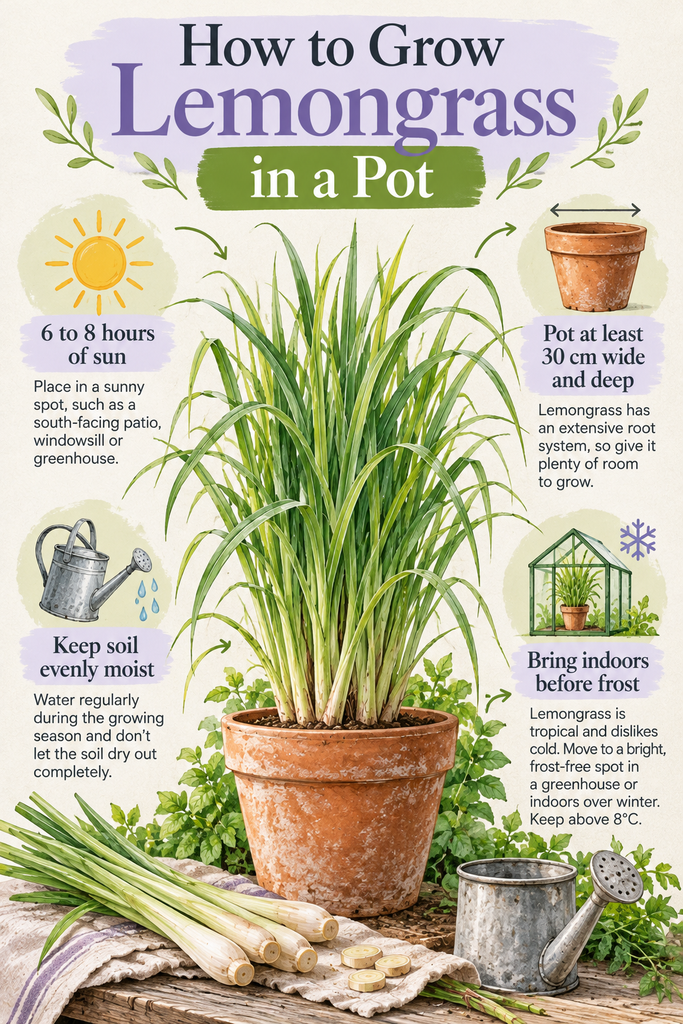
Lemongrass is a tropical plant. It grows as a true perennial outdoors in USDA zones 10 and 11, and gardeners in zone 9 can sometimes overwinter it outside with protection. In zone 8 and colder, treat it as an annual or lift it and bring it indoors.
The RHS is blunt about this for UK gardeners: it will not usually survive outdoor winters, even in mild areas, and an unheated greenhouse may be too cold as well. RHS Plants advises keeping it frost-free over winter, with temperatures that do not drop below 8°C (46°F).
Sun, soil, and containers
Give lemongrass at least six to eight hours of full sun, as recommended by The Old Farmer’s Almanac, and shelter from strong wind. It likes moist, well-drained soil with plenty of compost, and it tolerates both acid and alkaline conditions. The RHS lists moist but well-drained loam as ideal.
A container makes life easier because you can move the plant. Choose a pot at least 12 inches (30 cm) wide and deep, with drainage holes. Our guide to self-watering plant pots for herbs is useful here, because a thirsty, sun-baked pot is the most common reason container lemongrass struggles in summer.
Watering and feeding
Water regularly so the soil stays evenly moist, and check pots daily in hot weather. Lemongrass is a fast-growing grass, so it benefits from regular feeding during the growing season. A balanced liquid fertilizer every couple of weeks works well, and the Almanac points out that lemongrass needs nitrogen for healthy leaves.
In winter, cut back watering. A dormant or slow-growing plant sitting in cold, wet compost will rot.
Starting from seed, plants, or stalks
You have three ways to start, and each one has trade-offs.
Nursery plants are the fastest and the most reliable. Look for a plant with several firm stalks and healthy green leaves, and repot it into a larger container after you get home.
Seed is cheap but slow. One UK supplier recommends sowing seed in late winter on top of seed compost without covering it, and keeping it warm, around 70 to 75°F (20 to 25°C), where it should germinate in 10 to 14 days. Expect to wait a long time before you have stalks thick enough to cook with.
Grocery-store stalks are the popular shortcut. The Almanac recommends placing the root ends of fresh stalks in water until roots form, and our guide to regrowing herbs from cuttings walks through the same method with other herbs. Choose fresh, firm stalks with the base intact, and change the water every day or two.
One honest caution: the RHS advises against growing lemongrass from stems bought in supermarkets and food shops, because of the risk of introducing plant diseases. This is a bigger concern in the UK, where plant health rules are strict, but it is worth knowing. If you do try it, grow the cuttings in a pot kept away from other plants and do not plant them in the ground beside valuable crops.
Harvesting lemongrass
You can start harvesting once the stalks are roughly a quarter to a half inch thick at the base. Choose outer stalks first, and cut or twist them off as close to the soil as you can, because the most tender, flavorful part is the bottom few inches. Leaving the center stalks alone lets the clump keep growing.
Frequent harvesting is fine, although a plant that is cut often will not grow as tall or as full. If you only harvest once a year, do it in fall, before the first frost, when the stalks are plump. Wear gloves or be careful, because the leaf edges are sharp enough to cut your fingers.
Overwintering lemongrass indoors
If you live where frost arrives, now is the time to plan. Our October herb garden jobs post covers moving tender herbs indoors, and lemongrass follows the same rules. Move the pot inside before nights approach freezing.
Cut the leaves back hard, to about six to twelve inches, and place the pot in the sunniest window you have or under a grow light. Keep the compost barely moist, because growth is slow in winter. You can also dig a clump out of the ground, divide it into small sections of two to four stalks, and pot those up.
Lemongrass kept in a warm room will keep trying to grow through winter, so do not be surprised by new leaves in January. In spring, once nights are reliably warm, harden the plant off and move it back outdoors.
Common problems
Brown leaf tips and yellowing leaves usually point to uneven watering, low humidity in a heated house, or a pot that is too small. Check the roots, water deeply, and repot if the plant is root-bound.
Slow growth often means too little light or cold nights. Lemongrass slows down as nights approach 46°F (8°C), the minimum the RHS suggests, so bring it into shelter early.
Pests and disease are minor outdoors. Indoors, watch for spider mites on dry, warm leaves, and for rusty spots in humid, crowded conditions. Good airflow and a hose-down on the leaves usually deal with the first, and removing affected leaves helps with the second.
Division. Lemongrass multiplies, and clumps become crowded after a few years. Divide established plants every few years in spring, and replant the sections at the same depth they were growing before.
A Basic Usage Guide: Cooking with Lemongrass
Lemongrass tastes like lemon without the sharp acidity. It is floral and slightly gingery, with a green, grassy edge, and it fits both sweet and savory dishes. The flavor lives in the essential oil, so the more you bruise or chop the stalk, the more of it you release.
Which parts do you use?
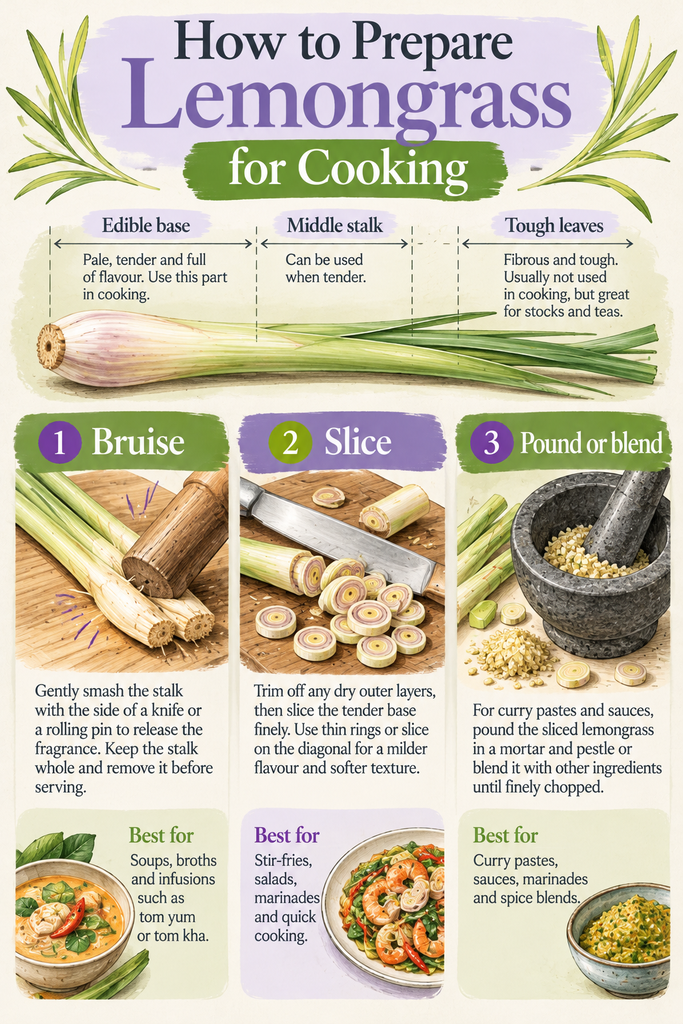
The lower four to six inches of the stalk are the useful part for cooking. Trim off the root end and the dry, papery outer layers until you reach a pale, tender core. The leaves and the tougher upper stalk are too fibrous to eat, but they are excellent for infusing tea, broth, and syrups.
Preparation methods
There are three main ways to prepare a stalk, and the right one depends on the dish.
Bruise and add whole. Whack the stalk with the back of a knife or a rolling pin so it splits and releases its oils. Drop it into soups, broths, and curries, and fish it out before serving, because it stays woody.
Slice very thin. Peel back the outer layers, then slice the tender core into fine rings. This works well in stir-fries, salads, and marinades, where you will actually eat the pieces.
Pound or blend. For curry pastes and marinades, chop the core and pound it in a mortar or blend it with garlic, ginger, and chilies. This breaks down the fibers completely.
Flavors that pair well
Lemongrass is a natural partner for ginger, garlic, chili, and coconut milk, and it gets along with lime, cilantro, and Thai basil. It suits chicken, fish, shrimp, and pork. It also works in drinks, where it adds a citrus note that makes a very good base for iced tea and lemonade.
Tips for maximizing flavor
- Use fresh stalks when you can, because the aroma fades with age.
- Bruise the stalk before adding it to hot liquid.
- Add whole pieces early in cooking so they have time to infuse, and add finely sliced lemongrass later so it stays bright.
- Do not boil delicate infusions hard, because a gentle simmer keeps the flavor cleaner.
Substitutes
Nothing matches lemongrass exactly. In a pinch, use lemon zest with a little grated ginger, and add it near the end of cooking so the aroma stays fresh. Lemon balm leaves can stand in for the herbal note in teas.
Four Simple Lemongrass Recipe Ideas
These are starting points, not strict recipes. Adjust amounts to your taste.
1. Fresh lemongrass tea
Bruise one or two trimmed stalks, or use a handful of fresh leaves, and simmer them in about four cups of water for 10 to 15 minutes. Strain, then sweeten with honey if you like, and add a slice of ginger or lime. Serve it hot, or chill it for iced tea.
Keep it to an occasional cup rather than a strong daily brew, and see the safety notes above if you are pregnant or take medication.
2. Ginger and lemongrass broth
Simmer two bruised stalks with sliced ginger, a few smashed garlic cloves, and a pinch of salt in four cups of stock for 20 minutes. Strain it, then add mushrooms, noodles, or cooked chicken, finishing with lime juice and cilantro. This is the quick cousin of Thai tom yum and works as a restorative soup on a cold evening.
3. Lemongrass and coconut chicken
Blend the tender core of two stalks with garlic, ginger, a chili, and a splash of fish sauce to make a loose paste. Rub it over chicken thighs and marinate for at least an hour. Brown the chicken, add a can of coconut milk, and simmer until the chicken is cooked through and the sauce thickens.
4. Lemongrass syrup
Combine equal parts sugar and water with three or four bruised stalks, and simmer gently for 10 minutes. Cool, strain, and store it in the fridge for up to two weeks. Use it in sparkling water or lemonade, or try it in our ginger, lemongrass, and mint lemonade.
If you want to see where lemongrass sits among other cooking herbs, our guide to herbs around the world shows how different cuisines build their flavor bases.
Storing Lemongrass: Fresh, Frozen, and Dried
A bundle of fresh stalks can last a few weeks if you store it well, and it freezes better than most herbs.
Fresh storage
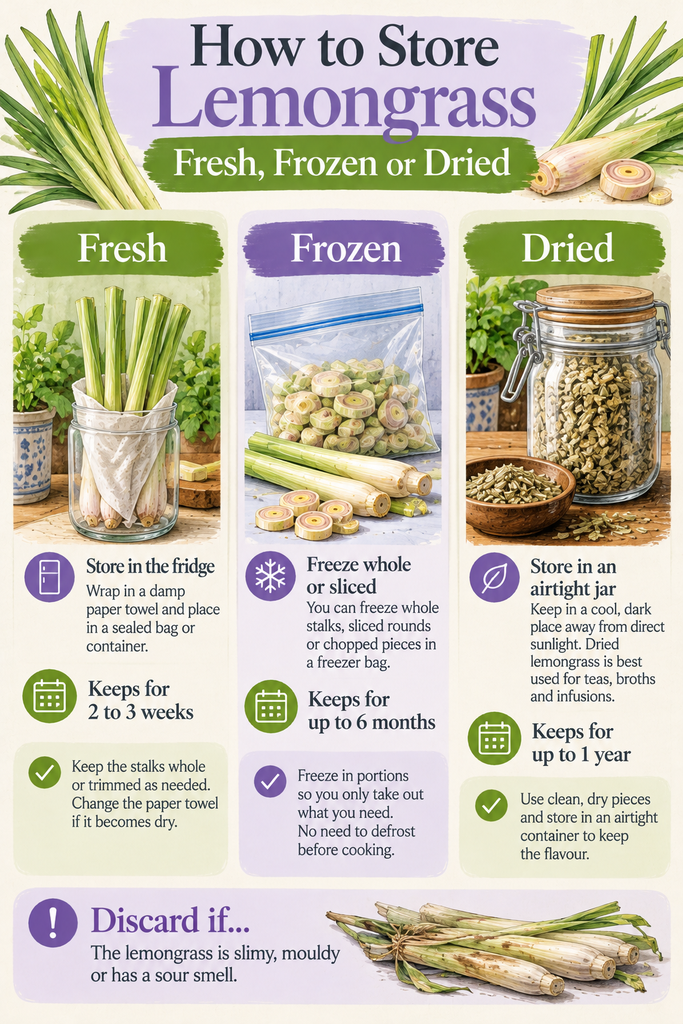
Wrap trimmed stalks loosely in a damp paper towel, slide them into a bag or container, and keep them in the refrigerator crisper. Alternatively, stand the stalks in a glass with an inch or two of water, like cut flowers, and change the water every couple of days. Either method keeps them usable for roughly two to three weeks.
Freezing
Freezing is the best long-term method. Peel off the outer layers, then freeze the stalks whole, or slice them into rings and freeze them flat on a tray before transferring them to a bag.
Hobby Farms magazine says frozen stalks keep for about six months, and you can cook with them straight from the freezer. Our guide to freezing fresh herbs covers ice cube trays and batch prep.
Drying
Lemongrass dries well. Hang bundles of leaves in a warm, airy spot, or use a dehydrator on a low setting, and store the crisp pieces in an airtight jar away from light.
Dried leaves are best for tea and broths, and ground dried lemongrass is used as a powder in some Indonesian cooking. Our guide to preserving fresh herbs compares air-drying, dehydrators, and ovens.
Signs of spoilage
Throw lemongrass out if it feels slimy, smells sour or musty, or shows mold. Stalks that have turned brown, mushy, and scentless have also passed their best. A stalk that is simply dry on the outside can still be fine once you peel away the outer layers.
Frequently Asked Questions About Lemongrass
Is lemongrass safe to eat during pregnancy?
The research is limited, and the cautious answer is to avoid medicinal amounts and strong teas. MSK suggests avoiding lemongrass in pregnancy because of animal studies on citral and myrcene, and WebMD notes that more research is needed. Ask your doctor or midwife about culinary amounts in food.
Can I grow lemongrass from a grocery-store stalk?
Yes, fresh stalks with an intact base often root in water within a few weeks. The RHS advises against it in the UK because of the risk of introducing plant diseases, so grow cuttings in their own pot and keep them away from other plants.
How long does lemongrass take to grow?
From a nursery plant, you can often harvest stalks within a season. Starting from seed takes much longer, and one gardening source puts the time to usable size at around 80 to 100 days after the seedlings are growing well.
Will lemongrass survive winter outdoors?
It depends on your zone. It is a perennial in USDA zones 10 and 11, borderline in zone 9, and a tender annual or houseplant in colder zones. In the UK, the RHS says it will not usually survive outdoors over winter.
Why are my lemongrass leaves turning brown?
The common causes are uneven watering, low humidity, too little light, or a root-bound pot. Check the roots, water deeply and evenly, and move the plant somewhere brighter.
Which part of lemongrass do you eat?
Use the pale, tender bottom four to six inches of the stalk. Discard the dry outer layers, and use the tougher upper stalk and leaves only to infuse liquids.
What can I use instead of lemongrass?
Lemon zest with a little fresh ginger is the closest simple swap. Add it near the end of cooking so it keeps its aroma.
Is lemongrass the same as lemon balm or lemon verbena?
No. Lemongrass is a tropical grass, lemon balm is a member of the mint family, and lemon verbena is a woody shrub. They share a lemony scent but differ in flavor, use, and how they grow.
Will lemongrass repel mosquitoes?
Citronella oil is used in insect repellents, but there is little evidence that a potted lemongrass plant will protect you from bites. Enjoy it for the scent, and use proven repellents when you need them.
Is lemongrass toxic to pets?
The ASPCA lists it as toxic to dogs, cats, and horses, with stomach upset the main sign in dogs and cats. Keep pots out of reach, and keep essential oils well away from pets.
Conclusion
Lemongrass is a tender, sun-loving grass whose pale stalks give soups, curries, teas, and syrups a clean lemon fragrance. It grows well in a pot, it needs protection from frost, and it freezes better than most herbs, which makes it easy to keep a supply going all year.
The health claims around it are mostly traditional or early-stage, so enjoy it for flavor first and check with your doctor if you are pregnant or take medication. Pick up a plant this season, give it a sunny spot, and you may never buy a limp stalk from the store again.
Continue Your Journey
Keep exploring herbs, drinks, and kitchen projects with these related guides:
- The Complete Guide to Preserving Fresh Herbs
- How to Make Herbal Tea Blends for Beginners
- Iced Herbal Teas: Refreshing Garden Herb Drinks for Every Season
- Fenugreek: The Complete Guide to Growing, Cooking, and Using This Warming Spice Herb
- How to Grow and Use Lemon Balm: From Garden to Teacup
Want fresh herb guides, seasonal growing reminders, and simple recipes in your inbox? Join the Green Herb Guru newsletter and grow something delicious this season.


