
Herb Garden Jobs for September: End-of-Summer Harvest and Fall Prep
September asks a lot of your herb garden in a short window. Harvest, propagation and fall sowing all compete for your time before the first frost changes what’s possible, and it is easy to let one slide while you focus on another. This week-by-week style guide walks through exactly what to prioritise, starting now.
Think of this as your September task list rather than general growing advice. Every job here has a shelf life measured in days, not months, so the order you tackle them in matters.
As an Amazon Associate I earn from qualifying purchases and sometimes recommend products from other sellers at no extra cost to you. For more details see my disclosure policy and privacy policy.
🌿 The Harvest Window Before Frost Risk Begins
Right now, your herbs are at or near peak growth, but that will not last. Once night-time temperatures drop and the first frost is on the horizon, tender herbs like basil will blacken and die back almost overnight, while even hardier herbs slow their growth considerably.
Forged & Grown — The Shop
Handpicked products chosen to fit the way we cook, grow, and create. Nothing generic — every item earns its place.
Visit the Shop


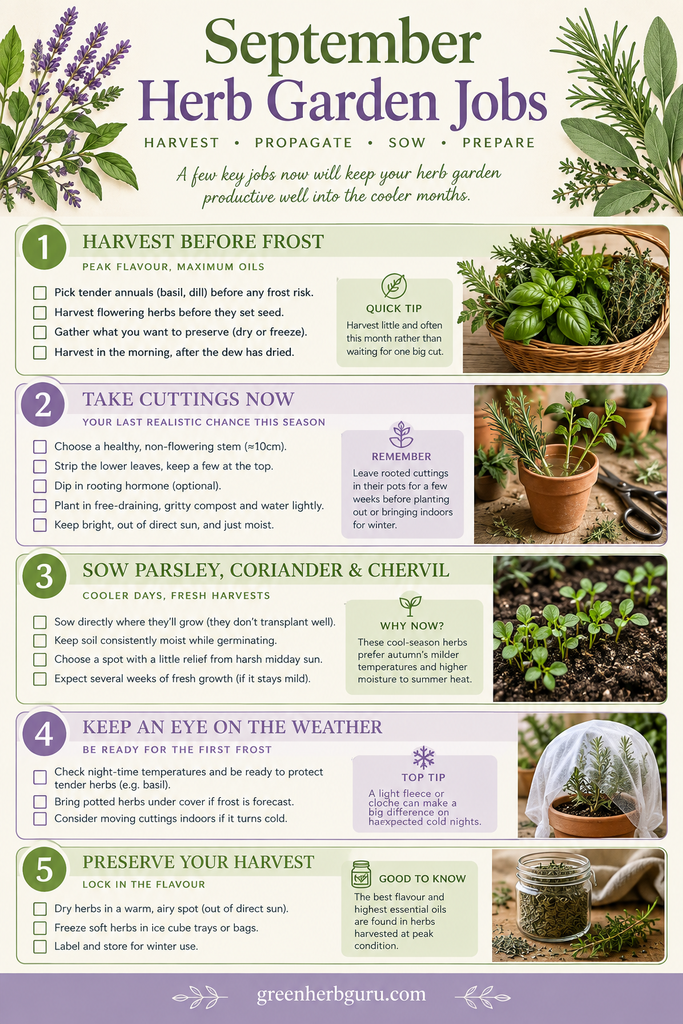
Harvest little and often this month rather than waiting for one big cut. Prioritise:
- Tender annuals (basil, dill) before any frost risk, since they have zero cold tolerance
- Flowering herbs before they set seed and lose flavour
- Anything you plan to preserve, since drying and freezing both work best with herbs harvested in peak condition
A quick, practical safety note here: most herbs are lovely and completely safe in normal culinary amounts, but some can have medicinal-strength effects when used therapeutically (as strong teas, tinctures, or concentrated preparations) rather than as a sprinkle in a meal. If you are pregnant, on medication, or preparing anything for children beyond ordinary cooking, it is worth checking an herb’s safety profile first. Our herbal tea safety guide is a good place to start.
Morning harvesting, after the dew has dried but before the day heats up, gives you the best flavour and the highest concentration of essential oils. If your basil, mint or other soft-stemmed herbs have grown leggy and are threatening to flower, this is also the moment to give them a proper cutback (more on that below).
🌱 Take Cuttings Now: Your Last Realistic Chance This Season
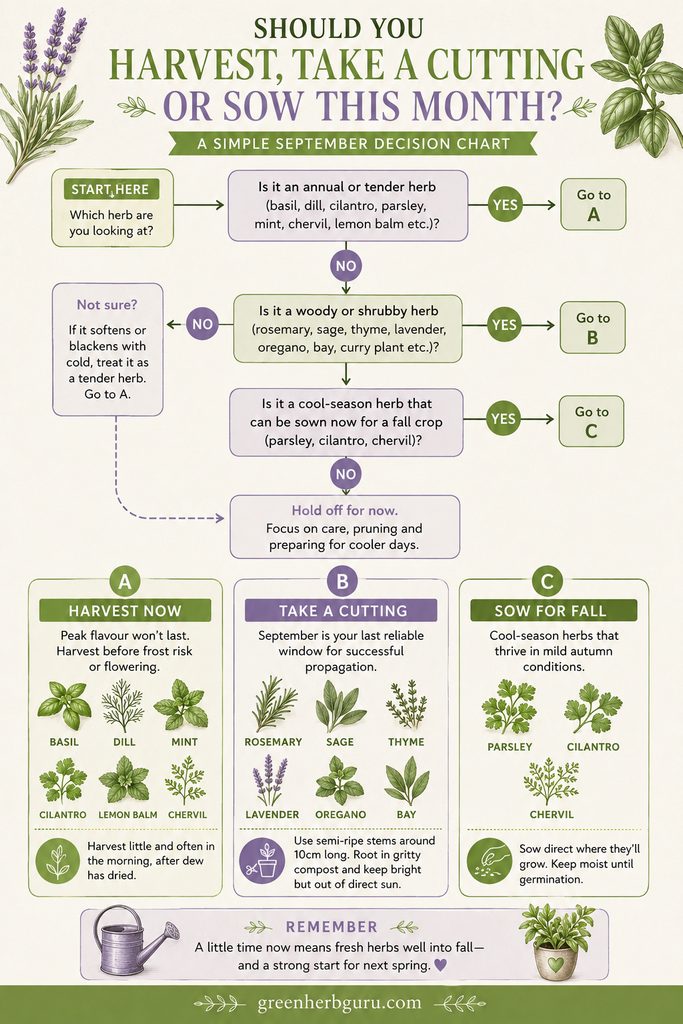
If you want to propagate woody or shrubby herbs like rosemary, sage, thyme or lavender, September is genuinely your last easy window before cooler, wetter weather makes rooting far less reliable. Cuttings taken now still have enough warmth in the soil and enough growing season left to establish roots before winter properly sets in.
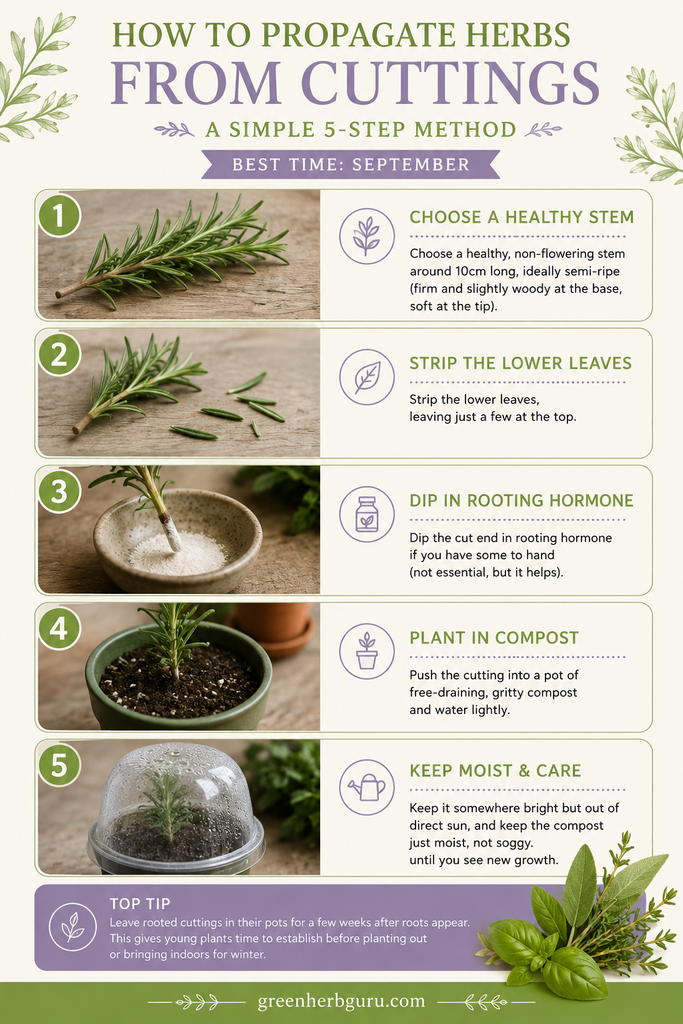
Here is a simple, beginner-friendly method:
- Choose a healthy, non-flowering stem around 10cm long, ideally semi-ripe (firm and slightly woody at the base, soft at the tip).
- Strip the lower leaves, leaving just a few at the top.
- Dip the cut end in rooting hormone if you have some to hand (not essential, but it helps).
- Push the cutting into a pot of free-draining, gritty compost and water lightly.
- Keep it somewhere bright but out of direct sun, and keep the compost just moist, not soggy, until you see new growth.
Softer-stemmed herbs work a little differently. If you would rather skip compost altogether, our guide on how to regrow herbs from cuttings covers the simple water-propagation method that works brilliantly for herbs like mint and basil while conditions are still mild. For woody Mediterranean herbs specifically, our sage growing guide has more detail on timing semi-ripe cuttings for the best success rate.
Leave rooted cuttings in their pots for a few weeks after roots appear, rather than planting straight into the garden. This gives young plants time to establish before you either pot them on for a sheltered spot or plan to bring them indoors over winter.
🌾 Sow Parsley, Coriander and Chervil for a Fall Crop
Here is the part that surprises a lot of home gardeners: September is not just about wrapping up the season, it is also a genuine sowing opportunity. Parsley, coriander (cilantro) and chervil are all cool-season herbs that actually prefer the milder temperatures and higher moisture of early autumn to the heat of summer.
- Parsley germinates slowly but grows steadily through cooler weather, and often overwinters with a little protection, giving you a head start next spring. Our complete parsley guide has full growing notes if you want more detail.
- Coriander bolts fast in summer heat but thrives now, since cooler air means it is far less likely to run to seed before you get a decent harvest. See our guide to growing your own cilantro for step-by-step sowing advice.
- Chervil actively prefers mild, slightly shaded conditions and can struggle in summer, so early autumn sowing plays to its strengths.
Sow all three directly where they are to grow, since none of them transplant especially well. Keep the soil consistently moist while seeds germinate, and choose a spot that gets a little relief from the harshest midday sun if you are still getting warm days.
Depending on how mild your autumn turns out to be, you may get several weeks of fresh growth before your first frost, and cool-tolerant herbs like parsley and chervil will often keep going a good while after that with some protection.
🍯 Time to Preserve the Glut
If you have been harvesting generously (and you should be, per the section above), you are probably staring down more fresh herbs than you can use in meals this week. This is exactly the moment to start preserving in earnest, before quality drops and before frost forces the issue.
Drying, freezing and infusing are all straightforward options, and which one suits a particular herb depends mostly on its water content and how you plan to use it later. For a full breakdown of methods and which herbs suit which technique, our viral herb-preservation hacks post is built exactly for this September glut moment, and our complete guide to preserving fresh herbs goes deeper on drying, freezing and infusing specifically.
If you are torn between air-drying, a dehydrator or the oven, we compared all three properly in our air-drying vs dehydrator vs oven-drying comparison. For anyone doing this at any real volume, a budget food dehydrator takes the guesswork out of drying herbs evenly and quickly, and once everything is dried, airtight glass herb and spice storage jars keep flavour and colour intact for months rather than weeks.
Whatever you choose, label everything with the herb and the date. Dried herbs lose potency gradually, so a jar from last September is not the same as one from last week, even if it still looks and smells fine.
🧣 Frost-Prep Housekeeping: Mulch, Move and Cut Back
Alongside harvesting, propagating and sowing, September is also when the general tidying-up starts to matter. A few simple jobs now make a real difference to how well your herbs come through the colder months.
- Mulch around perennial herbs such as chives, thyme, oregano and mint once temperatures start dropping consistently. A layer a few centimetres thick around (not on top of) the crown helps insulate roots against sudden cold snaps.
- Move containers to shelter before your first frost, not after. Pots lose heat far faster than open ground because roots are exposed to cold air on every side, so tender potted herbs like basil and lemongrass should come indoors, or at least against a sheltered, sunny wall, well before the forecast turns.
- Cut back leggy growth on perennial herbs to encourage bushier growth next spring, but avoid hard-pruning woody herbs like rosemary and lavender too late in the season, since fresh growth may not harden off before frost.
- Group pots together if you cannot bring them inside, since clustering containers against a wall reduces exposed surface area and gives some collective shelter.
- Have horticultural fleece ready for any surprise early cold snaps, since draping tender container herbs overnight buys you valuable extra weeks of growth.
If you are still deciding what to grow through the shoulder season, our guide to the best herbs to plant in November is a useful next stop once this month’s jobs are ticked off.
❓ Your September Herb Garden Questions, Answered
Do I need to worry about exact frost dates? Not really, and we would rather you didn’t stress over a calendar date. Pay attention to your local forecast as autumn progresses, and treat “before your first frost” as your real deadline for tender herbs and container moves, whenever that happens to land where you garden.
Can I still take cuttings if I have missed early September? You have some flexibility. Cuttings taken through mid-to-late September will usually still root, just be prepared for slower results as temperatures drop, and keep new cuttings somewhere warm and bright rather than in a cold spot outdoors.
Will parsley, coriander and chervil survive frost once they are up? Chervil and parsley both tolerate light frost reasonably well and often keep producing into the cooler months, especially with a cold frame or fleece. Coriander is a little less hardy, so treat any harvest after the first proper cold snap as a bonus rather than a certainty.
What is the single most important job if I only have time for one? Harvest what you can use or preserve now. Everything else (propagation, sowing, frost-proofing) has some flexibility in timing, but a hard frost can undo weeks of tender growth overnight.
Is it too late to start an herb garden this season? Not at all. Cool-season herbs sown now will reward you through autumn, and cuttings taken this month give you a head start on next year’s garden. September is a genuine second planting season, not just an ending.
🌻 Continue Your Journey
Keep building out your herb garden knowledge with these related reads:
- Planning Your Perfect Herb Garden: The Complete Guide
- Self-Watering Plant Pots for Herbs: Your Guide to Effortless Growing
- Multi-Herb Vinaigrettes and Dressings: One Ratio, Any Herb Glut
- Essential Herb Gardening Tools: 7 Must-Haves for Beginners
- Air-Drying vs. Dehydrator vs. Oven-Drying: Which Method Wins for Fresh Herbs?
Want more seasonal, beginner-friendly herb guidance delivered straight to your inbox? Sign up for our newsletter and never miss a job before the season changes.


