Tarragon: The Complete Guide to Growing, Cooking, and Using This French Kitchen Essential
Tarragon is the herb most home cooks know by reputation before they ever taste it. It shows up in the name of a sauce, in a jar of flavored vinegar, or in a recipe that just says “add tarragon” without explaining why. Once you actually cook with it, the reason becomes obvious.
Real French tarragon has a flavor unlike anything else in the herb garden: a soft anise sweetness layered over something green and slightly peppery. It is the herb that makes a simple roast chicken taste like it came from a Paris bistro, and it is far easier to grow well than most gardeners expect once you know its one big quirk.
This guide covers everything you need to grow tarragon successfully, understand why the variety you buy matters more than it does for almost any other herb, and use it the way French cooks have used it for centuries.
As an Amazon Associate I earn from qualifying purchases and sometimes recommend products from other sellers at no extra cost to you. For more details see my disclosure policy and privacy policy.
Forged & Grown — The Shop
Handpicked products chosen to fit the way we cook, grow, and create. Nothing generic — every item earns its place.
Visit the Shop


What Is Tarragon?
Tarragon (Artemisia dracunculus) is a perennial herb in the daisy family, Asteraceae, which puts it in different botanical company than most of the herbs in this guide series. Oregano, sage, and thyme are all mint family plants. Tarragon is related to wormwood and mugwort, and that lineage shows up in its slightly bitter, aromatic backbone.
The name comes from the French estragon, itself borrowed from the Arabic tarkhun. Both trace back to a root meaning “little dragon,” a reference either to the plant’s coiling root system or to an old belief that tarragon could treat the bites of venomous creatures. Neither claim holds up botanically, but the name stuck.
Tarragon has been part of French cooking since at least the 16th century, when it became one of the foundational herbs of classical French cuisine alongside chervil, chives, and parsley. It remains one of the four fines herbes, the delicate herb blend that defines a huge share of French home cooking. Beyond France, tarragon shows up in Russian, Georgian, and broader Eastern European cooking, though often in a genuinely different plant, which brings us to the part of this guide you cannot skip.
The Variety Question: Why It Matters More Than With Any Other Herb
With basil, oregano, or thyme, choosing the “wrong” variety at the garden center mostly changes the flavor intensity. With tarragon, choosing the wrong variety can mean growing a plant with almost no flavor at all.
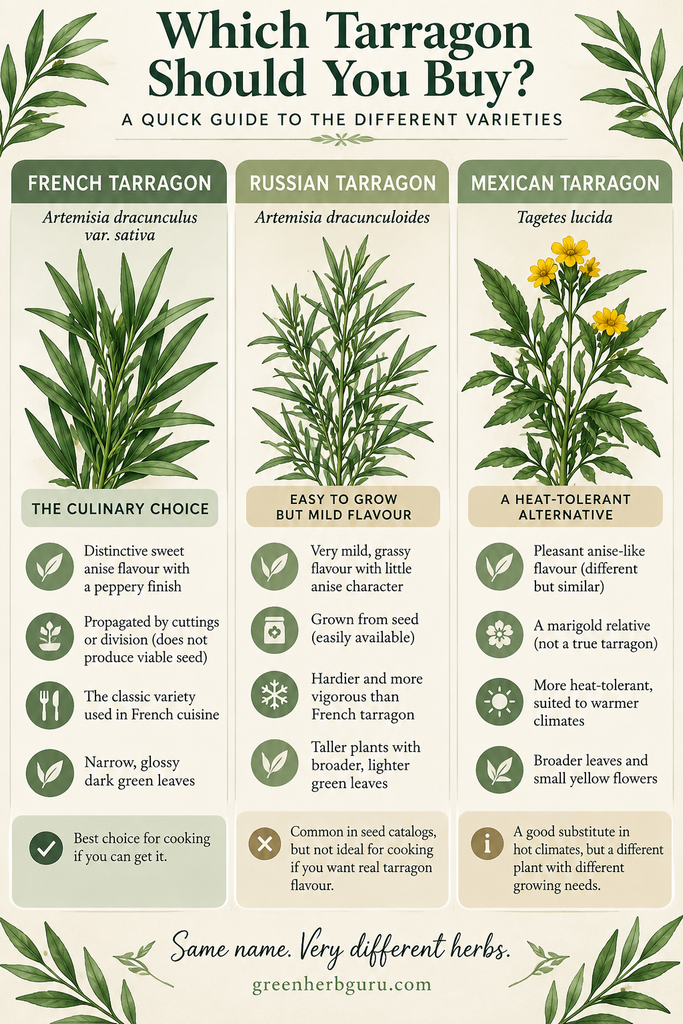
French tarragon (Artemisia dracunculus var. sativa) is the culinary standard and the variety this entire guide is written around. It has narrow, glossy dark green leaves and a smooth anise-vanilla flavor with a peppery finish. French tarragon is a sterile hybrid. It does not produce viable seed, which means every French tarragon plant sold is propagated from a cutting or division of an existing plant. This single fact shapes almost everything about growing it successfully, and it is worth internalizing before you buy anything.
Russian tarragon (Artemisia dracunculoides) is the seed-grown alternative you will find in almost every seed catalog and seed rack. It is taller, hardier, and far easier to start from seed. It is also, by nearly universal agreement among cooks, close to flavorless. Russian tarragon has a faint grassy bitterness with almost none of the anise character that makes French tarragon worth growing. If a tarragon seed packet exists, it is Russian tarragon. There is no seed-grown version of the good stuff.
Mexican tarragon (Tagetes lucida) is not a tarragon at all. It is a marigold relative, sometimes called Mexican mint marigold or Texas tarragon, grown as a heat-tolerant substitute in climates where French tarragon struggles through summer. It has a genuinely tarragon-like anise flavor and deserves a mention here, though its growing requirements, flowering habit, and culinary role are different enough that it merits its own dedicated profile down the line rather than a few paragraphs folded into this one.
For cooking, the buying rule is simple: read the plant tag before anything else. If it says “French tarragon” or “Artemisia dracunculus sativa,” you have the culinary herb. If it just says “tarragon” with no qualifier, or if it is sold as seed, assume it is Russian tarragon and flavor expectations accordingly.
How to Grow French Tarragon
French tarragon has a reputation for being fussy. It is not fussy so much as specific. Meet its few real requirements and it is a reliable, low-maintenance perennial for years. Ignore them and it sulks, or dies over winter, which is the single most common tarragon-growing complaint.
Starting From a Cutting or Division, Not Seed
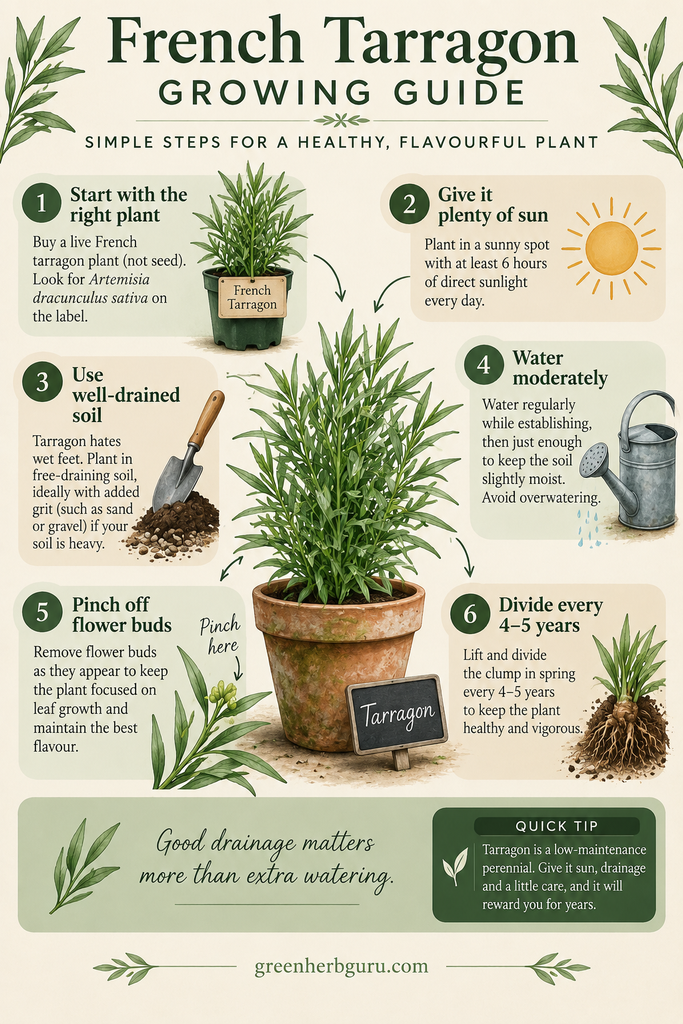
Because French tarragon does not set viable seed, you will buy it as a live plant, a rooted cutting, or a division from an established plant. This is the most important thing to get right before you plant anything.
Buy from a nursery or supplier that specifically labels its stock as French tarragon, ideally one propagated vegetatively rather than a generic “tarragon” listing. Garden centers occasionally mislabel Russian tarragon as French, so if a plant seems unusually vigorous, tall, or coarse-leaved for the price, it is worth a closer look and a crushed-leaf smell test before committing garden space to it. Real French tarragon has a distinct, sweet anise scent when a leaf is bruised. Russian tarragon smells faintly grassy and forgettable by comparison.
Once you have a healthy plant, propagating more is straightforward. Division in spring, digging up an established clump and separating the root mass into sections, is the most reliable home method. Softwood cuttings taken in late spring or early summer will also root, though French tarragon can be slower and less forgiving to root from cuttings than herbs like mint or rosemary.
Soil, Sun, and Drainage
Tarragon wants full sun, at least six hours of direct light daily, and soil that drains fast. This is the single biggest factor in whether a tarragon plant survives winter. French tarragon’s roots are far more likely to be killed by sitting in cold, wet soil over winter than by cold temperatures alone.
Raised beds, containers, or naturally sandy or loamy soil all work well. If your garden has heavy clay, amend generously with compost and coarse sand, or grow tarragon in a container instead of fighting the native soil. A neutral to slightly alkaline pH, roughly 6.5 to 7.5, suits it best, though tarragon is not especially picky about pH within a reasonable range.
Water tarragon moderately. It prefers soil that dries out somewhat between waterings rather than staying consistently damp, which mirrors its Mediterranean-adjacent, drought-tolerant instincts even though it is not technically a Mediterranean herb.
Hardiness, Climate, and the Heat Problem
French tarragon is hardy in USDA zones 4 through 7, and it can persist in zone 8 with excellent drainage and some winter protection. This is a narrower comfortable range than thyme, sage, or oregano, all of which tolerate hotter and more humid summers with far less complaint.
Hot, humid summers are French tarragon’s real weak point. In zones 8 and warmer, particularly in humid regions like the Gulf Coast or the Southeast, French tarragon frequently struggles, going dormant early, developing weak growth, or dying outright during a hot, muggy summer. Gardeners in these climates often have more success treating it as a cool-season plant, growing it through fall, winter, and spring and expecting it to fade in peak summer heat, or growing Mexican tarragon as a heat-season substitute instead.
In colder zones, winter survival depends almost entirely on drainage. A layer of mulch after the ground has started to cool in late fall helps insulate the roots, but mulch piled against damp soil can do more harm than good. If your winters are wet as well as cold, growing tarragon in a container that can be moved to a sheltered spot, or even into an unheated garage or porch, is often more reliable than leaving it in the ground.
Indoor and Container Growing
Tarragon can be grown in containers year-round, and for gardeners in hot-summer or wet-winter climates, a container is often the more reliable choice specifically because it lets you control drainage and move the plant out of extreme conditions. Choose a pot at least 12 inches wide and deep, since tarragon develops a substantial root system for its size, and always use a well-draining potting mix rather than garden soil.
Tarragon is a less enthusiastic indoor windowsill herb than something like chives or basil. It wants more direct light than most homes can offer through a window alone, and it genuinely benefits from an outdoor summer even if it comes indoors for winter protection. If you are building out a broader windowsill herb setup, our micro herb garden guide covers which herbs handle indoor conditions best, and tarragon is realistically better suited to a bright patio or a cold frame than a kitchen sill.
Harvesting and Pruning
Start light harvesting once a plant is established and actively growing, generally from its second season onward for plants grown from small divisions. Snip stems just above a leaf node, which encourages bushier regrowth rather than a single leggy stem.
Tarragon’s flavor is at its best from late spring through midsummer, before the plant puts energy into the small greenish-white flowers it produces later in the season. Pinching off flower buds as they appear redirects the plant’s energy into leaf production and extends the period of good flavor.
Cut plants back by about a third in late summer to encourage a fresh flush of tender growth, and give the plant a final light trim in fall before it goes dormant. Established French tarragon plants tend to lose vigor after four or five years and benefit from being divided and partially replaced, which conveniently also gives you new plants to share or expand your own patch with.
Common Growing Problems
Most tarragon problems trace back to one of two causes: too much water or too little light. A plant with yellowing lower leaves and a soft, mushy base is almost always sitting in soil that stays wet too long, and the fix is drainage rather than more careful watering. A plant that grows tall, thin, and floppy with pale leaves is usually stretching for light and needs a sunnier spot or, indoors, a spot closer to a south-facing window.
Powdery mildew can appear on tarragon in humid conditions with poor air circulation, showing up as a white, dusty coating on leaves. Space plants generously, water at the base rather than overhead, and remove any affected leaves promptly. Rust, a less common but more serious fungal issue, shows up as small orange-brown pustules on leaf undersides and generally means removing and discarding affected foliage rather than composting it.
Aphids occasionally target new growth, particularly on stressed or overwatered plants. A strong blast of water or a light insecticidal soap treatment usually clears a minor infestation without needing anything stronger. Tarragon’s aromatic oils make it naturally less appealing to many pests than more tender herbs, so serious pest pressure is relatively uncommon on a healthy plant.
Culinary Uses and Flavor Profile
French tarragon’s flavor is built around anise and licorice notes, similar in family to fennel or star anise but softer and greener, with a subtle vanilla sweetness and a faint peppery bite on the finish. It is a distinctive, assertive flavor, and a little goes further than most cooks expect the first time they use it.
Tarragon in French Cooking
Tarragon is one of the four classic fines herbes, alongside chervil, chives, and parsley, a delicate fresh herb blend stirred into dishes at the very end of cooking rather than cooked down like a bouquet garni. Fines herbes appears in omelets, simple pan sauces, and soft cheeses throughout French home cooking.
Tarragon is also the defining flavor of béarnaise sauce, the warm emulsified butter sauce built on a reduction of tarragon, shallots, and vinegar. It is essential in classic French tarragon chicken (poulet à l’estragon), where the herb infuses a cream or wine-based pan sauce, and it flavors the vinegar used in remoulade and other French mustard-based sauces. A broader look at how French cooking builds its herb pairings, alongside other European traditions, is on our list to cover in more depth as our international cuisines series continues; that piece will be a natural home for tarragon’s deeper French culinary context once it is live.
Best Pairings and Uses Beyond France
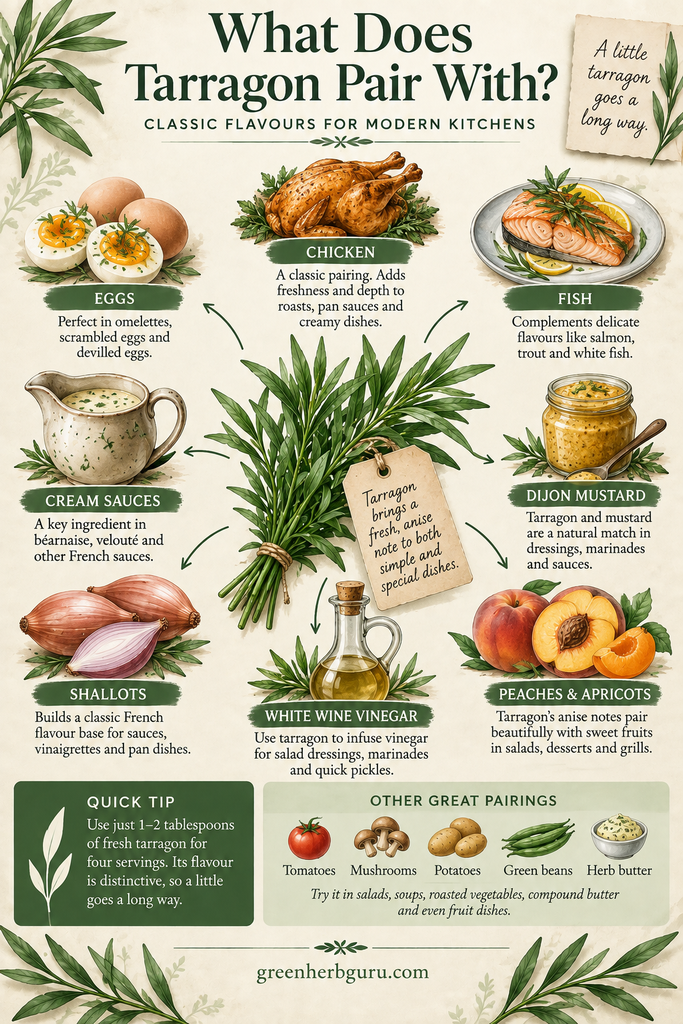
Tarragon pairs especially well with eggs, chicken, fish, and shellfish, where its anise sweetness cuts through richness without overwhelming a delicate protein. It is a natural partner for cream sauces, mustard, shallots, and white wine vinegar.
Tarragon vinegar, made by steeping fresh sprigs in white wine vinegar for two to three weeks, is one of the simplest and most useful ways to capture the herb’s flavor for cooking well past its fresh season. It is a classic base for vinaigrettes and a quiet upgrade to homemade mayonnaise or mustard. For a wider look at how different cuisines lean on their own signature herbs, our Herbs Around the World guide puts tarragon’s French role into a broader global context.
A tarragon-butter compound, made by working chopped fresh tarragon into softened butter, is an easy way to finish grilled fish, roasted vegetables, or a simple steak. Tarragon also pairs surprisingly well with fruit, particularly stone fruits like peaches and apricots, and with mushrooms, where its anise note plays against their earthiness in a way that feels unexpected but works.
Simple Ways to Start Cooking With It
A handful of low-effort dishes let you get a real feel for tarragon before committing to a more involved recipe. A simple tarragon chicken salad, made by folding chopped fresh tarragon and a little Dijon mustard into mayonnaise-dressed shredded chicken, is an easy weeknight way to taste it against a familiar base.
Tarragon scrambled eggs or a tarragon omelet, finished with just a teaspoon of chopped leaves stirred in off the heat, is the fastest possible introduction to fines herbes cooking. A quick pan sauce, made by deglazing a skillet with white wine and a splash of cream after searing chicken or fish, then finishing with chopped tarragon and a knob of butter, gives a genuine taste of poulet à l’estragon without the full recipe. And a simple tarragon vinaigrette, whisked from tarragon vinegar, Dijon mustard, and olive oil, turns an ordinary green salad into something that tastes distinctly French.
A Little Goes a Long Way
Because tarragon’s flavor is so distinct, most recipes use it in modest amounts, often just one to two tablespoons of chopped fresh leaves for a dish serving four. Overdoing it can push a dish from “elegantly herbal” to “tastes like black licorice” fairly quickly. When substituting dried tarragon for fresh, use roughly a third of the amount, since dried tarragon is more concentrated but, as covered below, also loses a fair amount of its character in the drying process.
Health and Wellness Notes
Tarragon has a long history of traditional use as a digestive aid, and it has occasionally been called on for its mild appetite-stimulating properties in traditional European herbal practice. Modern research on tarragon specifically is limited compared to better-studied culinary herbs like rosemary or oregano, and most of what exists focuses on its essential oil or concentrated extracts rather than the small culinary amounts used in cooking.
One safety note worth flagging honestly: tarragon contains estragole, a naturally occurring aromatic compound also found in basil, fennel, and anise. Estragole has raised safety questions in concentrated forms, such as essential oils or high-dose extracts, and some sources suggest caution with regular high-intake use during pregnancy specifically because of this compound. Normal culinary amounts of fresh or dried tarragon used in cooking are considered safe for the general population, and this caution applies specifically to concentrated tarragon essential oil or supplement-level intake, not to a sprinkle of chopped leaves in a sauce.
As with any herb used medicinally rather than culinarily, pregnant or breastfeeding readers, and anyone on regular medication, should check with a healthcare provider before using tarragon in concentrated or supplement form. For a broader, more cautious look at using culinary herbs medicinally, our beginner’s apothecary guide and our guide to everyday medicinal herbs are good starting points.
Storage Methods
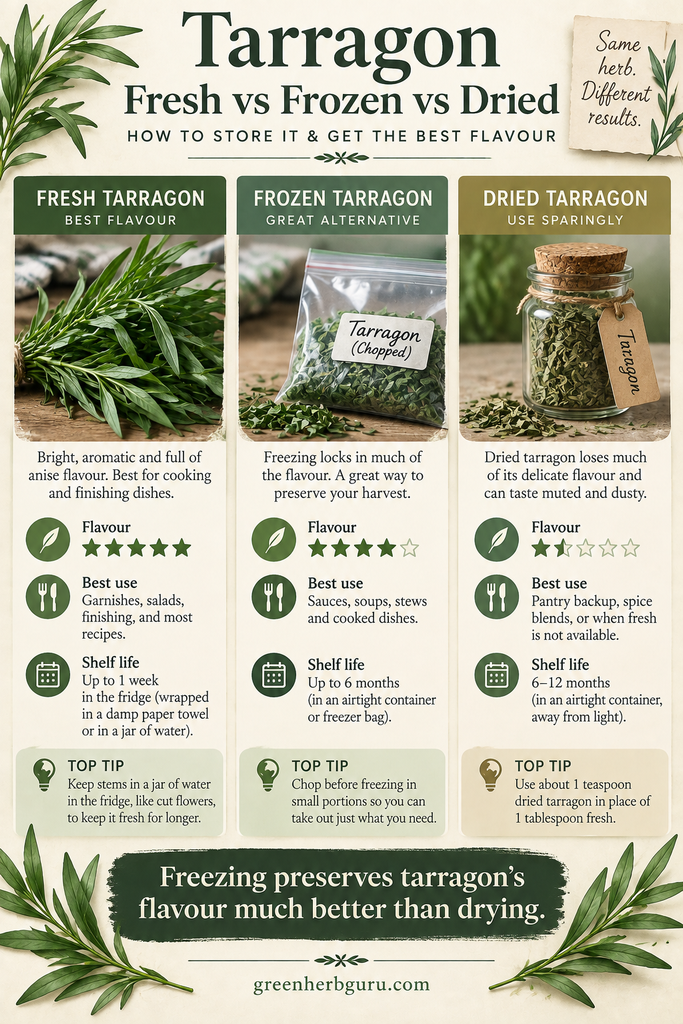
Tarragon is genuinely one of the more perishable fresh herbs, and it is also one where drying loses more of the original character than gardeners typically expect. Knowing the tradeoffs of each storage method helps you actually keep tarragon’s flavor rather than end up with a jar of pale, generic dried herb.
Fresh Storage
Store fresh tarragon the way you would delicate herbs like parsley or basil rather than sturdy herbs like rosemary. Trim the stem ends, stand the bunch upright in a jar with an inch or two of water like a bouquet, and loosely cover the leaves with a produce bag before refrigerating. Change the water every couple of days. Stored this way, fresh tarragon typically holds good flavor and texture for around a week to ten days.
Freezing
Freezing preserves tarragon’s flavor far better than air-drying does, which makes it the better default choice if you have a surplus to put away. Chop fresh leaves and freeze them in ice cube trays covered with a little water or olive oil, then transfer the frozen cubes to a labeled freezer bag once solid. This method keeps the anise character much closer to fresh and works well dropped straight into a warm pan sauce or soup.
Whole sprigs can also be frozen directly in a freezer bag with the air pressed out, though the leaves will darken and soften on thawing, which makes them better suited to cooked dishes than as a fresh garnish.
Drying
Dried tarragon loses a noticeably larger share of its flavor than herbs like oregano or thyme, which actually concentrate and hold their character well when dried. If you do want to dry tarragon, hang small bundles in a warm, dark, well-ventilated spot rather than a sunny windowsill, since light accelerates the loss of the delicate volatile oils that carry its anise flavor. Store dried leaves whole rather than crumbled, in an airtight container away from light, and crush them just before use to preserve as much aroma as possible.
Because tarragon dries down so much in character, tarragon vinegar or frozen tarragon cubes are usually a better way to extend the season than the dried leaf jar most cooks reach for out of habit. For a wider rundown of drying, freezing, and infusing techniques across different herbs, our herb preservation guide covers the methods that work best for sturdier, higher-oil herbs where drying is more forgiving.
Frequently Asked Questions
Why did my tarragon plant taste like nothing? You almost certainly grew Russian tarragon rather than French tarragon. If the plant was grown from a seed packet labeled simply “tarragon,” it is Russian tarragon, which has very little of the anise flavor French cooking is built around. Look for plants specifically labeled French tarragon or Artemisia dracunculus sativa for real flavor.
Can I grow tarragon from seed? Not French tarragon. It is a sterile hybrid that does not produce viable seed, so it can only be propagated by cuttings or division of an existing plant. Any tarragon seed you find in a catalog or seed rack is Russian tarragon.
Is French tarragon a perennial? Yes, in USDA zones 4 through 7, and often in zone 8 with excellent drainage. It dies back to the ground in winter and regrows from its roots in spring. In hot, humid climates it often struggles as a true perennial and may need to be treated more like a cool-season plant or replaced periodically.
Why does my tarragon keep dying over winter? Wet soil is by far the most common cause, not cold temperatures alone. French tarragon’s roots are vulnerable to rot in cold, waterlogged soil. Improving drainage, whether through raised beds, sandy soil amendments, or moving the plant to a container, solves this for most gardeners.
What can I substitute for French tarragon? Fresh chervil has a milder anise note and is the closest substitute in flavor family, particularly in fines herbes blends. Fennel fronds bring a stronger anise character that works in a pinch. Mexican tarragon (Tagetes lucida) is a genuine substitute with real tarragon-like flavor, particularly useful in hot climates where French tarragon struggles to grow.
Does tarragon come back every year? Established French tarragon in a suitable zone with good drainage will reliably return each spring, though individual plants tend to lose vigor after four or five years and benefit from division.
How do I know if I’m buying real French tarragon? Check the plant tag for “French tarragon” or the Latin name Artemisia dracunculus var. sativa, and be wary of a plain “tarragon” label with no qualifier. A quick smell test helps too: crush a leaf and look for a distinct sweet anise scent, not a faint grassy one.
Can I grow tarragon indoors year-round? It is possible but not ideal. Tarragon wants more direct light than most windowsills provide and generally performs better with at least part of the year spent outdoors in full sun. A bright patio, cold frame, or sunroom is a better long-term setup than a kitchen windowsill alone.
Is tarragon the same as Mexican tarragon? No, and this trips up a lot of shoppers. Mexican tarragon (Tagetes lucida) is a different plant entirely, a marigold relative rather than a true tarragon, though it has a genuinely similar anise flavor and is often used as a heat-tolerant substitute where French tarragon struggles.
What’s the best way to preserve a big tarragon harvest? Freezing, either as leaves in oil-filled ice cube trays or as whole sprigs, holds tarragon’s flavor much better than air-drying does. Tarragon vinegar is another excellent option that captures the flavor in a form that keeps for months.
Bringing Tarragon Into Your Kitchen
Tarragon rewards a little extra attention at the buying stage more than almost any other herb in this series. If tarragon has you hooked on growing your own herbs properly, our guides to growing oregano, sage, and thyme cover three more kitchen staples worth adding to the same bed. Get a real French tarragon plant into well-drained soil and full sun, and you will have a reliable perennial that brings something genuinely distinctive to your cooking, the kind of French bistro flavor that is surprisingly hard to replicate with anything else in the herb garden.
Start with a small amount in your next pan sauce or vinaigrette. Once you taste what real tarragon is supposed to taste like, it earns a permanent spot in the garden.
Continue Your Journey
For more on building out your herb garden and kitchen: explore our beginner’s guide to essential herbs and spices, get the full picture on planning your perfect herb garden, or read the complete guide to chives for another low-fuss perennial to pair with tarragon. If you’re building a home apothecary, start with our beginner’s apothecary guide, and if you’re stretching a fresh herb glut further, our guide to making herbal infused oils at home covers techniques that adapt well to tarragon.
Never miss a growing guide or garden-to-kitchen recipe. Sign up for the Green Herb Guru newsletter and get fresh herb wisdom delivered straight to your inbox.